
Home › Services › Pest Control
Cricket Control
Two insects share the name and they’re different problems entirely. One is a damp signal in a basement; the other is a lighting problem at your doors.
Advertising disclosure: calls are routed to an independent local provider. We’re paid a referral fee for the call. You pay the provider, never us.
The short answer
Camel crickets — humpbacked, no wings, don’t chirp — live in damp basements and crawl spaces and chew paper, cardboard and fabric. Field crickets are the ones that chirp, come in from outside, and are drawn to exterior lighting. The first is a humidity problem, the second is a lighting and exclusion problem, and treating them the same way fails.
Camel cricket
Humpbacked, silent, damp
Field cricket
Chirps, comes in from outside
Camel fix
Dehumidify
Field fix
Lighting and sealing
Which cricket
The sound tells you immediately.
Damp problem
Camel crickets
Humpbacked, long antennae and legs, no wings, and completely silent. Found in basements, crawl spaces and garages. They jump toward disturbance rather than away, which is why people find them alarming. They chew cardboard, paper and fabric.
Lighting problem
Field crickets
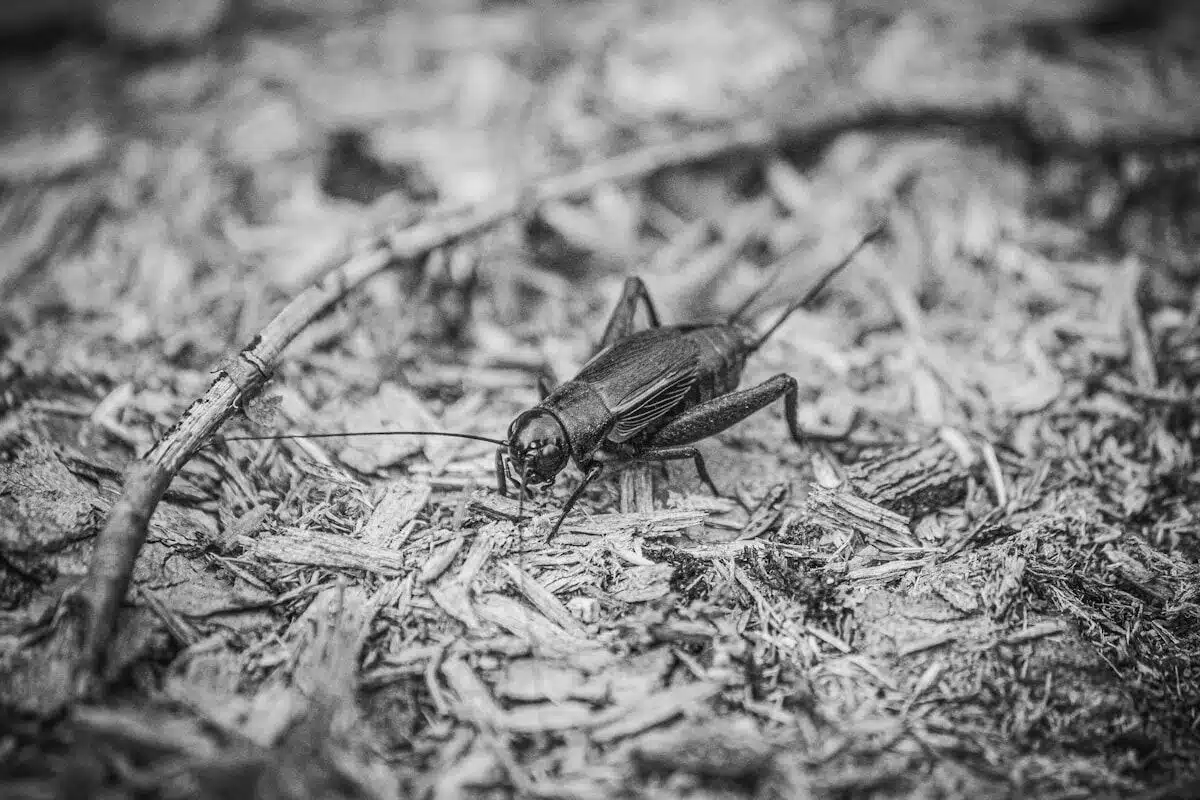
Dark, winged, and they chirp. Come in from outside, drawn to lights at night. Usually individuals rather than populations, and they don’t breed indoors in numbers.
Outdoors
Mole crickets
In turf rather than buildings, damaging grass roots. A lawn pest with a different treatment entirely.
Not crickets
Grasshoppers and katydids
Outdoor insects that occasionally wander in. Not a building problem.
Why camel crickets bother people so much
They jump toward whatever disturbs them rather than away. That’s a defensive strategy — startle the threat — and it makes finding a group in a crawl space genuinely unpleasant even though they’re harmless.
They also damage stored items. Cardboard boxes, paper, and natural fabrics in a damp basement are all on the menu, which is a real reason to deal with them rather than tolerate them.
The lighting fix for field crickets
Field crickets indoors are almost always individuals drawn to a lit doorway. Moving fixtures away from doors, switching to warmer colour temperatures, and using motion activation rather than dusk-to-dawn reduces encounters substantially and costs the price of a few bulbs.
Two problems, two answers
Identify first, then apply the right one.
Listen
Chirping means field crickets and a lighting problem. Silence means camel crickets and a damp one.
For camel crickets, dehumidify
Basements and crawl spaces. They need damp and can’t persist without it.
Get cardboard off the floor
Both habitat and food. Plastic boxes on shelving instead.
For field crickets, change the lighting
Away from doors, warmer colour, motion activated. Cheap and effective.
Seal ground-level gaps
Under thresholds, at penetrations. Works for both.
Clear harbourage outside
Woodpiles, dense ground cover and debris against the foundation.
Two crickets, two fixes
Where this stops being a DIY job
Persistent damp in a crawl space. That has implications for timber and air quality beyond the crickets, and it’s the actual problem.
Large established populations in an enclosed space. Camel crickets in numbers in a crawl space usually means conditions that need addressing structurally.
Damage to stored documents already occurring. Continued damp will keep causing it.
Advertising disclosure: calls are routed to an independent local provider. We’re paid a referral fee for the call. You pay the provider, never us.
What a competent visit does
Identifies
Asks whether they chirp
It’s the fastest diagnostic there is and it changes the whole approach.
Measures
Checks humidity
For camel crickets. Treatment without it is temporary.
Advises
Lighting and storage
Both cheap, and both do more than a spray.
Common questions
What’s the difference between camel crickets and field crickets?
Camel crickets are humpbacked, wingless and silent, and live in damp basements. Field crickets chirp, come in from outside, and are drawn to exterior lighting.
Do camel crickets bite?
No. They’re harmless, though they jump toward disturbance rather than away, which people find alarming. They do chew paper, cardboard and fabric.
Why do I have crickets in my basement?
Almost certainly camel crickets, and it means the space is damp. A dehumidifier ends it more reliably than any treatment.
How do I stop crickets coming inside?
For field crickets, change exterior lighting — away from doors, warmer colour, motion activated — and seal ground-level gaps.
Crawl space damp, or an established population?
Listening for the chirp tells you which problem you have in about ten seconds, and both fixes — a dehumidifier or different lighting — are yours. Persistent crawl-space damp is the part that needs someone else.
Call (720) 389-2293