
The short answer
Price is set by access more than size — a large tree with open ground around it costs a fraction of a small one that has to be climbed and lowered in sections over a conservatory. And the DIY line is low: anything needing a ladder plus a chainsaw is where this stops, because those two together are the worst combination in home maintenance.
Sets the price
Drop zone, not size
DIY limit
What you reach standing up
Never a tree service
Anything on a power line
Usually separate
Stump and haul-away
Which job do you actually need?
Four situations that get described the same way and need different people.
Yours, partly
Small branches, low down
Anything reachable standing on the ground with hand tools. Cut at the collar, stay under a quarter of the crown, and most young-tree work is done.
Hire it
Above ladder height
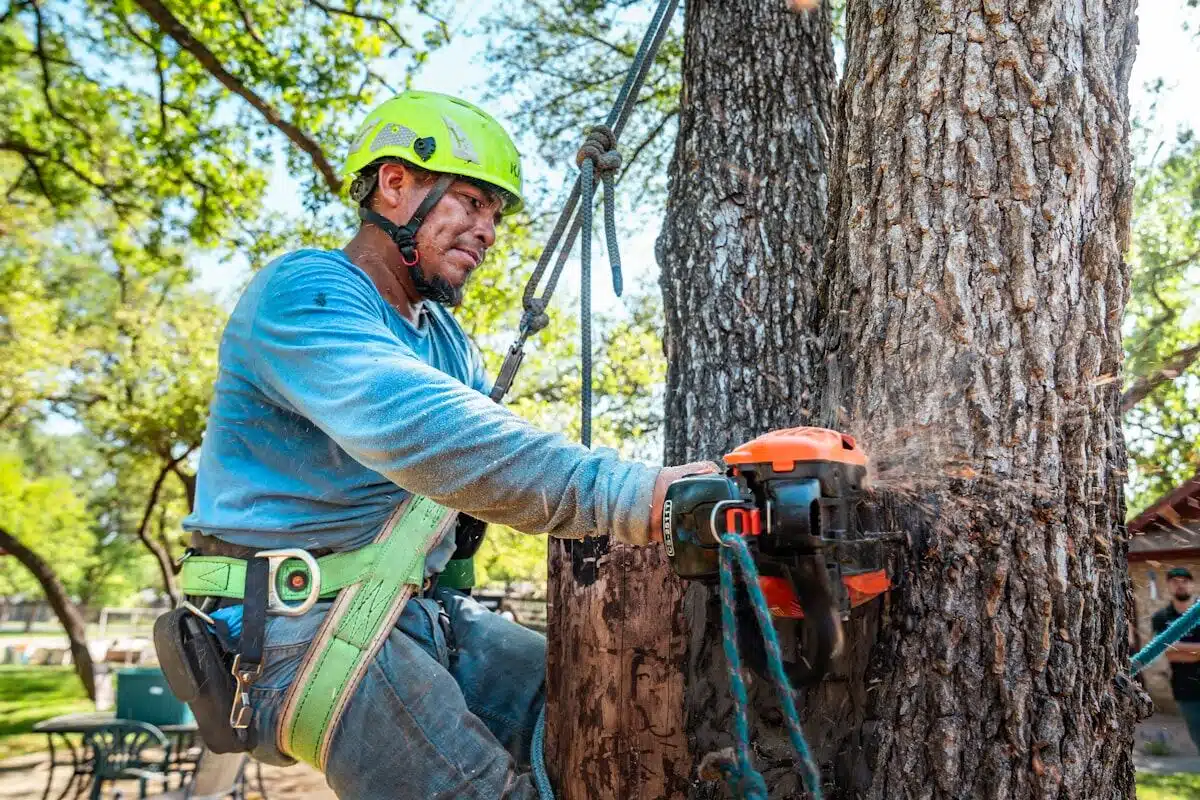
A chainsaw needs two hands and a stable stance. A ladder gives you neither. This is where the serious injuries in tree work happen.
Hire it
Anything over a structure
Sectional dismantling with ropes. Skilled work, and the reason a small tree in a tight garden can cost more than a large one in a field.
Call the utility
Touching a power line
Not a tree service at all. Your electricity provider is responsible for vegetation around their conductors and normally handles it without charge.
Why access beats size
A tree with clear ground the full height of its fall can be felled in one sequence — minutes of cutting, then processing on the ground. The same tree with a house, fence or neighbour’s garden inside that radius has to be climbed and taken apart piece by piece, each section roped and lowered.
That’s the difference between an hour and most of a day, and it’s why quotes for apparently similar trees vary so widely. When you ring round, describe what surrounds the tree before you describe the tree.
Before you call anyone
Five things that make quotes comparable and stop the common surprises.
Check for lines first
If anything touches or overhangs a conductor, the call is to the utility and nothing else on this page applies.
Describe the surroundings
Distance to buildings, fences and boundaries. That determines method, and method determines price.
Ask for three lines
Felling, stump, haul-away. The stump is separate almost every time and it’s the usual surprise.
Look at the base
Fresh soil lifting or cracking opposite a lean means the root plate is moving. That changes the urgency.
Ask to see insurance
On work that could put a limb through a roof, that matters more than a price difference.
What each job involves
Where this stops being a DIY job
Any tree, branch or debris in contact with a power line. Contact your electricity utility immediately and keep everyone well clear, including from the ground nearby — a downed conductor can energise the soil around it. Do not let a tree service touch it either. No phone number on this page is the right one for that.
Any cut that needs a ladder. Chainsaws need two hands and a braced stance. Ladders provide neither.
Dead, hollow or storm-loaded trees. Decayed wood fails unpredictably and can’t be safely climbed. This is the category where experienced people get hurt.
What separates an arborist from a crew with a saw
Assesses
Looks at what’s underneath
Drop zone before diameter. Anyone quoting on height alone hasn’t chosen a method.
Refuses
Won’t top a tree
The clearest single marker of competence in this trade.
Itemises
Separates the lines
Felling, stump, debris. A single number can’t be compared to anything.
Common questions
Why do tree removal quotes vary so much?
Because access sets the price more than size does. A tree that can be felled in one piece costs a fraction of the same tree dismantled in sections by a climber.
Who is responsible for trees near power lines?
Your electricity utility. They handle vegetation around their conductors, normally at no cost, and no tree service should be working there.
Is stump removal included with tree removal?
Almost never. It’s a separate machine and a separate line, and it’s the most common surprise cost in the trade.
What tree work can I safely do myself?
Anything you can reach standing on the ground with hand tools, cutting at the branch collar and removing no more than about a quarter of the live crown in a season.
Above ladder height, or too close to the house?
Small branches from the ground, backfilling after a stump grind, and planting properly are genuinely yours — and the guides here cover each. Anything needing a ladder and a saw is where this stops, and anything near a line belongs to the utility rather than to anyone you’d pay.
Call (804) 488-3350
The seven guides
Tree Services by state
Licensing, seasonal timing and local exposure differ by state. These pages cover what changes where you are.