
Home › Services › Tree Service
Tree Trimming
Three quite different jobs get quoted as “trimming”, and asking which one you’re buying is the fastest way to tell a competent company from a crew with a chainsaw.
Advertising disclosure: calls are routed to an independent local provider. We’re paid a referral fee for the call. You pay the provider, never us.
The short answer
Crown thinning removes selected branches to let light and wind through. Crown reduction shortens the whole canopy back to growth points. Crown lifting removes the lowest branches for clearance. They cost different amounts and do different things to the tree, so a quote that just says “trim” hasn’t specified the work. And no more than about a quarter of a live crown should come off in one season.
Which job are you buying?
Pick what you actually want done and the quote becomes specific.
Three jobs
Thinning, reduction, lifting
Safe removal
~25% of live crown
Never acceptable
Topping
Timing
Species-dependent
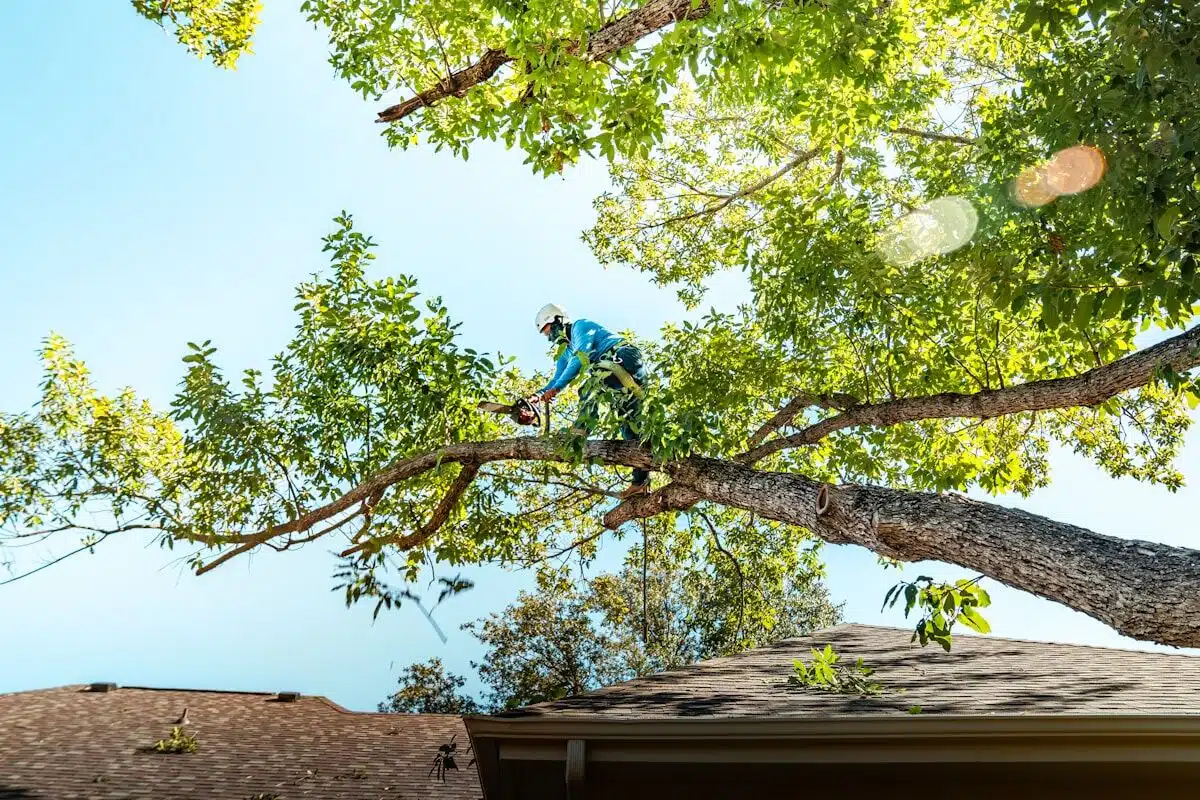
The quarter rule, and why it’s not arbitrary
Leaves are how a tree feeds itself. Remove too much canopy at once and it has to draw on stored reserves to replace it, which leaves it weaker going into the next season rather than tidier.
The working figure most arborists use is around a quarter of the live crown in a single season, less on a mature or already-stressed tree. A quote that involves taking half the canopy off is a quote for a different, worse outcome than the one being described.
Timing depends on species
Dormant-season pruning suits most deciduous trees — the structure is visible, the tree isn’t actively growing, and disease pressure is low. But spring-flowering species set their buds the previous year, so a winter cut removes the flowers. And a few species bleed heavily if cut in late winter, which is unsightly rather than harmful.
If a company can’t tell you why this month suits this tree, they’re working to their schedule rather than the tree’s.
What you can do yourself
Ground-level work on small trees, and nothing else.
Stay below shoulder height
Anything you can reach standing on the ground, with both feet planted and a hand pruner or lopper. That’s the honest limit.
Cut at the collar
The slightly swollen ring where a branch meets the trunk. Cut just outside it — flush cuts remove the tissue the tree seals with, stubs never seal at all.
Three cuts on anything heavy
Undercut, then a top cut further out to drop the weight, then the final cut at the collar. One cut and the bark tears down the trunk.
Remove the obvious faults first
Dead, damaged, and branches crossing and rubbing. That alone is most of what small-tree pruning achieves.
Stop at a quarter
Stand back and look. If it’s starting to look thin, you’re done for this year.
Leave the wound alone
No paint, no sealant. Trees compartmentalise their own wounds and dressings trap moisture against the cut.
Yourself or hired
Where this stops being a DIY job
Anything within reach of a power line. Not a tree service — call your electricity utility. They handle vegetation near their lines, usually at no charge, and a chainsaw near a live conductor kills people every year. No phone number on this page is the right one for that.
Any cut that needs a ladder. A chainsaw requires two hands and a stable stance. A ladder gives you neither, and kickback with nothing to brace against is how the serious injuries in this work happen.
Limbs under tension after a storm. A bent or trapped limb stores energy and releases it the instant it’s cut, in a direction that’s hard to predict.
What separates an arborist from a crew
Specifies
Names the work
Thinning, reduction or lifting, and how much. A quote saying “trim” hasn’t defined anything.
Refuses
Won’t top a tree
The clearest single marker. Anyone offering it is telling you what they don’t know.
Times it
Explains why now
Species, season and flowering habit. If they can’t, they’re working to their calendar.
Common questions
What’s the difference between trimming and pruning?
In practice the words are used interchangeably, but the useful distinction is purpose: pruning is done for the tree’s structure and health, trimming for clearance and appearance. Ask which one the quote covers.
How much can you cut off a tree at once?
Around a quarter of the live crown in a single season, and less on a mature or stressed tree. Removing more forces the tree to spend stored reserves replacing leaves.
Is tree topping ever acceptable?
No. It forces weak, fast regrowth that’s more hazardous than what was removed and opens the wood to decay. A company offering it is the wrong company.
When is the best time to trim a tree?
Dormant season suits most deciduous trees, but spring-flowering species set buds the previous year, so a winter cut removes the flowers. The right answer depends on the species.
Above what you can reach standing up?
Small branches from the ground, cut at the collar, staying under a quarter of the crown — that’s genuinely yours and it covers most young trees. A ladder plus a chainsaw is the combination to avoid, and anything near a line belongs to the utility.
Call (804) 488 3350