
The short answer
The thing that decides cost here isn’t area, it’s what has to leave the site. Cutting is the easy half. Chipping, hauling and tipping is the half that shows up on the invoice, and it’s the half most people forget to ask about until it arrives.
Cheap half
Cutting
Expensive half
Chip, haul, tip
Method changes at
About a quarter acre
Hedge rule
Wider at the base
How much, and how thick?
Volume decides method, and method decides price far more than acreage does.
Yours
A hedge run or a few shrubs
Hand shears or a trimmer and an afternoon. The technique that matters is tapering the sides so the base stays wider than the top.
Yours, just
Brush under a trailer load
Loppers under an inch, a bow saw above. Manageable — provided you solve disposal before you start cutting rather than after.
Hire it
A quarter acre and up
Where it stops being a weekend. Volume overwhelms hand tools and you’re into repeated chipper loads or a skip.
Machine work
Over an acre, or trees involved
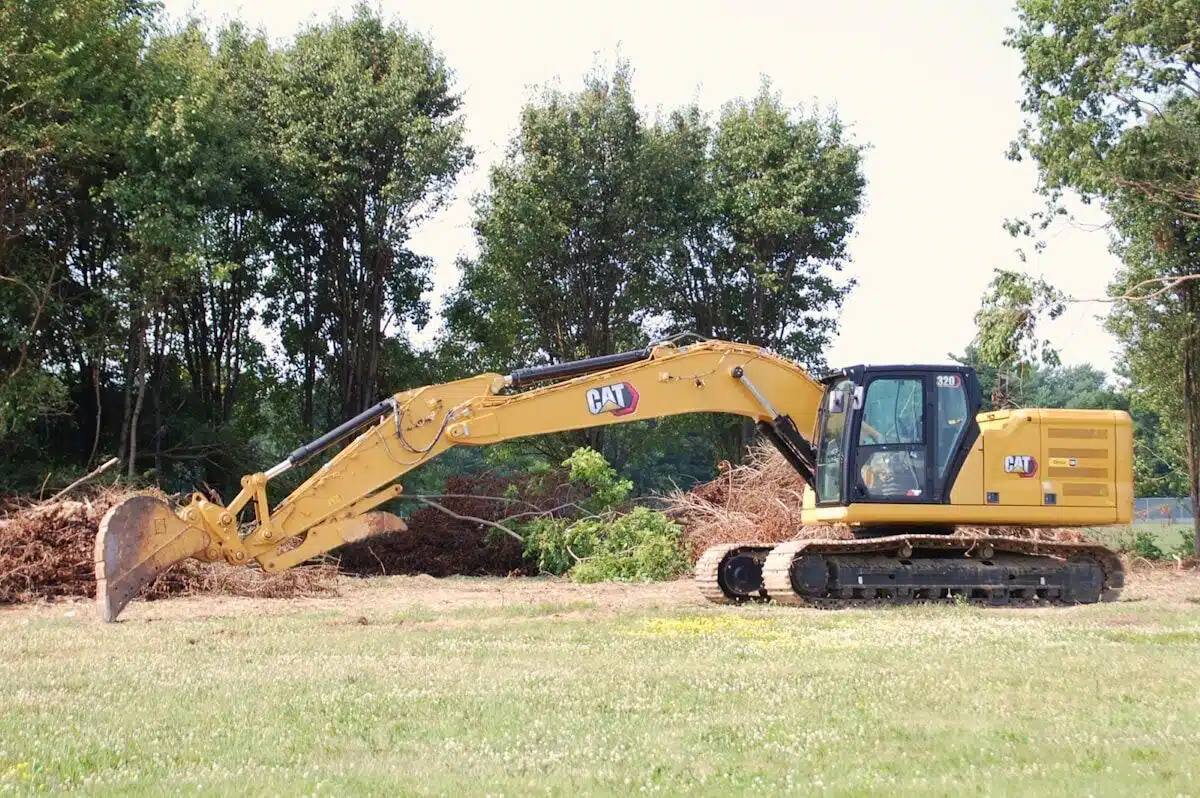
Skid steer with a mulching head. Once trees are in it, it stops being clearing and becomes tree work with its own requirements.
Why it scales badly
Below about a quarter of an acre, price tracks hours — hand tools, a chipper, and however long it takes. Above it, the method changes entirely to machine work, and price tracks machine days plus the fixed cost of getting the machine to site.
That’s a step rather than a slope, and it’s why quotes for slightly larger jobs can look disproportionate. It also means that just under the threshold is genuinely good value to do yourself, and just over it isn’t.
Before you cut anything
Five things, and the first two prevent most of the regret.
Solve disposal first
Green bin, skip, chipper hire, or haul-away booked. A pile you can’t move is worse than the brush was.
Check for free collection
After storms especially. Many municipalities run a free window and plenty of people pay to remove what would have been taken.
Check what’s protected
Mature trees, watercourse buffers, slopes, nesting season. Enforcement lands on the landowner.
Define what ‘cleared’ means
Mulched in place, hauled, stumps ground, or graded. Four end states, four prices.
Get four separate lines
Cut, chip, haul, tip. A single number hides which is inflated.
Method by scale
Where this stops being a DIY job
Anything past about a quarter acre. Machine work, and hiring the machine without the training is how people roll them on slopes.
Anything near overhead lines. Machines with raised attachments and conductors are a fatal combination. That’s a call to your electricity utility before anyone starts.
Material under tension, or poison ivy through the pile. Storm-thrown brush releases stored energy when cut, and burning poison ivy is a serious medical problem — the smoke carries the oils.
What a good clearing quote contains
Itemises
Four separate lines
Cut, chip, haul, tip. A single number can’t be challenged or compared.
Defines
What ‘cleared’ means
Mulched, hauled, ground or graded. Otherwise you’re trusting their interpretation.
Checks
Permits and protections
A contractor who dismisses the question is one to be careful with.
Common questions
Why is brush removal so expensive?
Because cutting is the cheap part. Chipping, hauling and tipping fees are the bulk of it, and they scale with volume rather than with the area cleared.
What does land clearing actually include?
Ask, because it varies enormously. Mulched where it stood, cut and hauled with stumps left, stumps ground, or excavated and graded are four different jobs.
Why is my hedge bare at the bottom?
It’s been cut with vertical or overhanging sides, so the top shades the base. Hedges need to be wider at the bottom than at the top.
Will a shrub grow back if I cut it down?
Most broadleaf shrubs will, often more vigorously. Most conifers won’t — which is convenient if removal is the goal.
Past what a weekend can handle?
A hedge run, a few shrubs and up to about a trailer load of brush are genuinely yours — provided disposal is sorted before you start cutting. Beyond about a quarter acre the method changes to machine work, and the cost stops tracking the area.
Call (804) 488 3350