
Home › Services › Tree Service
Tree Transplanting
Moving an established tree means leaving most of its root system behind. Whether it survives depends almost entirely on how much you take and how long you spent preparing.
Advertising disclosure: calls are routed to an independent local provider. We’re paid a referral fee for the call. You pay the provider, never us.
The short answer
A root ball takes a fraction of the root system, and the tree has to survive on what’s left while regenerating the rest. That gap is why transplant shock happens and why bigger trees move worse than smaller ones. Root pruning — severing the outer roots a season in advance so fine roots regenerate inside the future ball — substantially improves survival, and it’s the step most people skip.
The constraint
Root loss
Improves odds most
Root pruning, a season ahead
Smaller trees
Move far better
Best season
Dormancy
Is it worth moving?
Four sizes, and the economics change sharply across them.
Straightforward
Under about an inch trunk diameter
A spade, an afternoon, and good odds. At this size the root system is small enough to take most of it, and replacement cost is low anyway.
Doable
One to three inches
Two people, a season of root pruning first, and a dormant-season move. Reasonable odds with preparation, poor without.
Machine work
Three inches and up
Tree spade or crane. Real cost, and survival depends heavily on species, aftercare and how much root came with it.
Reconsider
Large mature specimens
Technically possible and expensive, with meaningful failure rates. Often the honest comparison is against buying a well-grown replacement and waiting.
Root pruning, and why it changes the odds
Cut a circle around the tree at the diameter of your future root ball, a full growing season before the move. Severing the outer roots stimulates fine root growth inside that circle, so when you lift it a year later the ball contains far more functional feeding root than it otherwise would.
It’s the single biggest thing you can do for survival, it costs nothing but a spade and patience, and almost nobody does it because it means deciding a year ahead.
Aftercare is where they fail
A transplanted tree can’t take up water at its previous rate because most of its absorbing roots are gone. It needs deep, regular watering through the first two growing seasons — and that’s where most failures happen, because attention fades after the first few weeks.
Don’t fertilise at planting. It encourages top growth the reduced root system can’t support.
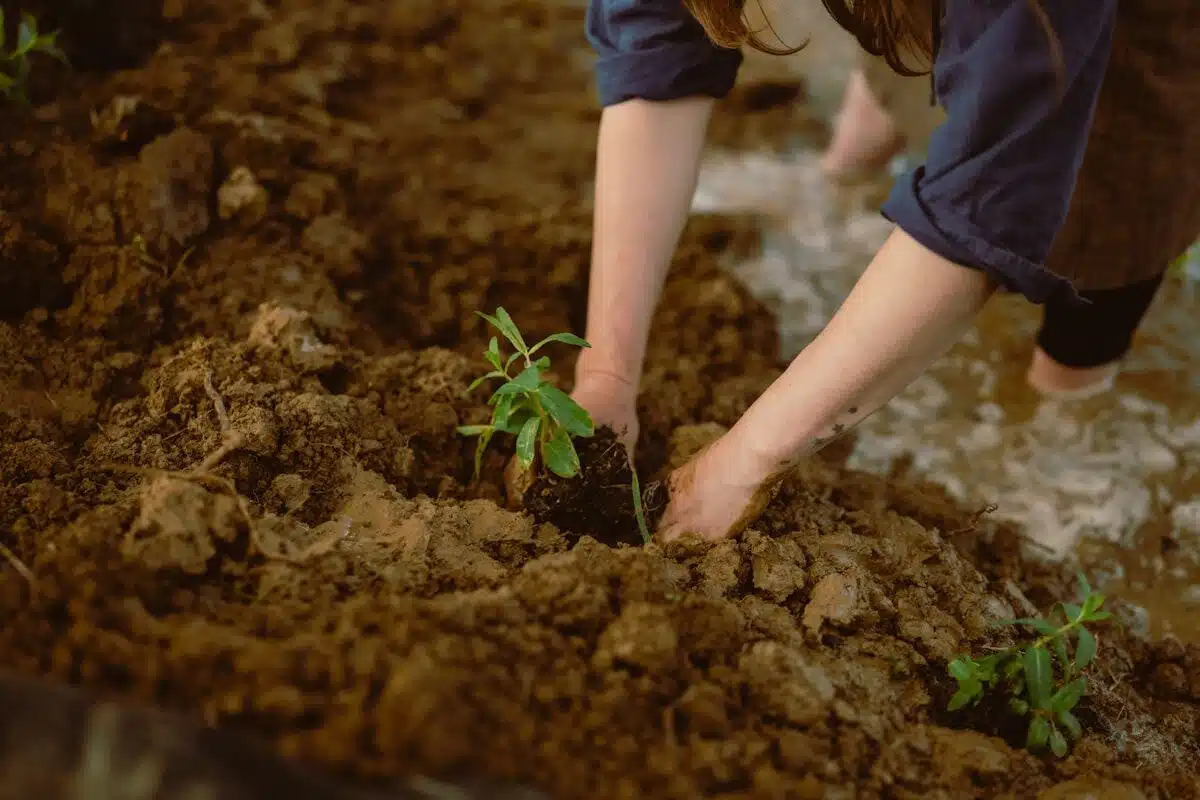
Moving a small tree
For anything up to about three inches. Prepare a season ahead if you can.
Root prune a season ahead
Cut a circle at the future ball diameter, a full growing season before. Transforms the odds.
Move in dormancy
Late autumn or early spring for most deciduous species, before growth starts. Least demand on a reduced root system.
Dig the new hole first
Wide and no deeper than the ball. The root ball should be out of the ground for as little time as possible.
Take as large a ball as you can move
Every extra inch is root. Wrap it in hessian to hold it together during the move.
Plant at the same depth
Root flare visible at the surface. Planting deep kills more transplants than the move itself does.
Water deeply for two seasons
Not just the first few weeks. This is where most failures actually happen.
Survival by size
Where this stops being a DIY job
Anything above about three inches trunk diameter. Machine work, and the root ball weight is far beyond what people expect — dropping one damages both the tree and whoever is holding it.
Anything near buried services. Root balls are wide and services run shallow near boundaries and drives. Have them located.
Trees of real value. Where the specimen matters, the assessment of whether it will survive the move is worth having before you commit to it.
Advertising disclosure: calls are routed to an independent local provider. We’re paid a referral fee for the call. You pay the provider, never us.
What a competent transplant involves
Plans
Root prunes in advance
Where the timeline allows. Anyone moving a tree the same week hasn’t prepared it.
Sizes
Takes the largest ball possible
Every inch of root ball is survival.
Follows up
Specifies the watering
Two seasons, deeply. It’s where most failures happen.
Common questions
How big a tree can be transplanted?
Technically almost any size with machinery, but survival falls as size rises. Under three inches trunk diameter is reasonable with preparation; large specimens are expensive with meaningful failure rates.
What is root pruning?
Cutting a circle around the tree at the future root ball diameter, a season before moving. It stimulates fine root growth inside that circle, so the ball contains far more functional root.
When is the best time to transplant a tree?
During dormancy — late autumn or early spring for most deciduous species — when demand on the reduced root system is lowest.
Why do transplanted trees die?
Usually water. Most absorbing roots were left behind, so the tree needs deep regular watering through two growing seasons, and attention typically fades after a few weeks.
Above three inches, or a tree that matters?
A small tree, root pruned a season ahead and moved in dormancy, is genuinely doable and the odds are good. Larger specimens are machine work, and the honest question is often whether a replacement plus time beats the cost of the move.
Call (877) 360-4657