
The short answer
When a shrub flowers tells you when to prune it. Spring flowerers set their buds the previous summer, so cutting them in winter removes the flowers — prune those straight after flowering. Summer flowerers bloom on new growth, so late winter pruning is right. Getting this backwards doesn’t harm the plant; it just costs you a year of flowers.
Spring flowerers
Prune after flowering
Summer flowerers
Prune late winter
Always first
Dead, damaged, diseased
Shearing
Trimming, not pruning
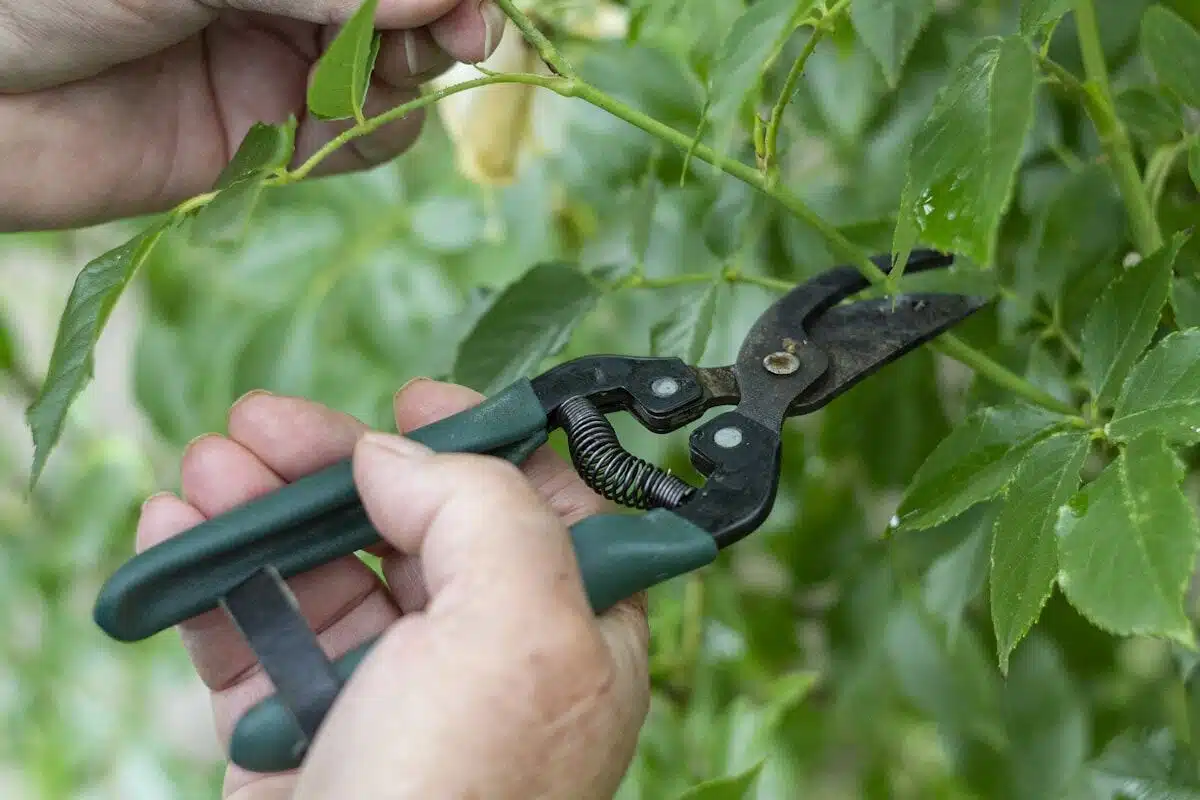
Which kind of shrub
Three groups, and the flowering time tells you which.
After flowering
Spring flowerers
Forsythia, lilac, weigela, deutzia. They set buds on last year’s wood the previous summer, so a winter cut removes this year’s display. Prune within a few weeks of flowering finishing.
Late winter
Summer flowerers
Buddleia, hydrangea paniculata, potentilla, most roses. They flower on growth made the same year, so cutting in late winter stimulates the stems that will carry the flowers.
Light touch
Evergreen structural shrubs
Box, yew, holly. Pruned for shape rather than flowering. Light and regular beats hard and occasional.
Careful
Hydrangea macrophylla
The mophead type flowers on old wood, so cutting it back in spring removes the display. Deadhead only, and remove old stems at the base sparingly.
The three D’s, and why they come first
Dead, damaged, diseased. Remove those before considering shape, on any shrub, at any time of year. It costs the plant nothing, it improves airflow through the centre, and it often reveals that less shaping is needed than you thought.
Cut back to healthy wood, and to a bud or a branch junction rather than leaving a stub. Stubs die back and become entry points.
Thinning against shearing
Shearing cuts every stem at the same distance, which stimulates dense growth at the surface. Do it repeatedly and you get a shell of foliage over a bare, twiggy interior — the shrub equivalent of a hedge going bare at the base.
Thinning removes whole stems at their origin, which opens the centre to light and keeps growth distributed through the plant. It takes longer, it looks like less happened, and it’s what keeps a shrub healthy for decades.
The renovation option
For an overgrown deciduous shrub, taking about a third of the oldest stems right to the base each year for three years renews it completely without ever leaving it looking butchered. Slower than cutting the whole thing down, and far more reliable.
Pruning properly
Three D’s first, then thin, then shape if needed.
Work out when it flowers
Spring means prune after flowering. Summer means late winter. This single question settles the timing.
Remove dead, damaged, diseased
First, always, on any shrub. Back to healthy wood, to a bud or junction rather than a stub.
Take out crossing stems
Branches rubbing against each other create wounds. Remove the weaker of any crossing pair.
Thin from the base
Whole stems removed at their origin rather than shortening everything. Opens the centre and keeps growth distributed.
Renovate over three years
A third of the oldest stems to the base each year. Renews an overgrown shrub without a butchered stage.
Shape last, and lightly
After the structural work. Most shrubs need far less than people give them.
Timing by flowering
Where this stops being a DIY job
Anything needing a ladder or a chainsaw. At that point it’s a tree rather than a shrub, and the rules and the risks are different.
Any shrub near overhead lines. The utility, and it comes first.
Removing a large established shrub entirely. The root plate on a mature specimen is more work than the top growth suggests.
What good pruning looks like afterwards
Subtle
Looks like little happened
Thinning is invisible done well. Dramatic results usually mean shearing.
Open
You can see through the centre
Light reaching the interior is the point.
Clean
No stubs left
Cuts to a bud or a junction, not partway along a stem.
Common questions
When should I prune shrubs?
When it flowers decides it. Spring flowerers set buds the previous summer, so prune after flowering. Summer flowerers bloom on new growth, so prune in late winter.
What’s the difference between pruning and shearing?
Shearing cuts everything to the same distance and produces a shell of foliage over a bare interior. Pruning removes whole stems at their origin, keeping the plant open and healthy.
How do I fix an overgrown shrub?
Take about a third of the oldest stems right to the base each year for three years. It renews the shrub completely without ever leaving it looking butchered.
Can I prune shrubs at any time?
Dead, damaged and diseased wood can come out any time. Everything else follows the flowering rule, and getting it wrong costs a year of flowers rather than harming the plant.
Needing a ladder, or a shrub that’s become a tree?
Working out when it flowers, taking out the three D’s and thinning from the base is the whole method and it’s genuinely yours. Anything needing a ladder or a chainsaw has stopped being shrub work.
Call (877) 360-4657
Calling connects you with a tree service serving your area. We’re paid for that referral, which is how these guides stay free.