
Home › Services › Pest Control
Ant Control
The ants on your worktop are foragers — a small fraction of the colony. Killing them changes nothing, which is why the trail is back within days.
Advertising disclosure: calls are routed to an independent local provider. We’re paid a referral fee for the call. You pay the provider, never us.
The short answer
A visible trail is roughly five percent of the colony. The queen and the brood are somewhere you can’t see, and they keep producing foragers faster than you can spray. Bait works because workers carry it back and feed it to the colony — which is why it looks slower for the first few days and then ends the problem, while spraying looks instant and never does.
Visible ants
~5% of the colony
Spraying the trail
Removes foragers only
Bait
Reaches the queen
Never do both
Spray contaminates bait
Which ant do you have?
Four common ones, and only one is a structural problem.
Nuisance
Odorous house ants
Small, dark, and they smell faintly of blue cheese when crushed. Trail to kitchens for sugar. Bait works well — they have multiple queens, so patience matters more than product.
Nuisance
Pavement ants
Small mounds of fine soil in cracks and along kerbs. Come indoors for grease and sweets. Straightforward baiting job.
Structural
Carpenter ants
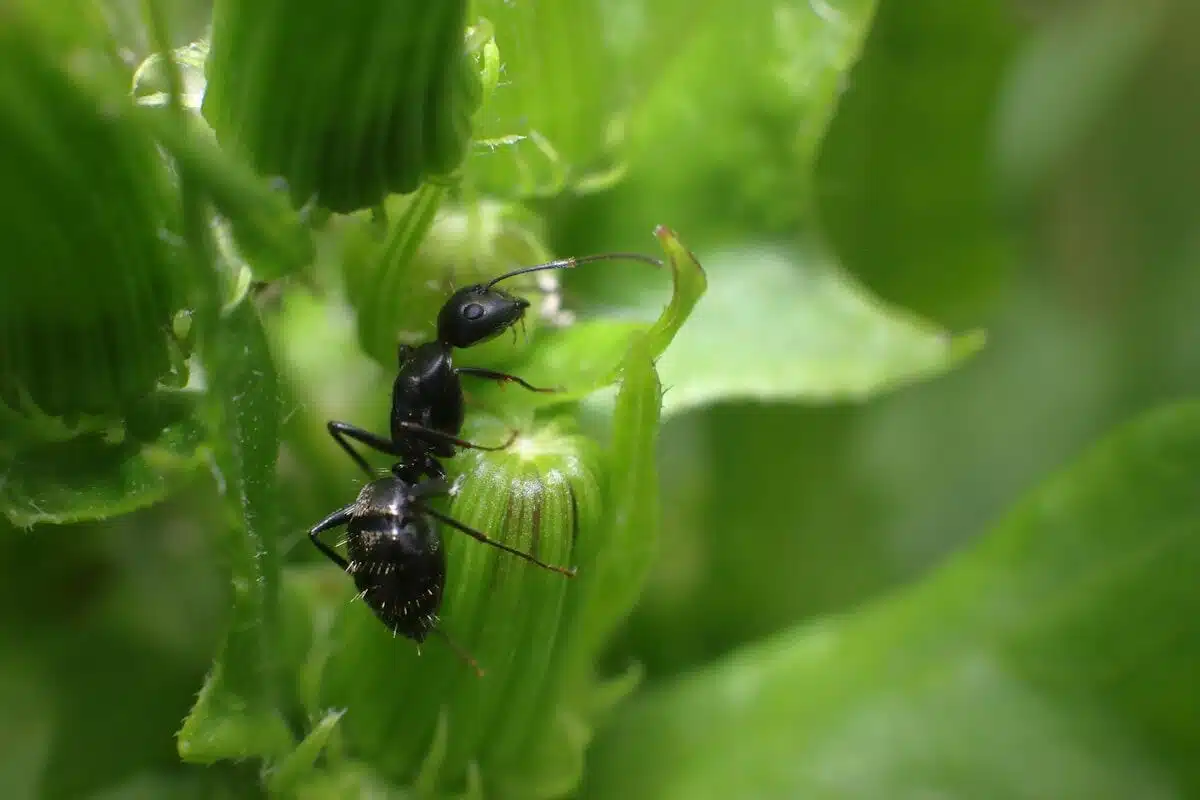
Large, black, and they excavate damp wood to nest in. Coarse sawdust with insect parts in it means a nest, and it means water damage first. Different treatment entirely.
Regional
Fire ants
Loose mounds in open turf, and they sting aggressively when disturbed. Bait works but the timing is specific, and mound drenches only kill the mound you can see.
Why spraying makes it last longer
Repellent sprays do exactly what the label says: ants avoid treated surfaces. Against a colony that’s already inside, that’s not helpful — it fragments the trails and pushes foraging into new routes, so the ants appear somewhere else instead of stopping.
Worse, spraying near bait ruins the bait. Workers won’t cross a treated surface to reach it, so the one thing that would have worked stops working. If you’ve laid bait, don’t spray anywhere near it, and clear away any residue from previous attempts.
Sugar or protein
Colonies switch preference through the season — protein when brood is being raised, sugar the rest of the time. A bait that sits untouched isn’t failing; it’s the wrong one for this month. Put out both and see which gets traffic.
Baiting properly
Six steps, and the discipline in step five is where most attempts fall over.
Follow the trail
Where does it come in? A gap at a pipe, a window frame, a slab join. That tells you where to place bait and what to seal later.
Clean the food source
Not the trail. Crumbs, spills, pet food, a sticky bin lid. Ants forage where food is; remove it and the bait becomes the best thing available.
Put out both bait types
Sugar and protein, side by side, near the trail rather than on it. Whichever gets traffic is the one to keep replenishing.
Leave the trail alone
Counter-intuitive and essential. That trail is the delivery route back to the colony. Wiping it down sends them looking for another way in.
Don’t spray anything
Not near the bait, not on the trail, not on the perimeter. Repellent residue stops workers reaching the bait and the whole approach fails.
Wait two to three weeks
Activity often increases first as more workers recruit to the bait. That’s the bait working, not failing.
Spray against bait
Where this stops being a DIY job
Carpenter ants with frass and soft wood behind it. The ants are the visible symptom; the water damage is the actual problem, and it’s in a structural element. That needs someone who will find the leak rather than treat the insects.
A colony you cannot locate after two weeks of baiting. Some nest in wall voids or under slabs where no amount of surface bait reaches them.
Fire ants where anyone in the household reacts badly to stings. Not a cost comparison.
Advertising disclosure: calls are routed to an independent local provider. We’re paid a referral fee for the call. You pay the provider, never us.
What a competent ant job looks like
Identifies
Names the species
Carpenter ants and odorous house ants need different work. A quote that doesn’t ask is a quote for a perimeter spray.
Baits
Doesn’t lead with spray
Anyone reaching for a repellent on an indoor trail is about to make it last longer.
Traces
Looks for the moisture
On carpenter ants especially. The nest is where the wood is wet.
Common questions
Why do ants keep coming back after I spray?
Because you’re killing foragers, which are about five percent of the colony. The queen keeps laying and new workers replace them within days.
What’s the best ant bait?
Whichever one they take. Colonies switch between sugar and protein through the season, so put both out and keep replenishing the one that gets traffic.
Should I clean the ant trail?
No, while you’re baiting. That trail is how workers carry bait back to the colony. Wipe it down and they find a different route in.
Are carpenter ants different?
Yes. They excavate damp wood to nest, so an infestation indoors is telling you about a water problem before it tells you about insects.
Frass in the house, or a colony you can’t reach?
Baiting properly, leaving the trail alone and clearing the food source will end most ant problems without anyone visiting. Carpenter ants in structural timber and colonies inside wall voids are the two that need someone else.
Call (720) 389-2293