
Home › Services › Tree Service
Tree Care Services
Sold as a programme of treatments. What mature trees mostly need is soil that works, structure that holds, and someone competent looking at them occasionally — and the third of those is the one nobody markets.
Advertising disclosure: calls are routed to an independent local provider. We’re paid a referral fee for the call. You pay the provider, never us.
The short answer
Most tree care programmes are fungicide and insecticide on a calendar. Healthy mature trees rarely need either. What they need is uncompacted soil with room for roots, mulch instead of turf over the root zone, and a structural inspection every few years to catch a failing union while it can still be reduced or braced. Ask what the programme includes beyond spraying — if the answer is nothing, it isn’t tree care.
Most programmes
A spray calendar
What trees need
Soil, structure, inspection
Root zone
Extends past the canopy
Best single change
Mulch instead of turf
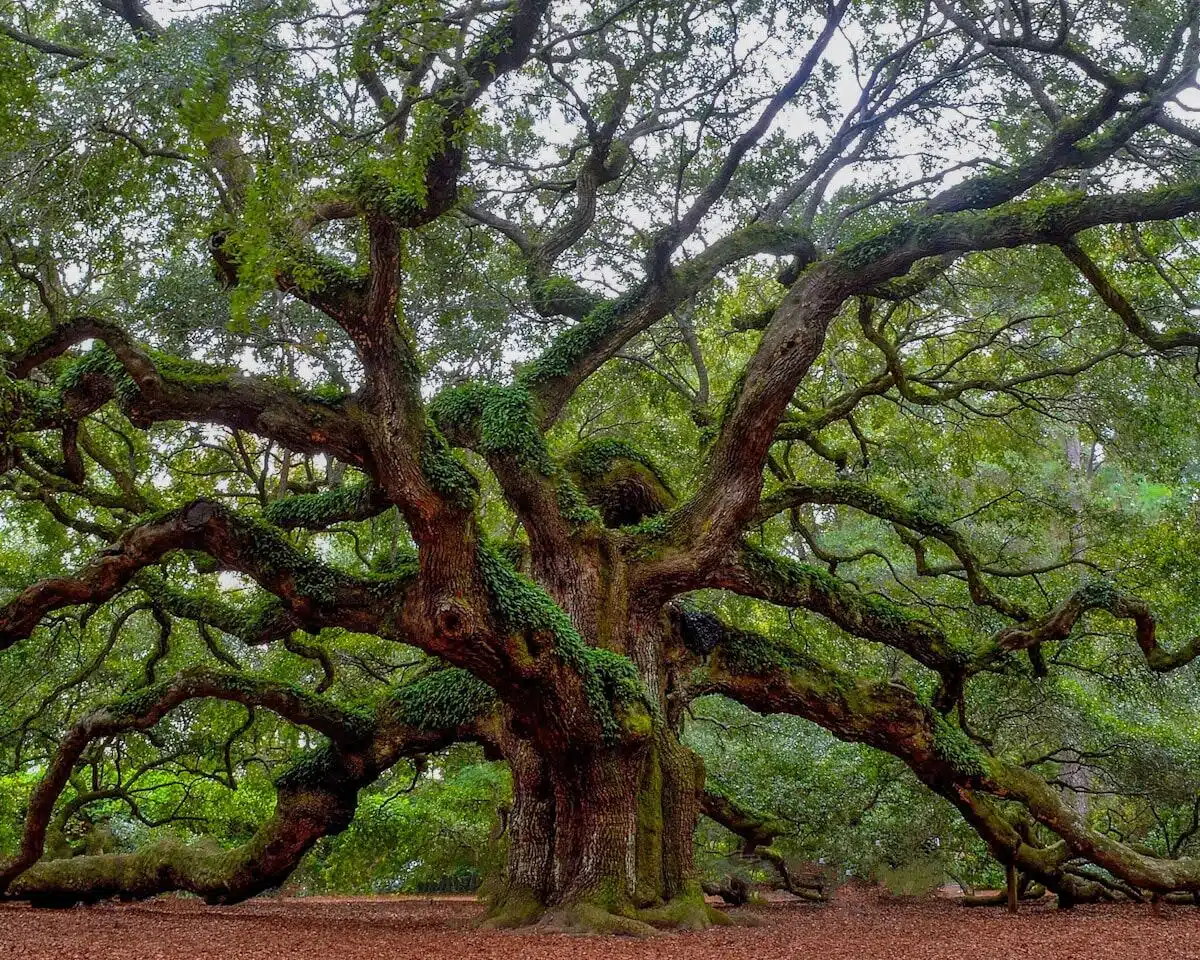
What’s actually wrong with the tree?
Four causes of decline, ranked by how often they’re the real answer.
Most common
Soil and roots
Compaction from mowers and foot traffic, turf competing for water at the root zone, or soil piled over the flare during landscaping. This is the cause far more often than anything a spray addresses.
Common
Water, too little or too much
Mature trees show drought stress a season or two after the drought. Poor drainage kills roots outright. Neither is fixed with a treatment programme.
Structural
A failing union
Included bark at a major fork. Looks solid for decades and is a crack waiting for a storm. Reducible or braceable if caught, not otherwise.
Least common
Pest or disease
Real, and worth treating when correctly identified. But it’s usually secondary — a stressed tree gets colonised, not the other way round.
The mulch ring, and why it’s the best value in tree care
Turf right up to the trunk is the default in most gardens and it’s poor for the tree. Grass competes directly for water and nutrients in the top few inches, which is exactly where a tree’s feeder roots are. Mowers hit the trunk. Strimmers girdle bark.
Replacing turf with a wide, shallow mulch ring — out toward the drip line, a few inches deep, and stopping short of the trunk itself — removes the competition, moderates soil temperature, holds moisture and stops mechanical damage. It costs almost nothing and it does more for a mature tree than any annual treatment.
The one way to get it wrong is piling mulch against the trunk. That holds moisture against bark, invites decay and rodents, and is the single most common mistake in landscape maintenance.
What actually helps a mature tree
In order of impact. Note that none of the first four are treatments.
Mulch, don’t mow
A wide shallow ring out toward the drip line, clear of the trunk. Removes competition and mechanical damage in one change.
Check the flare is visible
If soil or mulch has buried where the trunk widens, expose it. Buried flares rot slowly and kill trees over years.
Keep traffic off the root zone
Roots extend well past the canopy edge. Parking, storage and construction over them compacts soil the tree can’t recover from.
Water deeply in drought
Slowly, out at the drip line rather than the trunk, and infrequently. Mature trees show drought stress a year or two late.
Get the structure looked at
Every few years on a large tree near a building. A failing union caught early can be reduced or braced; caught late it’s a removal.
Treat only what’s identified
A named pest or pathogen, diagnosed. Calendar spraying on a healthy tree is a subscription.
What a programme should include
Where this stops being a DIY job
Any structural concern on a large tree near a building. Included bark, a visible crack, a cavity, or fresh lean. Whether it can be reduced, braced or has to come out is a judgement that needs someone qualified looking at it.
Anything requiring work above ladder height. Deadwooding a mature canopy is climbing work.
A tree declining near a power line. The utility handles vegetation around their conductors, and that call comes first.
What a real arborist looks at first
Ground
Starts at the roots
Flare visible, soil compacted, turf competing. Most decline is diagnosed below head height.
Structure
Checks the unions
Attachment angles and included bark before anything cosmetic.
Restraint
Recommends less than expected
Anyone proposing an annual spray programme for a healthy tree is selling a schedule.
Common questions
What does a tree care programme include?
Usually a spray calendar. What mature trees actually need is uncompacted soil, mulch instead of turf over the root zone, and periodic structural inspection — ask whether those are in it.
Why is my mature tree declining?
Most often soil and roots — compaction, turf competition, or soil piled over the flare. Pest and disease are usually secondary to a tree already under stress.
Is deep-root fertilisation worth it?
Rarely. Most landscape soils aren’t short of what gets injected, and a soil test costs less than a season of treatments.
How often should a large tree be inspected?
Every few years for a mature tree near a building, and after any significant storm. A failing union caught early can be managed; caught late it’s a removal.
Mature tree in decline, or a union you’re unsure about?
Mulching, keeping traffic off the root zone and exposing a buried flare are the highest-value things you can do and they’re all yours. Structural assessment on a large tree near a building is the part genuinely worth paying for.
Call (804) 488 3350