
Tree removal service
Tree coming down? Get tree removal on it.
Dead, leaning, split, or simply too close to the house. Describe what’s under the tree and you’ll be connected with a tree removal crew covering your area.
Call (877) 360-4657
Advertising disclosure: calls are routed to an independent local provider. We’re paid a referral fee for the call. You pay the provider, never us.
What happens when you call
You describe the tree and what surrounds it. You’re connected with a tree removal crew covering your area. Ask for a site visit and a written quote before the first cut.
Dead & dying trees
Hollow trunks, bark shedding
Leaning trees
Soil lifting at the root plate
Large tree removal
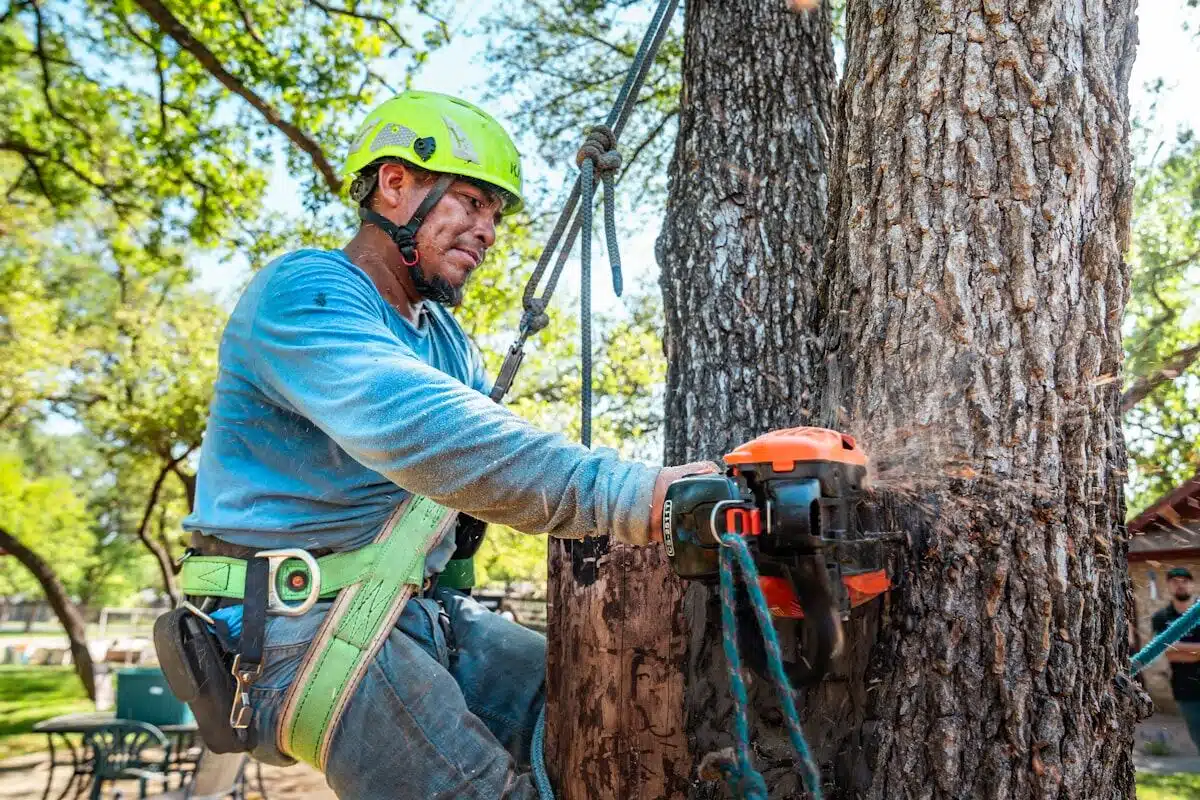
Climbed and lowered in sections
Emergency removal
Down on a roof, drive or fence
Your call
What’s around it — Rough height, and what sits inside the distance it could fall — house, garage, fence, drive, the neighbor’s yard. That is what routes the job to the right crew.
Site visit
Method, then number — Felled in one piece where there’s open ground, climbed and dismantled in sections where there isn’t, lifted out where even roping isn’t safe. Three methods, three prices.
The quote
Three lines — Removal, stump, haul-away. Ask for them separately — the stump is nearly always its own line and it is a common surprise.
Removal day
And the site after — Sections roped clear, trunk cut down to length, brush chipped. Settle beforehand whether logs are stacked, chipped and left, or hauled off, and what the lawn will look like.
Tree work a removal crew can take on
Removal
Tree removal
One tree or a row of them, in open yard or a few feet off the siding, taken down whole or dismantled from the top.
Dead or dying
Dead tree removal
Bark sloughing off, no leaf in the canopy, fungal brackets at the base, a trunk that sounds hollow. Decayed wood is why these get climbed differently.
Leaning
Leaning tree removal
New lean, fresh soil heaving or cracking on the far side, roots visibly lifting. This is the one worth describing on the phone today.
Large trees
Large tree removal
Mature oaks, pines and cottonwoods over roofs, drives and lines of sight. Rigging work, not a felling job.
Urgent
Emergency tree removal
A trunk on the roof, a crown across the drive, a tree that shifted in the last storm and is now holding on something.
After
Stump grinding and debris
Stump taken below grade, chips and logs dealt with. Ask for it quoted alongside the removal rather than after it.
Waiting makes it worse
A failing tree does not hold still. Decay works outward from a wound or a union, and the shell of sound wood holding the weight up gets thinner every season while the crown above it stays exactly as heavy. A dead trunk gets more brittle, not more stable, and limbs over a roof or a parked car come down on their own timetable rather than yours. Where the soil is lifting or splitting opposite a lean, the root plate is already moving, and nothing puts it back.
Access is the other half, and it only closes. Before the tree fails, a crew can choose the method, rig the sections and lower them where they want them. Once it has gone over into a roof, a fence or a drive, the work becomes a recovery: tension in the limbs, weight resting on something that has to be protected, and often the drive blocked by the tree the truck needs to reach. Storm season concentrates all of it into the same week, when every crew in the area is working the same list. A removal arranged ahead of that is the same tree with far less disruption.
One thing that is not a job for a tree crew: if the tree, a limb or the debris is touching or hanging near a power line, contact your electric utility and keep everyone well back from the tree and the ground around it. Do not cut it and do not let anyone else cut it.
Common questions
What does tree removal cost?
Access sets it before size does. Open ground with room for a truck and chipper is simpler work; a tree a few feet off the house that has to be climbed and lowered piece by piece is more involved, even if it is smaller.
How soon can it come down?
Say on the call whether it is leaning, dead, or already resting on something. Ask what they have open in your area and where a tree like that sits in the order.
Is the stump included?
Usually not. Removal conventionally leaves a stump at ground level, so get grinding and haul-away quoted as their own lines at the same time rather than afterward.
What should I ask before they start?
Ask to see proof of liability and workers’ comp cover. Ask whether it is a straight fell or a sectional dismantle. Ask who is responsible if a section lands on the fence, the drive or the lawn.
Describe what the tree is doing
Dead, leaning, split after a storm, or too big to be standing where it is — one call connects you with a tree removal crew covering your area.
Call (877) 720-7431