
Home › Services › Pest Control
Termite Treatment
Three quite different insects share the name, and the treatment for one does nothing for another. Identifying which you have is the entire first step.
Advertising disclosure: calls are routed to an independent local provider. We’re paid a referral fee for the call. You pay the provider, never us.
The short answer
Subterranean termites live in soil and reach wood through mud tubes — treated with a soil barrier or a bait system. Drywood termites live entirely inside the timber and need localised or whole-structure treatment instead. If you’re seeing winged swarmers inside the house, that isn’t a colony arriving; it’s an established colony old enough to produce reproductives, which takes years.
Start with what you can see
The evidence tells you the species, and the species decides the whole treatment.
Subterranean
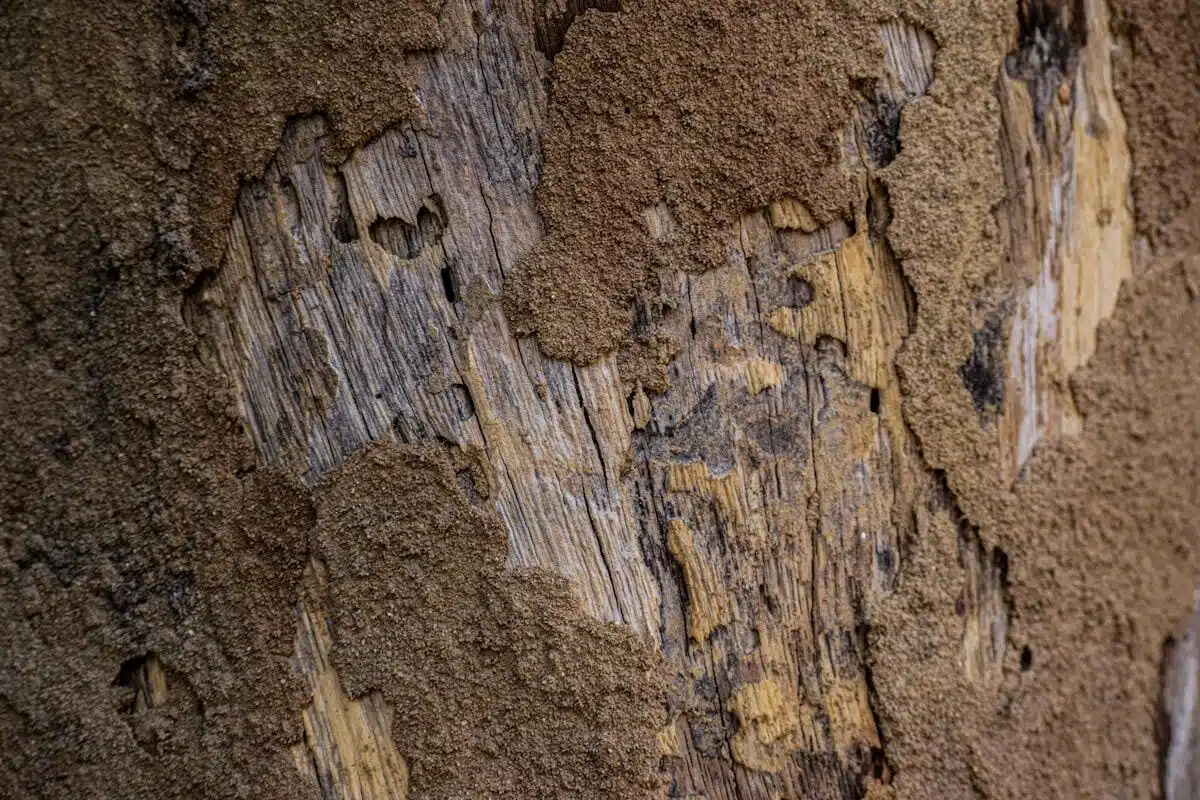
Soil-dwelling, mud tubes
Drywood
Lives inside the timber
Swarmers indoors
Established colony, years old
Treatment split
Barrier or bait
Which one do you have?
The evidence differs, and so does everything downstream of it.
Most common
Subterranean
Pencil-width mud tubes running up a foundation, pier or wall. They need contact with soil moisture, so the tubes are how they bridge to the timber. Treated with a soil barrier or bait stations.
Different job
Drywood
No soil contact and no tubes. Look for small hard faecal pellets, gritty and roughly uniform, dropping from tiny kick-out holes. Barrier treatment does nothing — it needs local or whole-structure work.
A symptom
Dampwood
Only attacks timber that is already wet. Finding them means you have a water problem, and fixing the water is most of the treatment.
Not termites
Carpenter ants
Also excavate wood, also leave debris — but their frass is fibrous shavings with insect parts in it, not uniform pellets. Completely different treatment.
Bait system or liquid barrier?
For subterranean termites there are two approaches and they work quite differently.
A liquid barrier is applied to the soil around and beneath the structure, creating a treated zone. It acts fast and it’s a physical solution to a physical route.
Bait stations are placed in the soil at intervals and rely on foraging termites finding them and carrying the active back to the colony. Slower — months rather than days — and aimed at eliminating the colony rather than blocking the path.
Both are legitimate. What matters is that you’re told which one you’re buying, why it suits this property, and what the monitoring and renewal arrangement is afterwards, because both approaches assume ongoing inspection.
What to establish before treatment
Five things, and the last one catches people out at sale time.
Get the species identified
Subterranean and drywood need entirely different work. Ask what evidence they found and where.
Ask barrier or bait, and why
Both are valid. A company that can explain the choice for your soil, slab and layout is thinking about your property.
Ask about the moisture
Subterranean termites need it and dampwood require it. Any water problem found is part of the fix, not a separate matter.
Understand the monitoring
Neither approach is fit-and-forget. Establish what inspection is included, for how long, and what happens after.
Ask what documentation you get
Property sales in many places require a termite inspection report. If treatment is happening anyway, get the paperwork that will be asked for later.
Telling them apart
Where this stops being a DIY job
All of it, honestly. This is one of the few pest problems with no meaningful homeowner version. Subterranean treatment means trenching and treating soil around a structure, or installing a monitored bait system. Drywood treatment can mean whole-structure fumigation. Neither is a retail product.
Any structural timber that sounds hollow or gives under pressure. At that point the question is what the damage has done to load-bearing members, which is a structural engineer’s call rather than a pest one.
Buying or selling. Many jurisdictions require a specific inspection report, and an untreated finding can stop a sale. That’s a documented inspection, not an opinion.
Advertising disclosure: calls are routed to an independent local provider. We’re paid a referral fee for the call. You pay the provider, never us.
What a proper termite inspection covers
Identifies
Names the species
With the evidence that led there. Subterranean and drywood are different jobs and guessing wastes a treatment.
Traces
Finds the moisture
Leaks, grade against siding, poor drainage. Subterranean termites need it and it’s often the reason they’re there.
Documents
Gives you the report
In the form a lender or buyer will later ask for.
Common questions
How do I know if I have termites?
Mud tubes running up a foundation mean subterranean; small hard uniform pellets below tiny holes mean drywood. Winged swarmers indoors mean a colony that has been established for years.
What’s the difference between bait stations and a liquid barrier?
A barrier treats the soil to block the route and works quickly. Bait stations rely on foraging termites carrying the active back to the colony, which takes months but targets the colony itself.
Are termites the same as carpenter ants?
No. Termites eat wood; carpenter ants excavate it to nest. Termite droppings are hard uniform pellets, carpenter ant frass is fibrous shavings mixed with insect parts.
Do I need a termite inspection to sell a house?
In many places, yes — and it’s a specific document rather than a general opinion. If treatment is happening anyway, get the report you’ll be asked for later.
Mud tubes, pellets, or wings on the windowsill?
Identifying which of three species you have, and finding the moisture that invited them, is genuinely useful work you can do before anyone quotes. The treatment itself has no homeowner version, and structural damage is a different profession again.
Call 484-309-5608