
Home › Services › Wildlife Removal
Bird Removal
The legal position matters more here than the practical one. Most birds, their nests and their eggs are protected, and an active nest changes what anyone is permitted to do — including you.
Advertising disclosure: calls are routed to an independent local provider. We’re paid a referral fee for the call. You pay the provider, never us.
The short answer
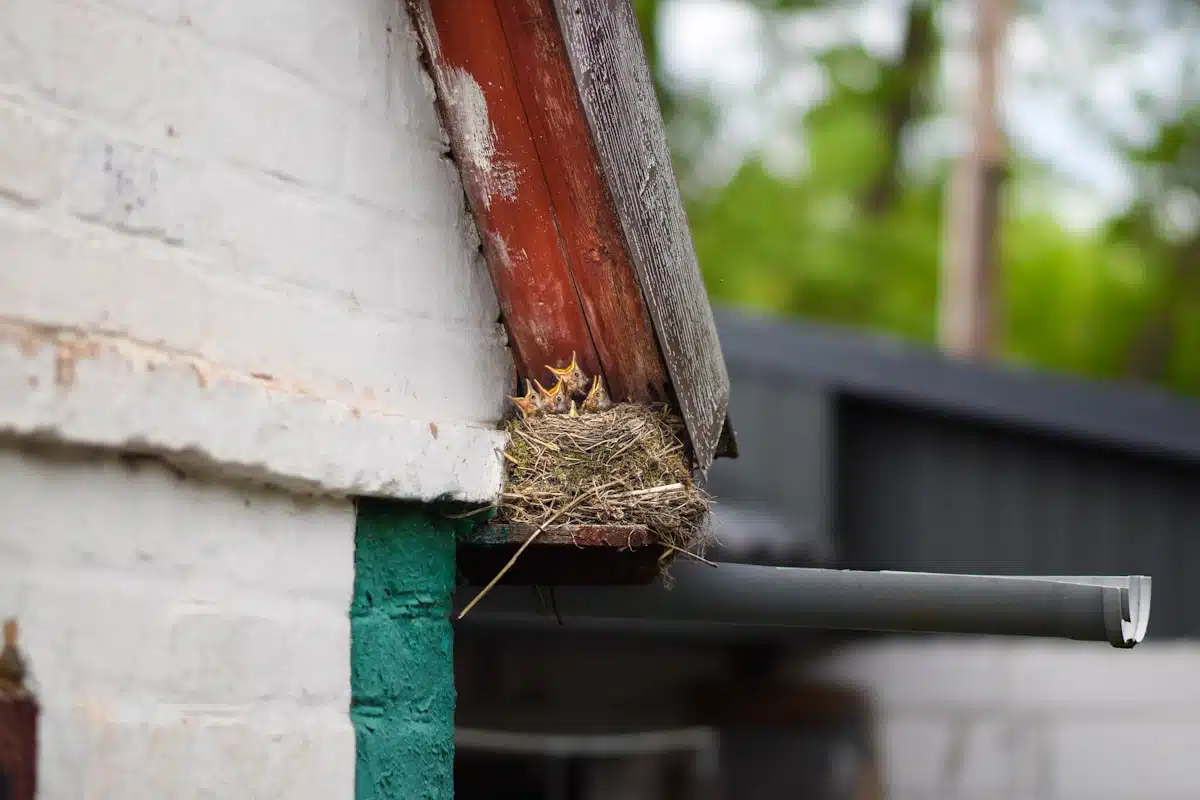
In the United States the Migratory Bird Treaty Act protects the great majority of native species, their nests and their eggs. Three common birds are not covered: house sparrows, European starlings and feral pigeons. For everything else an active nest with eggs or young generally cannot be removed, and the practical answer is exclusion after fledging rather than removal now.
Protected
Most native species
Not protected
Sparrow, starling, pigeon
Active nest
Usually cannot be removed
Real fix
Exclusion after fledging
What’s the actual problem?
Four situations, and the legal position differs across them.
Common
Nesting in a vent
Dryer and bathroom vents are favoured sites and a nest blocks the duct, which is a fire and moisture risk. Fixable permanently with a proper vent cover — after fledging, if active.
Structural
Roosting under solar panels or eaves
Droppings, nesting material and noise. Exclusion mesh solves it, and it’s usually work at height.
Health
Accumulated droppings in an enclosed space
Lofts, disused chimneys, roof voids. Dried droppings shouldn’t be dry-swept or vacuumed in a confined area — there’s a protocol and equipment for it.
Not protected
Sparrows, starlings, pigeons
These three can be managed without the same restrictions. Worth identifying properly rather than assuming, because getting it wrong is a legal matter.
Why exclusion is the whole answer
Birds return to successful nest sites, and where a site is available something will use it. Removing a nest without closing the opening means the same vent or eave gap is occupied again within weeks — often by the same pair.
Which makes timing the practical constraint. Where a nest is active and protected, the sequence is: wait for fledging, confirm the nest is empty, then exclude permanently. A few weeks of inconvenience against a permanent fix, and it’s the only version that’s both lawful and lasting.
The vent problem specifically
A nest in a dryer vent restricts airflow, which is a genuine fire risk, and it traps moisture in the duct. Vent covers with proper flaps and mesh are inexpensive and they permanently solve it. Standard vent hoods without a cover are effectively an invitation.
Doing it in the right order
Identify, wait if needed, then exclude permanently.
Identify the species
Protected, or one of the three that aren’t. This determines what’s permitted before anything else.
Check whether the nest is active
Eggs or young present. If so, exclusion waits until after fledging — usually a few weeks.
Plan the exclusion now
Vent covers, mesh, netting. Have the material ready so the gap closes the day it’s empty.
Fit proper vent covers
With flaps and mesh. The single most effective permanent fix for the most common problem.
Mesh the eave and soffit gaps
Stainless mesh behind ventilation openings keeps airflow and stops access.
Don’t dry-sweep droppings
In any enclosed space. That’s a respiratory hazard needing proper equipment.
What you can and can’t do
Where this stops being a DIY job
Accumulated droppings in a loft, chimney or roof void. Dried material shouldn’t be dry-swept or vacuumed in a confined space. There’s an established protocol and it’s the part most worth handing over.
Any active nest of a protected species. Removing it may be an offence. The answer is timing rather than technique.
Exclusion work at height. Solar panels, eaves and roofline netting are ladder work with both hands occupied.
Advertising disclosure: calls are routed to an independent local provider. We’re paid a referral fee for the call. You pay the provider, never us.
What a competent operator does
Identifies
The species, first
Because the legal position follows from it and it decides the whole approach.
Times it
Waits for fledging
Anyone offering to remove an active protected nest is offering you a problem.
Excludes
Closes the site permanently
Removal without exclusion means the same gap is occupied within weeks.
Common questions
Is it legal to remove a bird’s nest?
In the United States most native species, nests and eggs are protected under the Migratory Bird Treaty Act. House sparrows, European starlings and feral pigeons are the common exceptions.
What about birds nesting in my dryer vent?
If the nest is active and the species protected, wait for fledging, then fit a proper vent cover with flaps and mesh. The nest blocks airflow, which is a genuine fire risk.
How do I stop birds nesting under solar panels?
Exclusion mesh around the perimeter, fitted when nothing is nesting. It’s work at height, which is usually why it gets contracted out.
Are bird droppings dangerous?
Accumulations in enclosed spaces are a respiratory hazard, and dried material shouldn’t be dry-swept or vacuumed. That clean-up needs proper protection.
Droppings in a roof void, or an active protected nest?
Identifying the species, checking whether a nest is active and having exclusion material ready for the day it empties is all yours, and the vent cover is the highest-value fix there is. Clean-up in enclosed spaces and exclusion at height are where this stops.
Call (855)-321-3088