
Downspouts & Drainage
A clean, correctly pitched gutter that empties beside the wall is a system delivering water to your foundation with great efficiency. The last few feet matter more than the rest.
Advertising disclosure: calls are routed to an independent local provider. We’re paid a referral fee for the call. You pay the provider, never us.
The short answer
Most damp and foundation problems blamed on gutters are actually a discharge problem. Water needs to leave several feet from the wall, onto ground that slopes away — not into a soakaway right beside the footing, and not onto a flowerbed that holds it. Extensions are cheap, easy to fit yourself, and fix more foundation water than any other single change.
Discharge distance
Several feet, minimum
Ground slope
Away from the wall
Count
Follows roof area
Corrugated extensions
Hold water and breed mosquitoes
Where’s the water going?
Four discharge situations, in descending order of how much trouble they cause.
Fix this
Straight down beside the wall
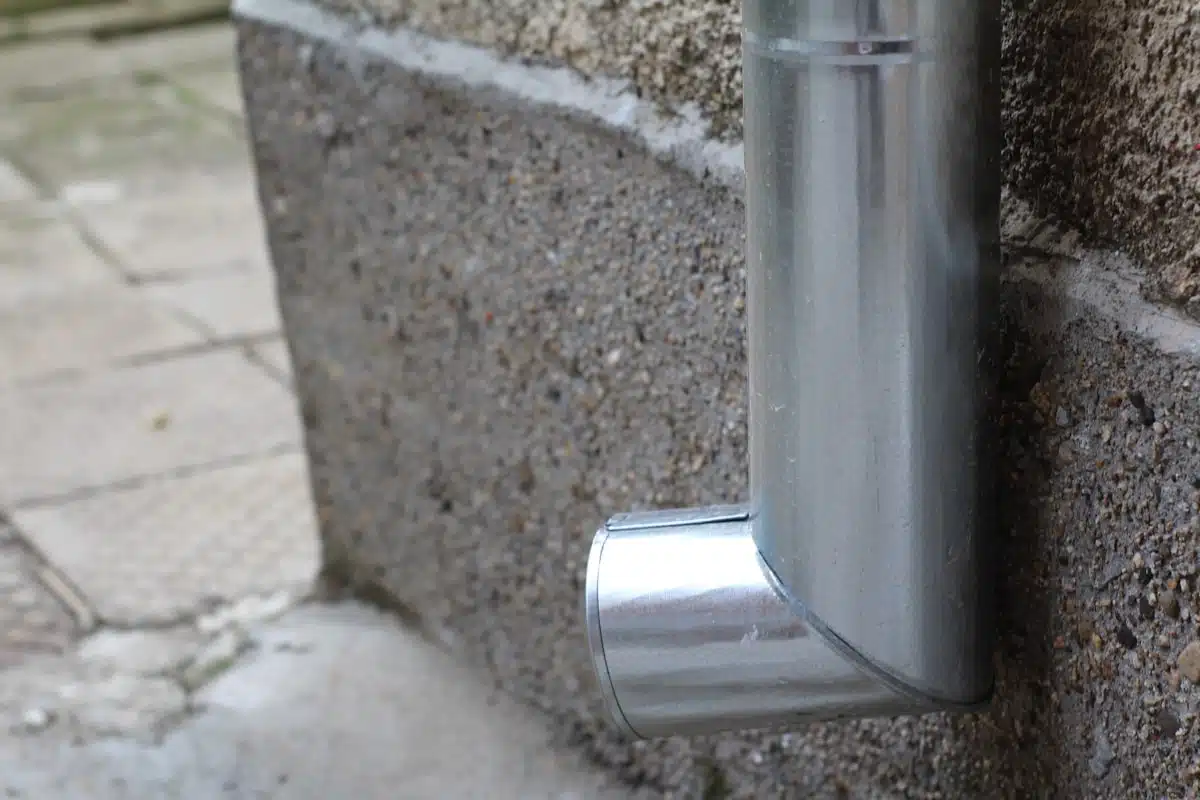
No extension, discharging at the base of the downspout. Every storm delivers the roof’s water directly to the foundation. Cheapest and highest-value fix on this page.
Fix this
Into ground that slopes back
An extension, but discharging onto ground falling toward the house. The extension is doing nothing except moving the problem four feet.
Check it
Into an underground drain
Fine when clear and a hidden failure when not. They silt up slowly and give no warning until water backs up at the top.
Correct
Several feet out, sloping away
Onto ground that carries water off, or into a drain that’s been checked. This is what you’re aiming for.
Count and capacity
Downspouts are where systems are most often under-provisioned. A long run of heavy roof feeding a single outlet will overflow in a downpour regardless of channel size or how clean it is, because the water can’t leave fast enough.
The number follows from roof area and rainfall intensity, and valleys or corners that concentrate flow may justify their own. If your gutters only overflow in heavy rain and are otherwise clean and correctly pitched, this is almost always the reason.
The extension that becomes a problem
Corrugated flexible extensions hold water in every ridge. That standing water breeds mosquitoes, and in freezing climates it expands and splits the pipe. Smooth rigid extensions cost slightly more and do the job without either problem.
Fixing the discharge yourself
Ground-level work, no ladder, and it addresses more foundation water than anything else here.
Watch during a storm
Where does water actually land and where does it go? Two minutes in the rain tells you more than any inspection.
Fit rigid extensions
Several feet from the wall, smooth-walled rather than corrugated. They clip on in minutes and cost very little.
Check the ground fall
The soil should slope away from the house. Where it doesn’t, extend further or regrade — an extension onto ground that slopes back achieves nothing.
Test any underground run
Hose into it and watch. If it backs up, it’s silted and needs rodding or jetting.
Keep the outlet clear
The strainer at the top of the downspout is where blockages start. Clearing it is part of any gutter clean.
Common discharge faults
Where this stops being a DIY job
A blocked underground drain. Beyond what a hose reaches. Rodding or jetting needs equipment, and forcing a blockage the wrong way can push it into a section that’s harder to reach.
Water already showing inside — damp on internal walls, water in a basement or crawl space. Fix the discharge, certainly, but that symptom needs looking at properly rather than assuming an extension will resolve it.
Adding downspouts. Cutting new outlets into an existing run is gutter work at height and needs to be positioned correctly, not just added where it’s convenient.
Advertising disclosure: calls are routed to an independent local provider. We’re paid a referral fee for the call. You pay the provider, never us.
What a proper drainage assessment covers
Traces
Follows the water
From outlet to discharge to where it ends up. Not just the gutter.
Tests
Checks the underground run
Silted drains are invisible until they back up.
Counts
Sizes the outlets
Because storm-only overflow is nearly always too few downspouts.
Common questions
How far should a downspout discharge from the house?
Several feet at minimum, onto ground that slopes away. Discharging at the base of the wall delivers the whole roof’s water straight to the foundation.
Are flexible downspout extensions any good?
Corrugated ones hold water in every ridge, which breeds mosquitoes and splits in freezing weather. Smooth rigid extensions cost a little more and avoid both.
How many downspouts do I need?
It follows from roof area and rainfall rather than run length. If clean, correctly pitched gutters still overflow in heavy rain, too few downspouts is nearly always the reason.
Why is water pooling next to my foundation?
Most often the downspout discharges too close to the wall, or onto ground that slopes back toward the house. Both are cheap to fix and account for a lot of damp blamed on gutters.
Drain backing up, or damp showing inside?
Extensions are cheap, fit in minutes at ground level, and fix more foundation water than anything else on this page — that part is genuinely yours. A silted underground drain, new outlets, or damp already showing indoors are where someone else should look.
Call (877) 360-4657