
Advertising disclosure: calls are routed to an independent local provider. We’re paid a referral fee for the call. You pay the provider, never us.
The short answer
Two to three feet apart is the working range, and closer where snow and ice load is a factor. Beyond about three feet a full gutter has enough weight between fixings to pull the channel out of line, and once it dips it holds water, which adds more weight. That’s the failure loop, and spacing is what prevents it — not the hanger type.
Standard spacing
Two to three feet
Under snow load
Closer, toward two
Obsolete
Spike and ferrule
Prerequisite
Sound fascia
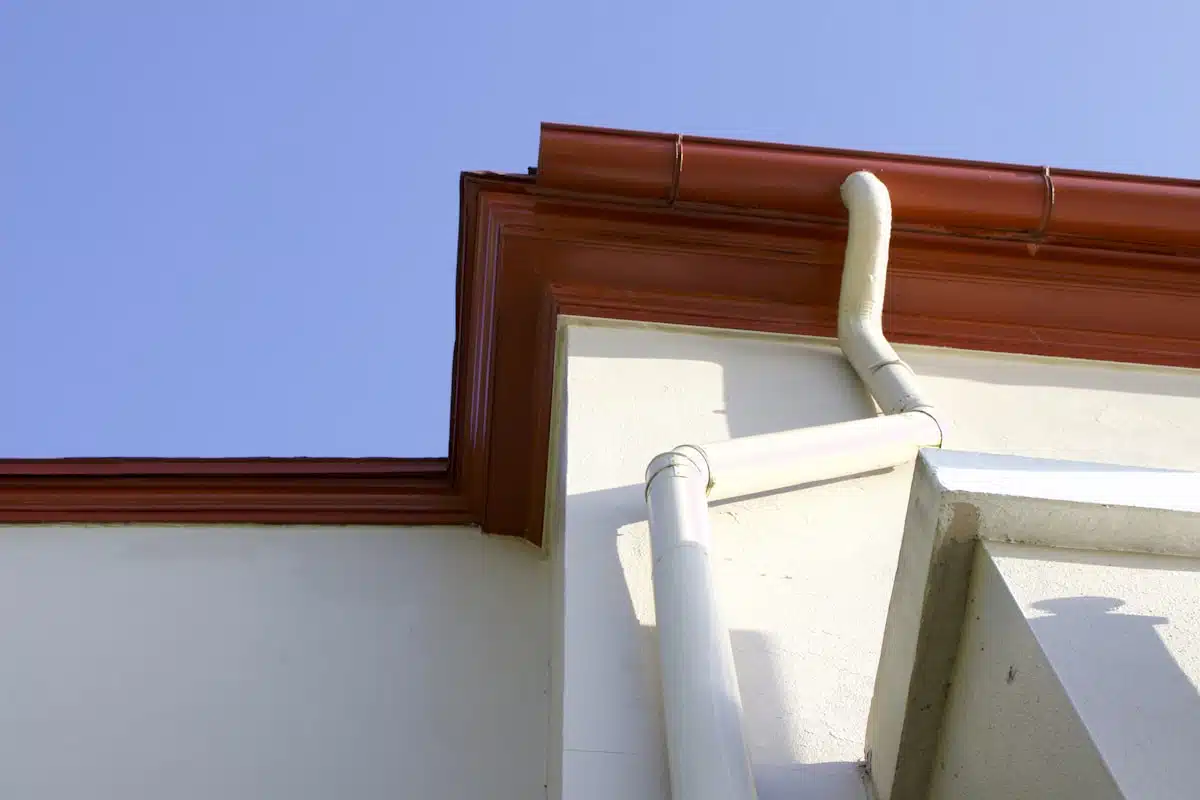
Three types
One current, one situational, one you should be replacing.
Current standard
Hidden hangers
A bracket that clips inside the channel and screws through the back into the fascia. Nothing visible from the ground, good pull-out resistance, and the screw can be re-driven into fresh timber if needed.
Situational
Strap hangers
Fixed to the roof deck under the shingles rather than to fascia. Used where there’s no fascia board to fix to. Requires lifting shingles, which brings the roof warranty question with it.
Replace these
Spike and ferrule
A long nail through a spacer sleeve. Standard for decades, and they work loose over freeze-thaw cycles because a nail has almost no withdrawal resistance. If yours are spikes, that’s usually why the run is dipping.
Why spikes fail and screws don’t
A nail resists pull-out by friction alone. Timber expands and contracts with moisture, and each cycle loosens it fractionally. Add the leverage of a gutter full of water and it works its way out over a few winters — which is why you see the classic symptom of a spike head standing proud of the fascia.
A screw threads into the wood and resists withdrawal mechanically. It doesn’t back out with seasonal movement. Replacing spikes with hidden hangers is one of the more satisfying small repairs available, and it’s the fix for most sagging runs on otherwise sound gutter.
The prerequisite nobody mentions
All of this assumes the fascia is solid. A screw in soft timber holds no better than a nail did, and re-fixing a sagging gutter into rotten wood buys you one season. Before replacing hangers, press the fascia where it’s stained. Any give and the carpentry comes first.
Replacing spikes with hidden hangers
Single storey only, and check the fascia before you buy anything.
Test the fascia first
Press where it’s stained or discoloured. Any softness means the timber is the job, not the hangers.
Count the run and buy accordingly
One hanger every two feet, plus one within a few inches of each end and each seam. Buying too few is the usual mistake.
Pull the spikes with a claw
Slowly, supporting the gutter as you go. They often come out with a chunk of soft fascia attached, which tells you something.
Fix into solid timber
Not into the old spike holes, which are enlarged and useless. Offset an inch or two either side.
Keep the fall as you go
String line from the high end to the outlet, roughly a quarter-inch per ten feet. Set each hanger to the line rather than to the old position.
Check with water
Hose from the far end. Any standing puddle means a hanger sitting too high, and it’s far easier to adjust now.
Spacing by condition
Where this stops being a DIY job
Anything above single storey. Working along a full run at height with both hands occupied, holding a gutter level while driving screws.
Soft or rotten fascia. New hangers in bad timber pull out, sometimes taking the board with them. Carpentry comes first and it’s a different trade.
Strap hangers under shingles. Lifting the first course puts you into roof warranty territory, which is worth checking before anyone starts.
Advertising disclosure: calls are routed to an independent local provider. We’re paid a referral fee for the call. You pay the provider, never us.
What a good installer specifies
Number
States the spacing
In inches, in the quote. A figure you can count afterwards.
Type
Uses hidden hangers
Anyone still fitting spike and ferrule on new work is decades behind.
Checks
Tests the fascia
Before quoting. Soft timber changes the job and the price.
Common questions
How far apart should gutter hangers be?
Two to three feet, and closer to two where snow and ice load matters. Beyond three feet a full gutter has enough weight between fixings to pull out of line.
Why is my gutter sagging?
Usually hangers pulled loose or spaced too widely to begin with. If yours are spike-and-ferrule, the nails have worked out over freeze-thaw cycles.
Are hidden hangers better than spikes?
Yes. A screw resists withdrawal mechanically; a nail resists only by friction and loosens with seasonal timber movement.
Can I replace gutter hangers myself?
On a single storey with sound fascia, yes — it’s one of the more satisfying small repairs. Soft timber or a second storey are where it stops.
Sagging above single storey, or timber that gives?
Swapping spikes for hidden hangers on a ground-floor run with sound fascia is genuinely a good afternoon’s work. Height and soft timber are the two that make it someone else’s job.
Call (877) 360-4657