
Home › Services › Pest Control
Bee Removal
Four quite different insects get called bees, and for three of them killing the colony is the wrong answer — sometimes an expensive one. Work out which you have before anyone quotes you for treatment.
Advertising disclosure: calls are routed to an independent local provider. We’re paid a referral fee for the call. You pay the provider, never us.
In short
Honeybees should be collected by a beekeeper, often at no charge, because the colony has value to them. Bumblebees are few in number, poor defenders and gone by autumn. Solitary ground bees cannot meaningfully sting and disappear within weeks. Carpenter bees are the only one of the four that is a structural question — and even then the damage is slow.
Honeybees
Call a beekeeper, often free
Bumblebees
Small colony, gone by autumn
Ground bees
No colony, cannot sting you
Carpenter bees
The only structural one
Which of the four is it?
Four quite different insects share the name. For three of them, killing the colony is the wrong answer.
Call a beekeeper
Honeybees
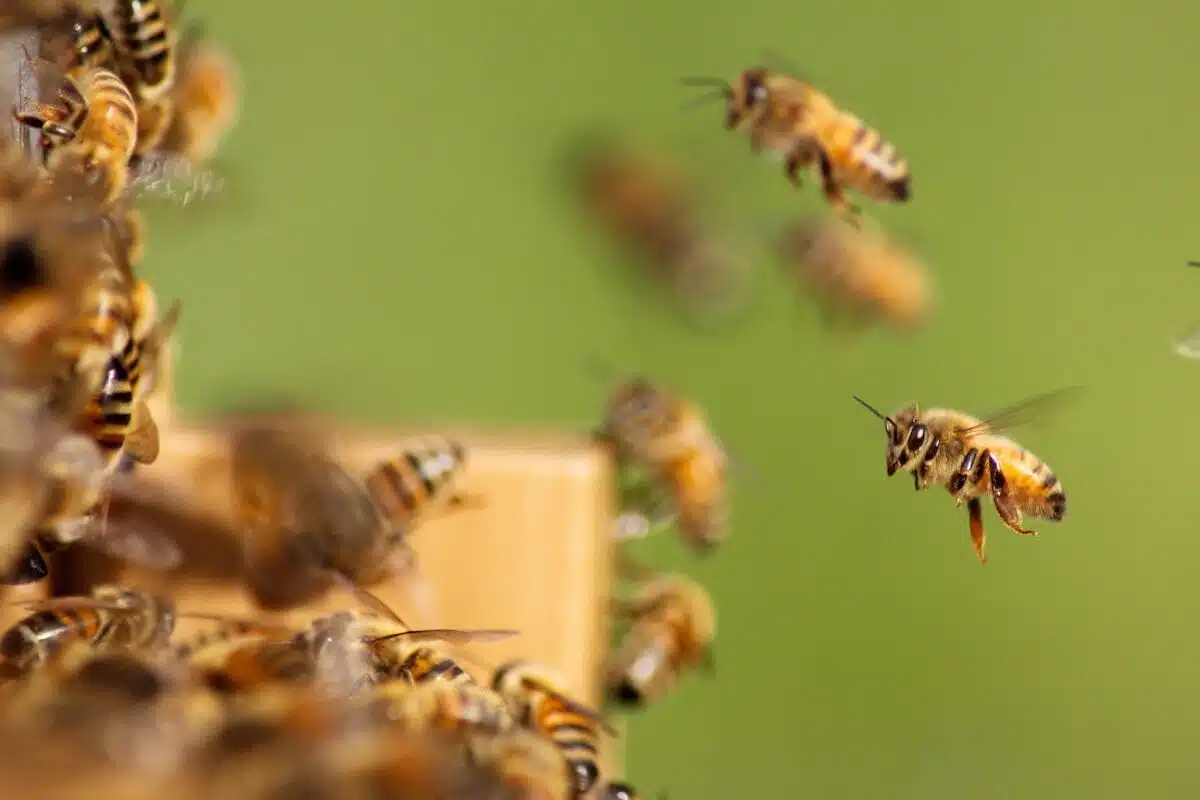
Amber and brown, slim, arriving in numbers. A swarm hanging in a ball is temporary and unusually docile. A colony that has moved into a cavity is a different job entirely.
Leave them
Bumblebees
Large, round, furry. A few hundred at most, often in an old rodent burrow or under a shed. The whole colony dies out at season’s end and the site is never reused.
Leave them
Ground bees
Dozens of pencil-width holes with small soil volcanoes in a dry patch in spring. No colony, nothing to defend, and the males that hover cannot sting at all.
Structural
Carpenter bees
Bumblebee-shaped with a shiny hairless black abdomen. Bore a clean round hole into unpainted softwood and tunnel along the grain. The only one that’s a building question.
Telling them apart
Honeybees are amber and brown, slim, and arrive in numbers. A swarm hanging in a ball on a branch or fence is temporary — a colony in transit, usually gone within a day or two, and unusually docile because they have no home to defend. A colony that has moved into a wall, chimney or soffit is a different matter and needs proper removal.
Bumblebees are large, round and furry, and nest in small numbers — often in an old rodent burrow, under a shed, or in insulation. A nest is a few hundred at most and the whole thing dies out at the end of the season, leaving only new queens to overwinter elsewhere. They do not reuse the site.
Solitary ground bees show up as dozens of pencil-width holes, each with a small volcano of soil, in a dry bare patch in spring. Every hole is one female with her own nest. There is no colony, no shared hive to defend, and the males that hover around cannot sting at all. They are gone within weeks.
Carpenter bees look like bumblebees with a shiny, hairless black abdomen. They bore a clean round hole roughly the diameter of a finger into unpainted softwood — fascia, deck rails, eaves, fence posts — and tunnel along the grain.
Why a honeybee colony in a wall is a removal, not a treatment
This is the case where doing the cheap thing costs the most. If a colony inside a cavity is killed and left, the comb stays. Without bees regulating the nest, stored honey warms, ferments and runs — through plaster, down inside the wall — and the smell draws wasps, ants, rodents and beetles into the same cavity for a long time afterwards.
Proper removal means opening the cavity, taking out comb and honey, cleaning, and sealing. It costs more than an aerosol and it is the only version that ends the problem. Ask specifically whether comb removal is included, because a quote that doesn’t mention it is quoting for the wrong job.
Carpenter bees, honestly
A single season of carpenter bee tunnelling is cosmetic. The problem is cumulative: they reuse and extend galleries year after year, and woodpeckers open the wood up chasing larvae, which is usually the damage people actually notice.
They strongly prefer bare or stained softwood. Painted wood is markedly less attractive to them, and that is the durable fix — fill the galleries in autumn once they’re empty, then paint. Treating in spring without filling and painting just books you the same job next year.
Carpenter bees, the durable fix
The only one of the four with a homeowner method worth writing down. Autumn work, not spring.
Wait until autumn
Galleries need to be empty. Treating in spring without filling and painting books you the same job next year.
Find every hole
Fascia, deck rails, eaves, fence posts, the underside of anything unpainted. Look up — they favour the sheltered face.
Fill the galleries
Wood filler or dowel plus glue. They extend existing tunnels year on year, so leaving them open invites the extension.
Paint, don’t stain
They strongly prefer bare or stained softwood. Paint is the actual deterrent and the reason this doesn’t recur.
Check for woodpeckers
Birds opening the wood chasing larvae is usually the damage people notice. If that’s started, the repair is bigger than the holes.
Which one is it, and what should happen
Where this needs someone else
A honeybee colony inside a wall, chimney or soffit. Not because of the stings — because of the comb. Killing them and sealing the gap leaves honey to ferment and run inside the cavity, and the fix at that point involves opening the wall anyway, on top of everything the smell has since attracted.
Anyone in the household with a known sting allergy. That removes the choice, whatever the species.
Anything above ladder height. Same rule as wasps: the fall is the hazard, not the insects.
Advertising disclosure: calls are routed to an independent local provider. We’re paid a referral fee for the call. You pay the provider, never us.
What proper bee removal involves
Identification
Names the species first
Three of the four shouldn’t be killed. That decides the whole job.
Extraction
Opens the cavity
Comb and honey come out. Sealing them in is what turns this expensive.
Repair
Seals and makes good
Ask who does it and whether it’s in the price.
What to ask on the call
- Which species is it, and how are you telling?
- If it’s honeybees — can this be collected rather than killed?
- Does the quote include opening the cavity and removing comb?
- Who repairs and seals afterwards, and is that in the price?
Try a local beekeeping association before a pest company for anything that might be honeybees. Collection is often free, because to a beekeeper the colony is worth having.
What people ask
Should honeybees be exterminated?
Rarely. A beekeeper will often collect a swarm at no charge because the colony has value to them. Try a local beekeeping association before a pest company.
What happens if you kill bees inside a wall?
The comb stays. Without bees regulating the nest, stored honey warms, ferments and runs through the wall — and the smell draws wasps, ants, rodents and beetles for a long time afterwards.
Are ground bees dangerous?
No. Dozens of small holes with soil volcanoes in a dry patch are solitary bees — no colony, nothing to defend, and the males that hover can’t sting at all. They’re gone within weeks.
How do I stop carpenter bees returning?
Fill the galleries in autumn once they’re empty, then paint. They strongly prefer bare or stained softwood, so paint is the durable fix rather than an annual treatment.
Traffic at a gap, and you can’t see a nest?
Ground bees and bumblebees genuinely want leaving alone, and carpenter bees are an autumn filling-and-painting job. A honeybee colony established inside a cavity is the one that needs opening up and clearing out properly — sealing it in is what turns it expensive.
Call (720) 389-2293