
Home › Services › Pest Control
Wasp & Hornet Nest Removal
Three insects get called wasps, and only one of them is a job you should do yourself. Work out which you have before you decide who deals with it.
Advertising disclosure: calls are routed to an independent local provider. We’re paid a referral fee for the call. You pay the provider, never us.
The short answer
If you can see the nest, you can probably handle it — a paper wasp nest within step-ladder reach is twenty minutes with an aerosol and a full-dark start. If you can only see insects going in and out of a gap, you can’t. That’s a yellow jacket colony in a cavity: thousands of insects, defending an area rather than a nest, stinging through clothing.
Paper wasp nest
20–30 insects
Hornet nest, late season
400–700
Yellow jackets by August
Several thousand
Best time to treat
Full dark, not dusk
Which one do you actually have?
This decides everything else on the page — the product, the timing, and whether it’s yours to do at all.
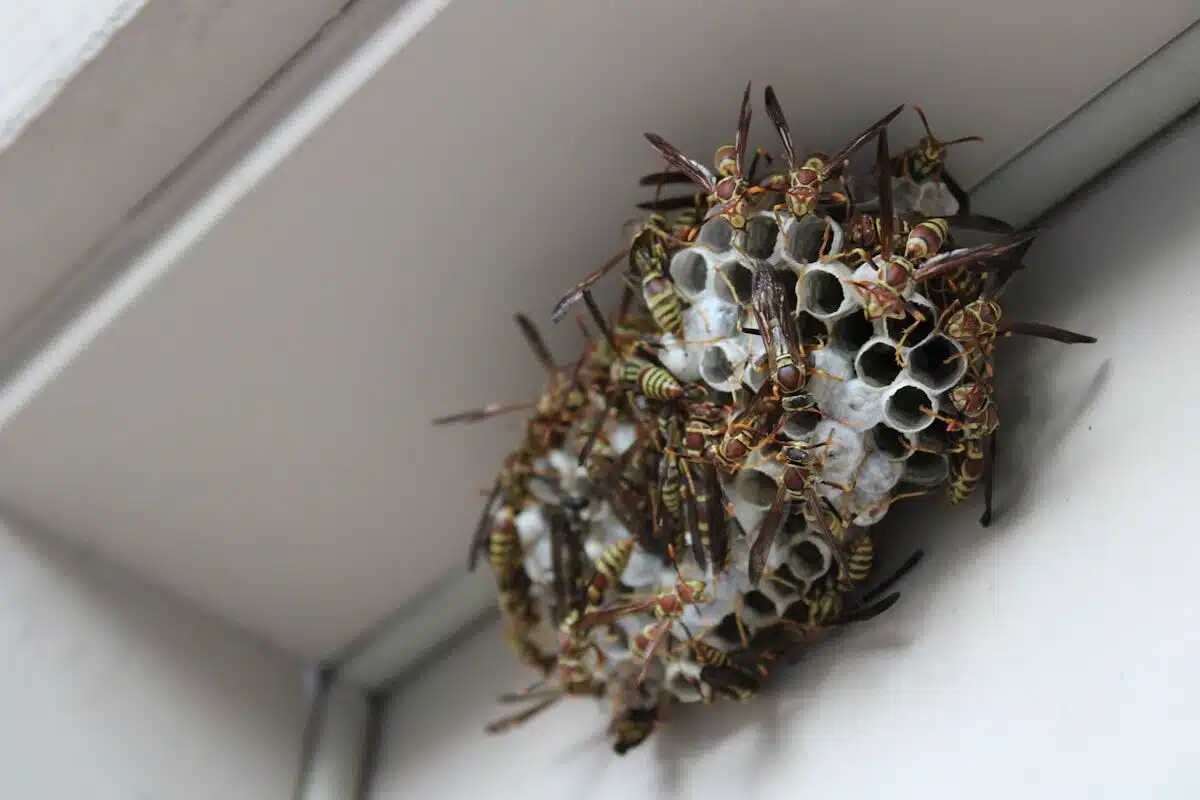
Usually DIY
Paper wasps
Open grey umbrella nest under an eave, deck rail or grill lid. You can see the cells from below. Defensive within about three feet, indifferent beyond it.
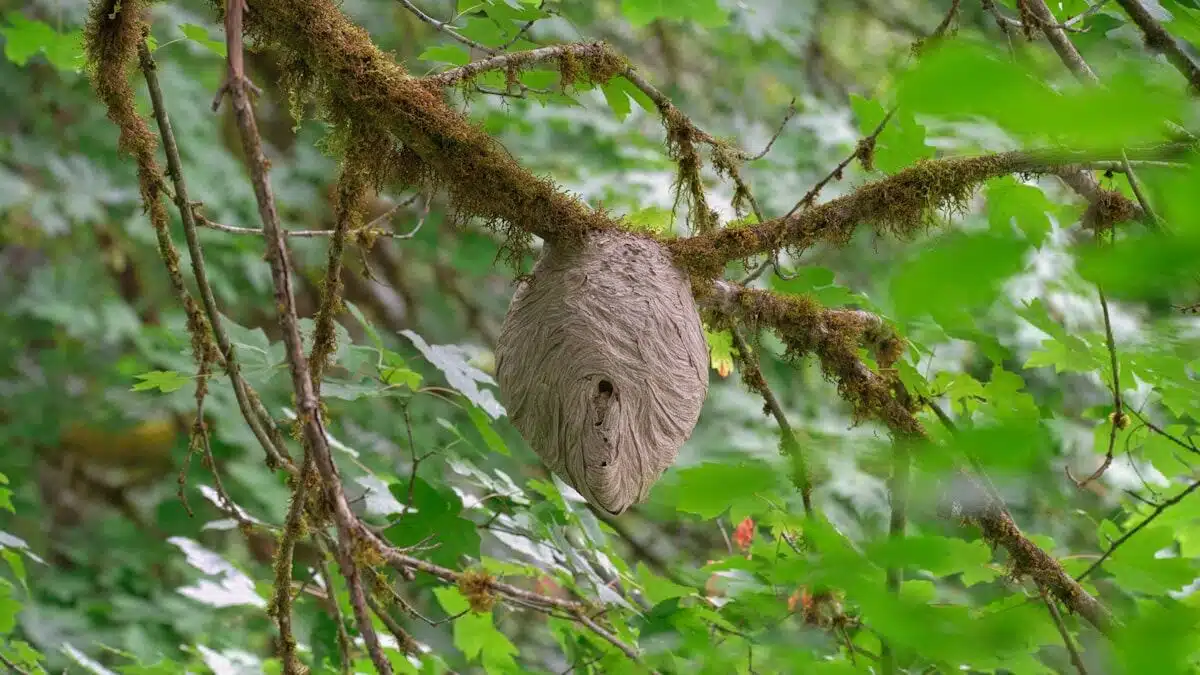
Care needed
Bald-faced hornets
Enclosed grey football with one opening near the bottom, usually eight feet up or higher. Defends a wide radius and will pursue.
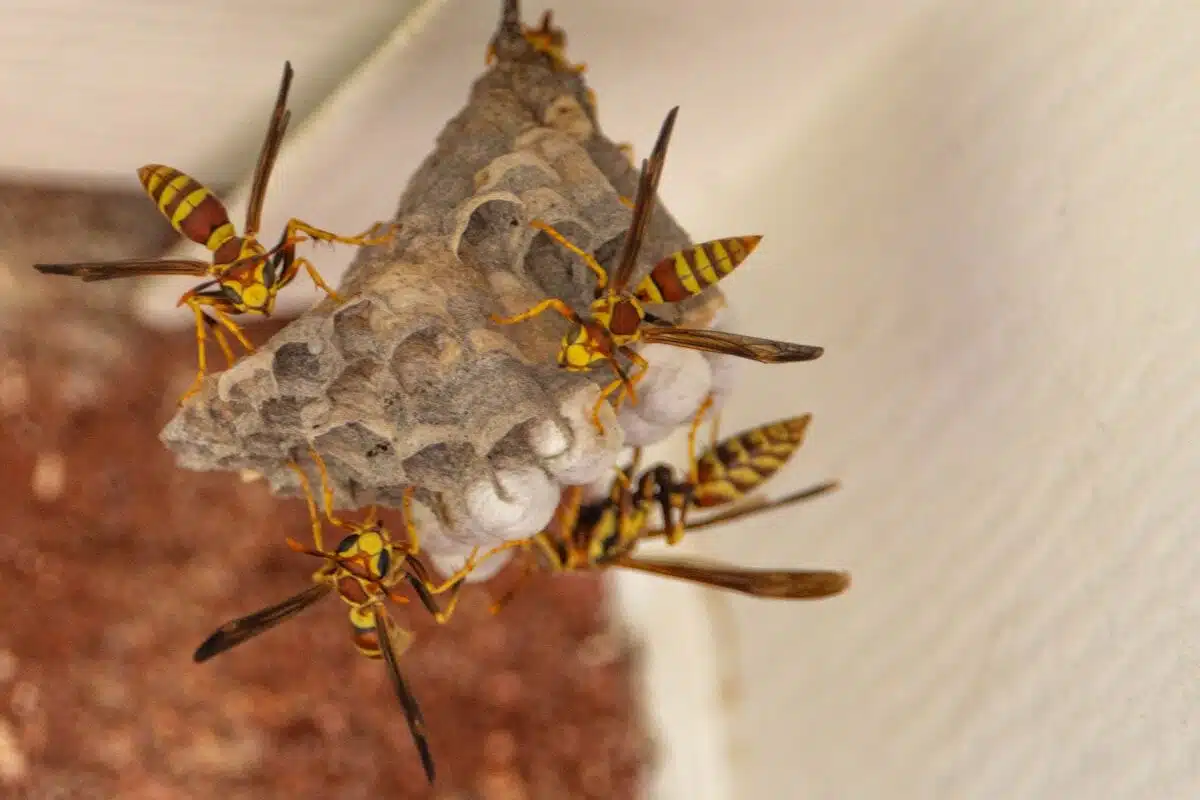
Don’t
Yellow jackets
No visible nest — just traffic at a hole in the ground, wall or siding. Most stings, most emergency room visits, and the ones that go badly.
Why they showed up
Wasps hunt protein in spring and early summer, sugar in late summer. A nest near a deck usually means one of three things: an accessible cavity, a food source, or last year’s site. They don’t reuse old nests, but they do reuse good locations, which is why the same eave gets a nest three years running.
The seasonal curve decides your timing. A colony founded by one queen in April is small and manageable through June. By late August it is at maximum population and at its most defensive, and stays that way until the first hard frost.
Doing it yourself
Honest version, for a visible paper wasp nest within reach of a step ladder. If that isn’t what you have, skip to the stop point.
Get the right can
Jet-stream aerosol rated for 20 feet. A 10-foot spray on a 15-foot nest falls short and leaves you standing under an alerted colony.
Wait for full dark
Not dusk — a third of the colony is still inbound at dusk. Use a torch with red cellophane over it; wasps don’t see red well.
Stand to the side
Never directly beneath. You need a retreat that isn’t down a ladder.
Five to eight seconds
Spray into the underside where the cells open. Then leave immediately — don’t stay to watch.
Return after 24 hours
No traffic means it’s done. Knock the nest down and bin it so scavengers don’t work the remains.
Don’t reuse the spot
They don’t reuse nests but they do reuse good locations. Seal gaps and the same eave stops getting one every year.
Yourself or hired
Where this stops being a DIY job
Inside a wall. A colony in a wall void can’t be sprayed from outside and must not be sealed from outside — blocked at their entrance, a few thousand insects look for another way, and the other way is usually into the room. Dust the cavity, wait for traffic to stop, then close it. That’s an order of operations, not a product, and getting it backwards puts the colony in your house.
Above ladder height. A nest at fifteen feet needs an extension pole and a suit. The specific hazard isn’t the stings — it’s being on a ladder when they come out.
A known sting allergy in the household. Not a cost comparison.
Advertising disclosure: calls are routed to an independent local provider. We’re paid a referral fee for the call. You pay the provider, never us.
What a professional does differently
First
Identifies before treating
Ground nests get dust, aerial nests get aerosol. The wrong one scatters a colony instead of ending it.
Then
Treats the entry, not the nest
Every returning forager carries material inward. Treating the visible surface of a wall treats plasterboard.
After
Comes back before sealing
Traffic has to have stopped before the cavity closes. That’s a second trip — ask whether it’s in the price.
What to ask before you book
- Which species do you think it is, and how are you telling?
- Dust or aerosol, and why that one here?
- Is a follow-up visit included, or billed separately?
- If it’s in a wall, who seals it and when?
- Are you insured for work above ladder height?
A quote given over the phone without asking where the nest is or what it looks like is a quote from someone who hasn’t decided how to do the job yet.
Common questions
Will the nest be reused next year?
No. Annual wasp and hornet colonies die at the first hard frost and the nest is never reused. They do reuse good locations, which is why the same eave gets one three years running — seal the gap rather than treating annually.
Is it worth treating a nest in October?
Often not. In a climate that freezes, an outdoor aerial nest away from the house will be finished by frost at no cost. If it’s over a door or a path, that reasoning doesn’t apply.
Why did they come back after I sprayed?
Usually a spray that fell short, or treatment at dusk with foragers still returning. For a cavity nest it means the entry was treated but the colony inside wasn’t reached.
How big is the nest by September?
Roughly forty times what it was in June. A colony founded by one queen in April is manageable through June and at maximum population and defensiveness by late August.
Nest in a wall, a roof void, or somewhere you can’t reach?
A visible nest within reach of a step ladder is genuinely yours and the method above will get you through it. A colony inside a cavity is the one where order of operations decides whether they end up outside or in the room — and that’s worth the call.
Call (720) 389-2293