
Home › Services › Pest Control
Hiring a Wasp Exterminator
Most of what separates a competent wasp job from a poor one happens before anything is sprayed. Here’s what a good one looks like, and the quote that tells you you’re being sold a visit rather than a diagnosis.
Advertising disclosure: calls are routed to an independent local provider. We’re paid a referral fee for the call. You pay the provider, never us.
The short version
Three things mark a job done properly: the species is identified before anything is applied, the treatment goes into the entry point rather than at the visible nest, and there’s a return visit written into the price for anything in a cavity. A quote given over the phone without asking where the nest is or what it looks like is a quote from someone who hasn’t decided how to do the job yet.
First thing done
Species identified
Where treatment goes
Entry point, not the nest
Cavity work
Needs a return visit
The tell
A quote with no questions
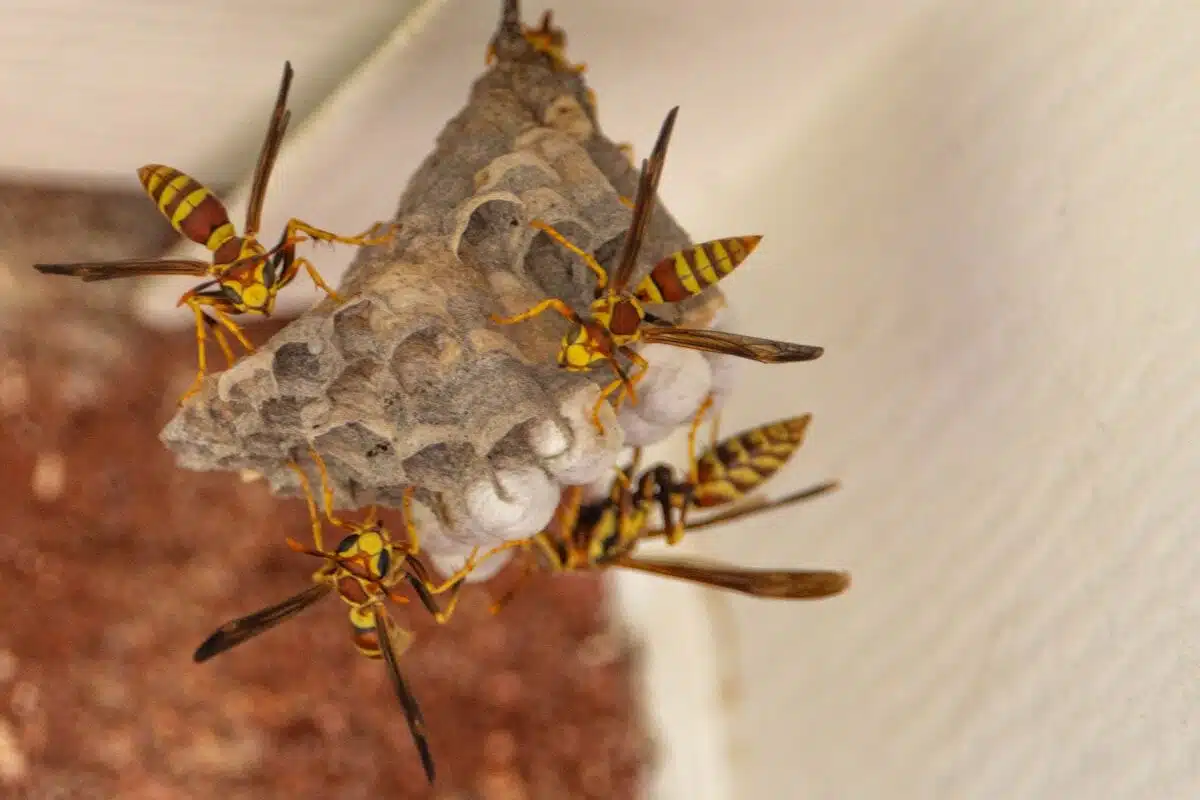
Reading the quote
Most of what separates a competent job from a poor one is audible before anyone arrives.
Good sign
They ask questions
“What does the nest look like? Can you see it, or just insects at a hole?” That answer decides the product, and it’s the step that gets skipped when someone quotes from a van.
Good sign
They mention returning
Cavity jobs need a second visit to confirm traffic stopped before sealing. Volunteering that is a sign they’ve done it before.
Walk away
Sealing first
“We’ll seal it up while we’re there.” That’s the order backwards, and backwards puts several thousand insects on the wrong side of the plaster.
Walk away
A price with no questions
A quote given without asking where the nest is or what it looks like is a quote from someone who hasn’t decided how to do the job.
Species first, because the product changes
Ground-nesting yellow jackets get dust. Aerial nests get an aerosol or a pole application. Using the wrong one on the wrong nest scatters a colony instead of ending it, and a scattered colony is more defensive and harder to find than it was.
So the first question a technician should ask is what you’re seeing: a visible nest, or traffic at a hole. It sounds basic. It is also the step that gets skipped when someone is quoting from a van on the way to another job.
Entry point, not the nest
For anything inside a cavity — a wall, a soffit, under siding, in the ground — the target is the opening the insects use, not the part of the nest you can see or imagine. Treating the entrance means every returning forager carries material inward. Treating the visible surface of a nest in a wall means treating plasterboard.
This is also why sealing has to come last. Blocked at their entrance, a few thousand insects will find another route, and in a wall the other route is usually into the room. The correct order is treat, wait for traffic to stop, then close. Any quote that leads with sealing has it backwards.
What a return visit is for
Cavity jobs need confirming. The traffic has to have stopped before the entry is closed, and that is a separate trip a day or more later. Ask whether it is included or billed again — the difference between two quotes is often exactly this, and the cheaper one frequently isn’t.
For a straightforward aerial nest within reach, a single visit is genuinely enough and a return trip would be padding. The distinction is cavity or no cavity.
What you’re paying for in autumn
Colonies are at maximum population and maximum defensiveness from late summer until the first hard frost, which is when most calls happen and when rates are highest. Worth knowing: annual wasp and hornet colonies die at frost and the nest is not reused. If it’s late in the season, far from the house, and nothing has to walk past it, weather will resolve it at no cost. If it’s over a door, that reasoning doesn’t apply.
What a correct job looks like
So you can tell, while it’s happening, whether you got one.
Species identified first
Ground-nesting yellow jackets get dust, aerial nests get aerosol. The wrong one scatters a colony instead of ending it.
Entry point treated
Not the visible nest. Every returning forager carries material inward — treating a wall’s surface treats plasterboard.
Traffic monitored
A day or more, then checked. This is the bit that costs a second trip and the bit cheaper quotes leave out.
Sealed last
Only once traffic has stopped. Any other sequence and they find another route, which in a wall is usually into the room.
Access assessed honestly
Above ladder height means an extension pole and a suit. If nobody raises that on a fifteen-foot nest, they haven’t looked.
Reading the quote
Where this stops being a DIY job
A colony inside a wall or ceiling void. This is the case where the order of operations decides whether the insects end up outside or in the room, and where a wrong sequence puts several thousand of them on the wrong side of the plaster.
Anything above ladder height. An extension pole and a suit, not a step ladder and a can. The injuries in this work come from the fall.
A known sting allergy in the household. Not a cost comparison.
Advertising disclosure: calls are routed to an independent local provider. We’re paid a referral fee for the call. You pay the provider, never us.
The marks of a job done properly
Before treating
Identifies the species
Visible nest or traffic at a hole. That one answer changes the product.
Treatment
Targets the entry point
Returning foragers carry material inward. Treating a wall’s surface treats plasterboard.
Sequence
Seals last, never first
Traffic has to stop before the cavity closes. Backwards puts the colony in the room.
Five questions before you book
- Which species do you think it is, and what are you telling from?
- Dust or aerosol, and why that one here?
- Is a return visit included, or billed separately?
- If it’s in a wall — who seals it, and how long after treatment?
- Are you insured for work above ladder height?
You are listening for whether they ask you anything back. The good ones do.
Common questions
How much does wasp nest removal cost?
It moves on height, access and whether the nest is in a cavity. Cavity work needs a return visit, and that’s usually where two quotes differ — ask whether it’s included rather than comparing headline numbers.
What’s the difference between dust and aerosol treatment?
Dust is for cavities and ground nests, aerosol for exposed aerial nests. Using the wrong one scatters a colony instead of ending it.
Do I need a follow-up visit?
For anything in a wall, void or the ground, yes — someone has to confirm traffic has stopped before the entry gets closed. For a reachable aerial nest, a single visit is genuinely enough.
Is it safe to seal a wasp entry hole?
Not until the colony inside is dealt with. Blocked at their entrance, a few thousand insects look for another route, and in a wall the other route is usually into the room.
In a cavity, or too high to reach?
A visible nest within reach of a step ladder is genuinely a do-it-yourself job and the guide here walks through it. Anything inside a wall or above ladder height is where hiring earns its money — provided they treat the entry point and come back to confirm before sealing.
Call (720) 389-2293