
Home › Services › Pest Control
Deer Tick vs Dog Tick
Two common ticks, quite different risks. The one people notice is the large patterned one; the one that matters most is the small plain one that’s easy to mistake for a freckle.
Advertising disclosure: calls are routed to an independent local provider. We’re paid a referral fee for the call. You pay the provider, never us.
The short answer
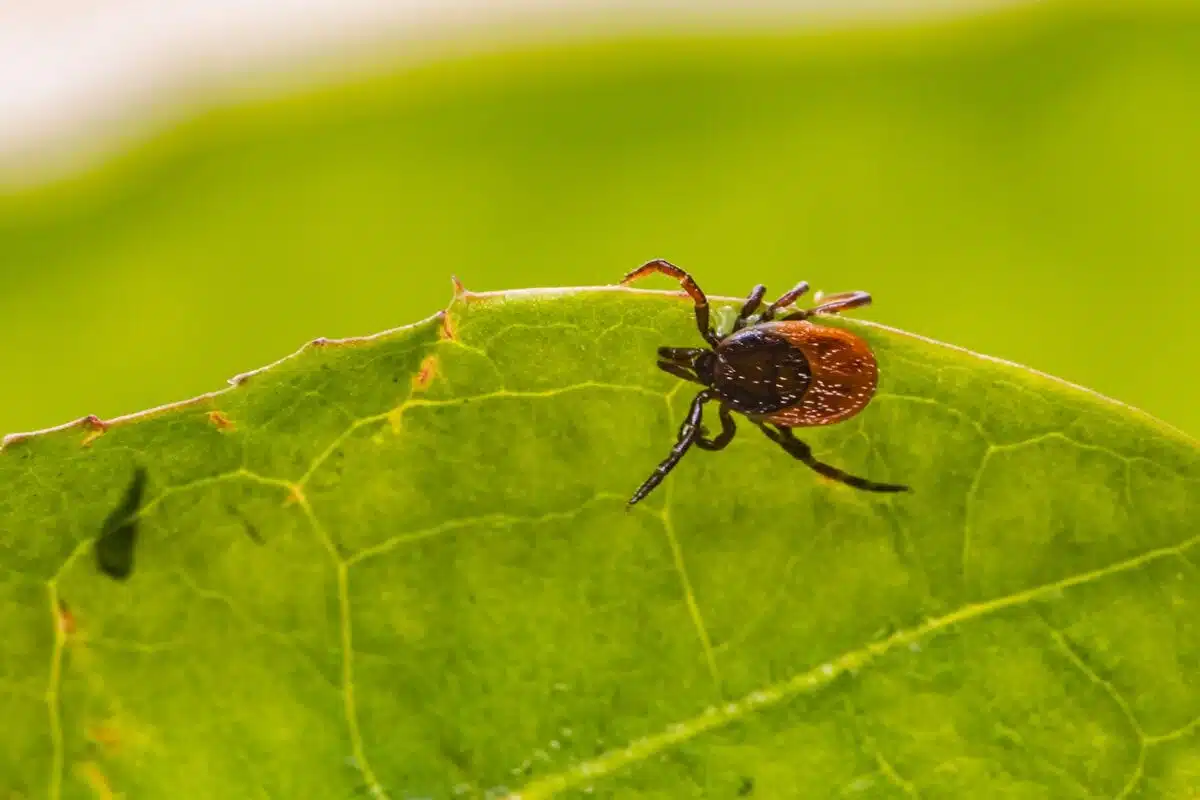
A dog tick is large — comparable to an apple seed — brown, with distinct pale or white mottled markings on the shield behind the head. A deer tick is much smaller, often poppy-seed sized as a nymph, plain dark reddish-brown with a solid dark shield and no mottling. Size and the absence of markings are the two reliable tells, and the small plain one is the one carrying Lyme.
Dog tick
Apple-seed size, mottled shield
Deer tick
Much smaller, plain dark shield
Nymph deer tick
Poppy-seed size
If bitten
Save the tick, note the date
Which one is it?
Three tells, in the order you can actually check them.
First
Size
Dog ticks are conspicuous — you notice them. Adult deer ticks are roughly sesame-seed sized and nymphs are smaller still, which is why they’re so often missed.
Second
The shield behind the head
Dog ticks carry pale mottled or marbled markings on it. Deer ticks have a plain, solid dark shield with no pattern at all. This is the most reliable single feature.
Third
Overall colour
Deer ticks have a reddish-brown body behind a darker shield. Dog ticks read as brown overall with the pale markings. Colour alone is weaker than the other two.
Not a tick
Sesame seeds and scabs
Both get sent to identification services constantly. A tick has legs, visible with a magnifier or a phone camera close-up.
Why the nymph stage matters most
Nymphal deer ticks are active in late spring and summer, they’re roughly poppy-seed sized, and they’re responsible for a large share of transmission — not because they carry more, but because they’re small enough to go unnoticed long enough to feed.
An adult tick found within a few hours is a much lower-risk event than a nymph attached for two days. That’s the practical reason for checking after being outdoors, and for checking the places people don’t look: behind knees, waistband, hairline, armpits.
What to do with one you’ve removed
Save it. Put it in a sealed bag or a small container, note the date and where on the body it was attached. Species and attachment time are the two things a clinician will ask about, and a tick in a bag answers the first far better than a description does.
Remove it with fine-tipped tweezers, gripping as close to the skin as possible and pulling steadily upward. Not with heat, petroleum jelly, or twisting — those risk agitating it.
Reducing tick pressure in a yard
Habitat work, and it’s more effective than treating the whole lawn.
Work the edge, not the middle
Ticks live in the transition between lawn and woodland or long grass. Open sunny turf is poor habitat and rarely needs treating at all.
Cut back the leaf litter line
Clearing litter and brush along the boundary removes the humid layer they need to survive.
Put a dry barrier in
A few feet of gravel or wood chip between lawn and woodland edge is genuinely effective — ticks won’t readily cross dry open ground.
Move what attracts hosts
Bird feeders, woodpiles and stone walls concentrate the small mammals that carry ticks. Site them away from where people sit.
Keep grass short at the margins
Not the whole lawn — the strip nearest the boundary, which is where contact happens.
Check after being outdoors
Behind knees, waistband, hairline, armpits. Nymphs get missed because nobody looks there.
Side by side
Where this stops being a DIY job
Any tick bite followed by a rash, fever, aching joints or fatigue. That is a medical question and it needs a doctor, not a pest control company. Take the tick with you if you kept it, and the date it was found. Nothing on this page is a substitute for that call.
A tick attached to a child, or one you can’t remove cleanly. Also medical.
Heavy tick pressure across an acreage. Edge treatment over a large boundary is equipment work, and product selection near water is regulated.
What a tick programme should target
Where
Treats the edge
Lawn-to-woodland transition, not the open turf. A blanket lawn spray is mostly wasted product.
When
Times it to the nymphs
Late spring, when the highest-risk stage is active.
What else
Recommends habitat change
Litter line, barrier, feeder placement. The chemical is the smaller half.
Common questions
How do I tell a deer tick from a dog tick?
Size and the shield behind the head. Dog ticks are apple-seed sized with pale mottled markings; deer ticks are much smaller with a plain, solid dark shield.
How small is a deer tick nymph?
Roughly poppy-seed sized, which is why they’re so often missed. That stage accounts for a large share of transmission simply because it goes unnoticed.
What should I do with a tick I removed?
Save it in a sealed bag and note the date and location on the body. Species and attachment time are what a clinician will ask about.
Where do ticks live in a yard?
The edge — the transition between lawn and woodland or long grass, where leaf litter holds humidity. Open sunny turf is poor habitat.
Heavy pressure along a wooded edge?
Clearing the litter line, putting a dry barrier between lawn and woodland, and moving feeders away from seating does more than most treatment programmes, and it’s all yours. A bite followed by symptoms is a call to a doctor, not to anyone here.
Call (720) 389-2293