
Home › Services › Pest Control
Cockroach Control
The half-inch roach in the kitchen and the two-inch roach by the drain are different problems. One breeds indoors and arrives in your groceries. The other lives outside and wanders in. Treat them the same way and one of them wins.
Advertising disclosure: calls are routed to an independent local provider. We’re paid a referral fee for the call. You pay the provider, never us.
The short answer
German cockroaches are about 1/2 inch, light brown with two dark stripes behind the head, and the most common species indoors (UC IPM). They often ride in on grocery bags, drink cartons or furniture (University of Kentucky). American and oriental roaches are bigger and live in sewers, drains and meter boxes. Sprays can repel and scatter roaches without long-term control, so bait is the main tool indoors, and a working bait program can take 7 days or longer to show. Clearing food, water and clutter first is what makes the bait work.
German
About 1/2 in, breeds indoors
American/oriental
1¼–2 in, comes from drains
One German egg case
About 30–40 young
Bait timeline
7+ days to work
Which species?
Size and where you see them tell you most of it, and the answer changes the treatment. Sizes below are from UC IPM unless noted.
Hardest
German
About 1/2 inch, light brown, two dark stripes on the shield behind the head. Kitchens and bathrooms, in warm, humid spots around 70–75°F. A female carries her egg case until a day or two before it hatches, each case holds about 30 young, and a new one can follow every few weeks (UC IPM). Kentucky puts it at up to 40 per case (University of Kentucky).
Comes from outside
American
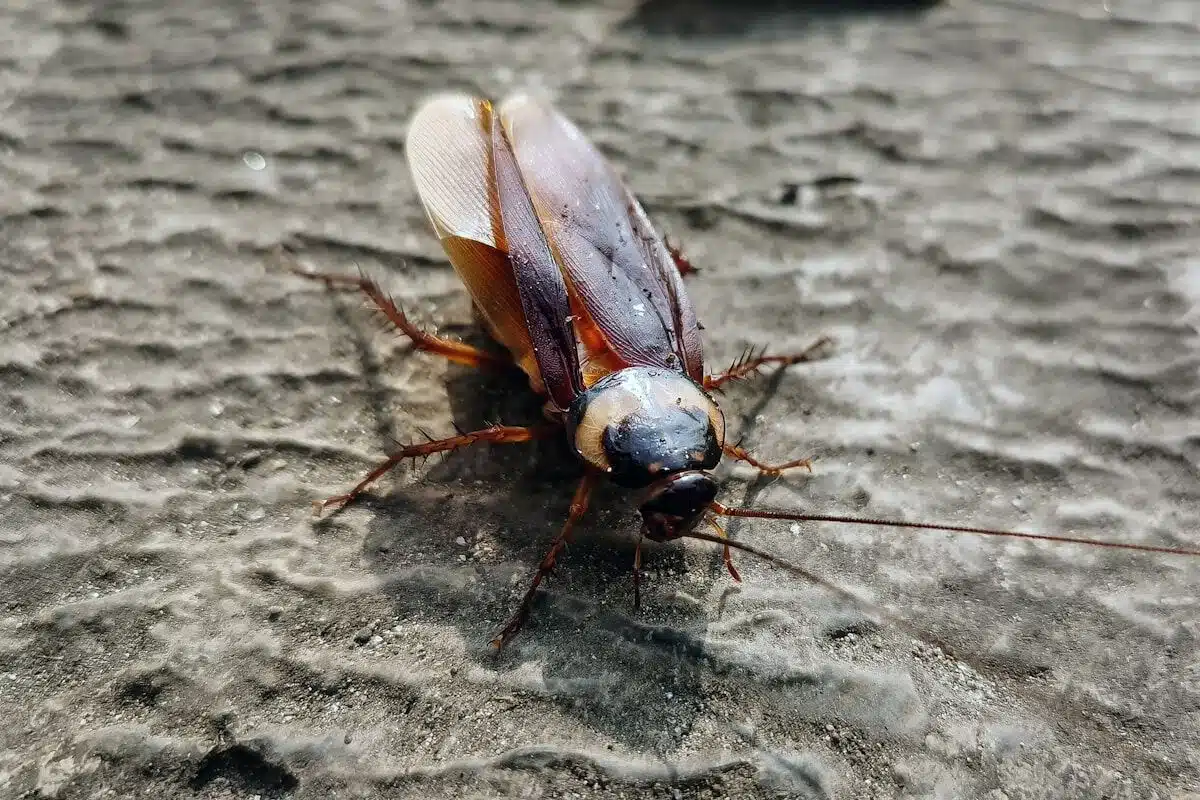
About 2 inches, reddish brown, with pale edges on the shield. Lives in sewers, storm drains and water meter boxes and likes it above 82°F (UC IPM). In the South this is one of the large roaches people call palmetto bugs (UF/IFAS). Sealing and drain work matter more than indoor baiting.
Comes from outside
Oriental
About 1¼ inches and almost black. Neither sex can fly. Lives in cool, damp places: garages, basements, meter boxes, drains (UC IPM). Indoors, find and dry out the damp spot it came from.
Often missed
Brownbanded
About 1/2 inch with light bands across the body. Unlike the German roach, it doesn’t stay in the kitchen: it hides behind pictures, inside hollow furniture legs and near electrical appliances, and likes it around 80°F (UC IPM). Only about 1% of indoor infestations.
Where you live changes the list
Florida. UF/IFAS lists seven common species around Florida homes. The large ones, 1¼ to 2 inches, live outdoors in leaf litter, mulch, tree holes and palm trees. Outdoor roaches generally don’t survive well inside, so getting the ones that wander in back out is often all that’s needed. The fix is outside: keep only a thin layer of mulch within about a foot of the foundation and stack firewood off the ground, away from the house.
California. The Turkestan cockroach, which lives outdoors in meter boxes, cracked concrete, compost and sewers, is displacing the oriental cockroach, especially in Southern California and the Central Valley (UC IPM).
Why spraying makes German roaches worse
Sprays give a quick knockdown of the roaches you can see. UC IPM says they don’t give long-term control and can repel and disperse roaches into other areas: deeper into cabinets, into the next room, or into the apartment next door. Foggers and “bug bombs” tend to miss the hiding places and bring their own flammability and exposure risks.
Bait works differently. The roach eats it and goes back to the void, and roaches usually die 1–3 days after feeding, with a clear drop in numbers within a few weeks (University of Kentucky). The catch is that spraying near bait undoes it. Kentucky warns against spraying cleaners or insecticides around bait placements, and Virginia Tech says sprays used around baits may repel roaches from the bait.
Resistance is the other reason to stop reaching for a can. In a six-month Purdue University study in multi-unit buildings in Indiana and Illinois, resistance rose four- to six-fold in a single generation, a rotation of three insecticides only held numbers flat, and a two-product mixture failed outright. The researchers’ conclusion was to combine chemicals with traps, sanitation and vacuuming.
What actually helps (the DIY method)
Preparation does more here than product, and it’s all yours. UF/IFAS calls chemical use alone the least effective control method.
Monitor first
Sticky traps along floor-wall edges, in cupboards and by appliances, numbered so you can track each one. Check daily for several days. Many roaches are caught in the first 24 hours (UC IPM). Where the traps fill up is where the bait goes.
Remove water
Roaches must have water to survive (Virginia Tech). Fix plumbing leaks and improve ventilation where condensation forms (UC IPM). Dry the sink at night and pick up pet water bowls.
Deny the food
Dishes, utensils and pet food shouldn’t sit out overnight, and loose food goes in tight containers (University of Kentucky). Clean up grease, and wash off droppings with hot, soapy water, which also removes the scent that draws others (Virginia Tech).
Cut the hiding places
Get stacks of paper bags, cartons and newspapers out of the kitchen. Seal plumbing and wire openings with caulk, foam or copper mesh, which also slows roaches moving between apartments (University of Kentucky). Adults fit cracks about 1/16 inch wide (UF/IFAS).
Gel bait, many small dabs
Small dabs in corners and along edges where you see droppings or roaches. More than a dozen placements may be needed under one kitchen sink (University of Kentucky). Keep sprays and cleaners away from them.
Stay with it
Bait programs can take 7 days or longer, and boric acid dust in dry, hidden voids is similarly slow (UC IPM). Keep baiting until numbers fall (Virginia Tech), and keep traps out to check. Skip ultrasonic devices: Virginia Tech says many studies have shown they don’t repel or kill roaches.
Treatment by species
German biology, spraying and bait behavior are from UC IPM and the University of Kentucky. The bait station note is from Virginia Tech, and the outdoor steps and outdoor-species survival are from UF/IFAS.
Where this stops being a DIY job
German roaches in an apartment or shared building. They travel between units through common walls and ceilings (University of Kentucky). Treating one unit while the neighbors go untreated is a cycle, not a fix. It has to be handled across the building, which is a conversation with the landlord or property manager.
Traps still filling a few weeks into the six steps. If you’ve cleared food, water and clutter, baited every spot the traps flagged, kept sprays away from the bait, and trap counts haven’t clearly dropped within a few weeks, the population or its hiding places are beyond what you can reach. UC IPM says serious indoor infestations often need professional pest control.
Roaches seen in daylight in more than one room. Daytime roaches can mean a large, growing infestation (Virginia Tech). That’s the point where hand-placed gel and patience stop keeping up.
A restaurant, food business or childcare setting. These fall under local health rules and are commercial jobs. See commercial pest control.
If large roaches keep coming up from a drain. A damaged or dry drain line needs finding and fixing by a plumber. Treating the kitchen while the source is under the floor treats symptoms.
Advertising disclosure: calls are routed to an independent local provider. We’re paid a referral fee for the call. You pay the provider, never us.
What a competent roach job looks like
Identifies
Names the species first
German and American roaches need opposite approaches. Expect traps or a flashlight inspection before anything is applied.
Baits
Treats hiding places, not open floors
Kentucky says sprays belong in harborages, not on walls, floors and countertops where roaches rarely linger (University of Kentucky). Bait goes where the droppings are.
Ends
Has a finish line
Kentucky notes it shouldn’t take a full year to clear roaches from a single-family home if treatment is done correctly, and some companies require a year of service anyway (University of Kentucky). Ask what “done” means before you sign.
What it costs. HomeGuide puts most cockroach jobs at $100–$600, about $350 on average. It lists sprays at $40–$100 per visit and gel bait at $100–$600, and $200–$350 for a one-time visit against $100–$200 per quarterly visit. Fumigation or tenting for a major infestation runs $1,000–$7,500. Our exterminator cost guide covers what moves the number, and quarterly vs one-time service covers which to buy.
Common questions
What’s the difference between German and American cockroaches?
German roaches are about 1/2 inch, light brown with two dark stripes, and live in kitchens and bathrooms. American roaches are about 2 inches, reddish brown, and live in sewers and storm drains (UC IPM). The first needs indoor baiting. The second needs sealing and outdoor work.
Why did spraying make my roach problem worse?
Sprays can repel and disperse roaches into new areas without long-term control (UC IPM), and spraying near bait can keep roaches from eating it. German roaches are also building resistance quickly.
How long does it take to get rid of cockroaches?
Roaches usually die 1–3 days after eating bait, and you should see a substantial drop within a few weeks (University of Kentucky). Keep traps out until they stay empty, because new egg cases keep hatching.
Do cockroaches mean a dirty house?
Not necessarily. German roaches often arrive in grocery bags, cartons or furniture and can settle anywhere with food, water and warmth. Cleanliness affects how fast they build up and how well bait works, more than whether they arrive.
Are cockroaches a health problem?
Yes, mainly through allergens. UC IPM notes indoor infestations are an important allergen source and a risk factor for asthma in children, especially in multi-unit housing, with allergen levels rising with roach numbers (UC IPM).
Small tan roaches, or coming from a drain?
Trapping to find them, removing water, clearing cardboard and placing gel bait does more against roaches than most products, and all of it is yours to do. A shared building, a drain source, daytime roaches in several rooms, or any food or childcare setting is where this needs someone else.
Call 484-309-5608
Related
Sources: UC IPM: Cockroaches · University of Kentucky Entomology: Cockroach control · Virginia Tech Extension: Cockroaches found in living spaces · UF/IFAS EDIS: Cockroaches and their management · Purdue University: Rapid cross-resistance in German cockroaches · HomeGuide cockroach exterminator cost