
Home › Services › Pest Control
Tick Control
Almost all tick exposure in a garden happens in one specific band, and it isn’t the middle of the lawn. Treating the right few feet does more than treating the whole property.
Advertising disclosure: calls are routed to an independent local provider. We’re paid a referral fee for the call. You pay the provider, never us.
The short answer
Ticks need humidity and leaf litter, which means they live in the transition between mown lawn and woodland, long grass or ornamental beds. Open sunny turf dries out and kills them, so it’s poor habitat and rarely needs treating. That makes edge treatment plus a dry physical barrier substantially more effective than a blanket lawn application, and considerably less product.
Where they are
The lawn-to-woodland edge
Open turf
Poor habitat
Best physical fix
A dry barrier strip
Timing
Late spring, nymph stage
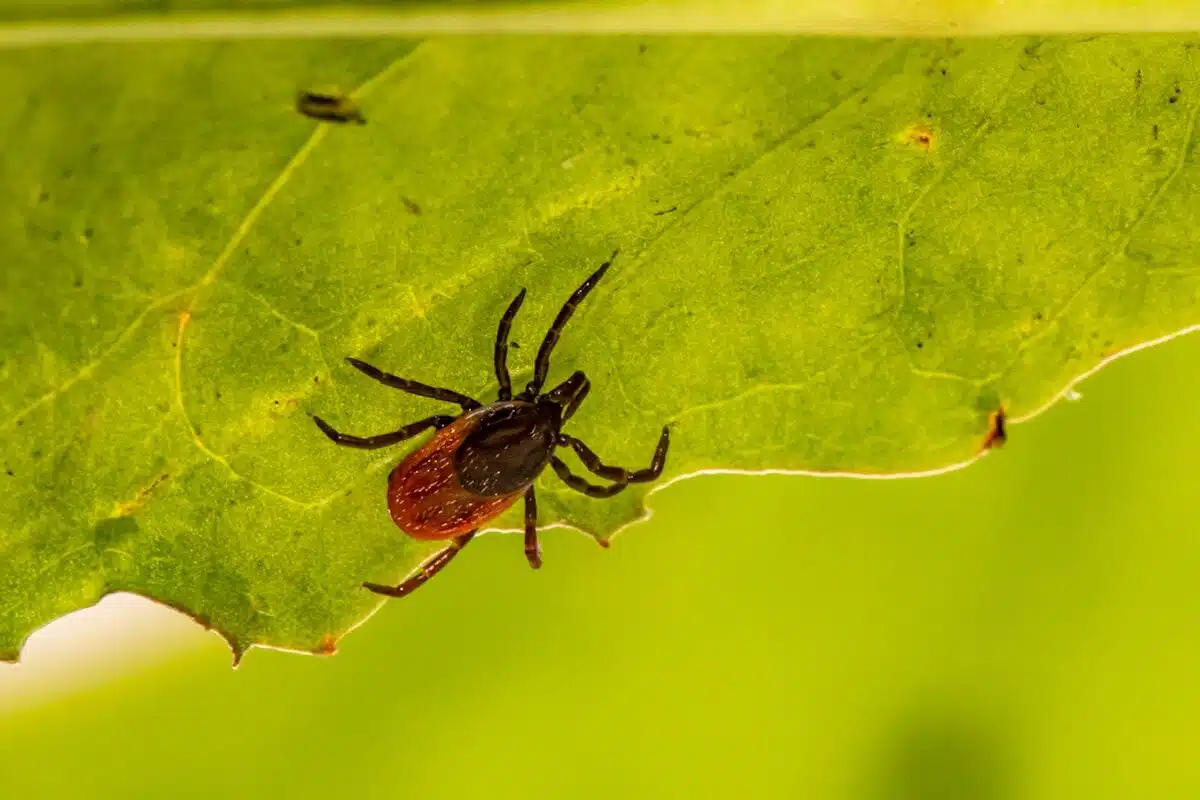
Where the risk actually is
Four zones, in descending order of exposure.
Highest
The edge band
The few feet where mown lawn meets woodland, long grass or a stone wall. Leaf litter holds humidity, and small mammal hosts travel along it. This is where treatment belongs.
Moderate
Ornamental beds and ground cover
Especially shaded plantings against the house. Same humidity conditions in miniature, and often right where people walk.
Moderate
Around feeders and woodpiles
Not habitat, but they concentrate the mice and chipmunks that carry ticks. Moving these matters more than treating around them.
Low
Open mown lawn
Sunny, dry and regularly cut. Genuinely poor tick habitat, and the part most commonly sprayed for no benefit.
The barrier strip
Three feet of wood chip or gravel between lawn and woodland edge is one of the better-evidenced non-chemical interventions available. Ticks quest by climbing vegetation and waiting; they don’t readily cross open, dry, unvegetated ground.
It costs a morning and some material, needs no maintenance beyond topping up, and it works continuously rather than for a few weeks after an application. If you do one thing on this page, do that.
Why timing matters more than product
Nymphal ticks are active from late spring, they’re roughly poppy-seed sized, and they account for a disproportionate share of transmission simply because they’re small enough to go unnoticed while feeding. A treatment timed to that window addresses the highest-risk stage.
A programme applied on a general calendar without reference to that is spending money at the wrong time of year.
Reducing pressure without spraying everything
Habitat work, in order of impact.
Clear the litter line
Rake back leaf litter and cut brush along the boundary. Removing the humid layer removes the habitat.
Lay a dry barrier
Three feet of wood chip or gravel between lawn and woodland. The single best physical intervention available.
Move what concentrates hosts
Bird feeders, woodpiles and rock piles away from where people sit and children play.
Keep the margin short
Not the whole lawn — the strip nearest the boundary, where contact happens.
Open up shade where you can
Ticks need humidity. Thinning dense shade over a play area changes the microclimate against them.
Check after being outdoors
Behind knees, waistband, hairline, armpits. Nymphs get missed because nobody looks there.
Where treatment belongs
Where this stops being a DIY job
Any tick bite followed by a rash, fever, aching joints or fatigue. That is a medical question and it needs a doctor. Take the tick with you if you kept it, and the date. Nothing on this page substitutes for that call.
Treatment near a stream, pond or storm drain. Setbacks are regulated and some products are restricted regardless of distance.
Heavy pressure across acreage. Edge treatment over a long boundary is equipment work.
What a real tick programme does
Where
Treats the edge band
A blanket lawn application is mostly product on ground ticks don’t use.
When
Times it to the nymphs
Late spring, when the highest-risk stage is questing.
Plus
Recommends the barrier
Chemical is the smaller half of a programme that works.
Common questions
Where do ticks live in a yard?
The transition between mown lawn and woodland, long grass or ornamental beds, where leaf litter holds humidity. Open sunny turf is poor habitat.
Does spraying the lawn get rid of ticks?
Mostly it treats ground they don’t use. Edge treatment plus a dry barrier strip does more with far less product.
What’s the best non-chemical tick control?
Three feet of wood chip or gravel between lawn and woodland edge. Ticks don’t readily cross dry open ground, and it works continuously.
When should tick treatment be applied?
Late spring, timed to the nymph stage — small enough to go unnoticed while feeding and responsible for a large share of transmission.
Long wooded edge, or pressure that won’t drop?
Clearing the litter line, laying a barrier strip and moving feeders away from seating does most of the work here and it’s all yours. A bite followed by symptoms is a doctor, not anyone on this page.
Call (720) 389-2293