
Home › Services › Wildlife Removal
Chipmunk Removal
Mostly harmless and often charming, until the burrowing undermines a patio, a retaining wall or a foundation. The damage is invisible until something settles.
Advertising disclosure: calls are routed to an independent local provider. We’re paid a referral fee for the call. You pay the provider, never us.
The short answer
Chipmunk burrows run several feet and they carry the spoil away rather than leaving a mound, so there’s no visible sign of how much soil has moved. That’s fine in open lawn and a genuine problem under a patio, a retaining wall or a porch slab, where the void eventually shows up as settlement or cracking. The fix is exclusion — hardware cloth below grade — not removing the animal.
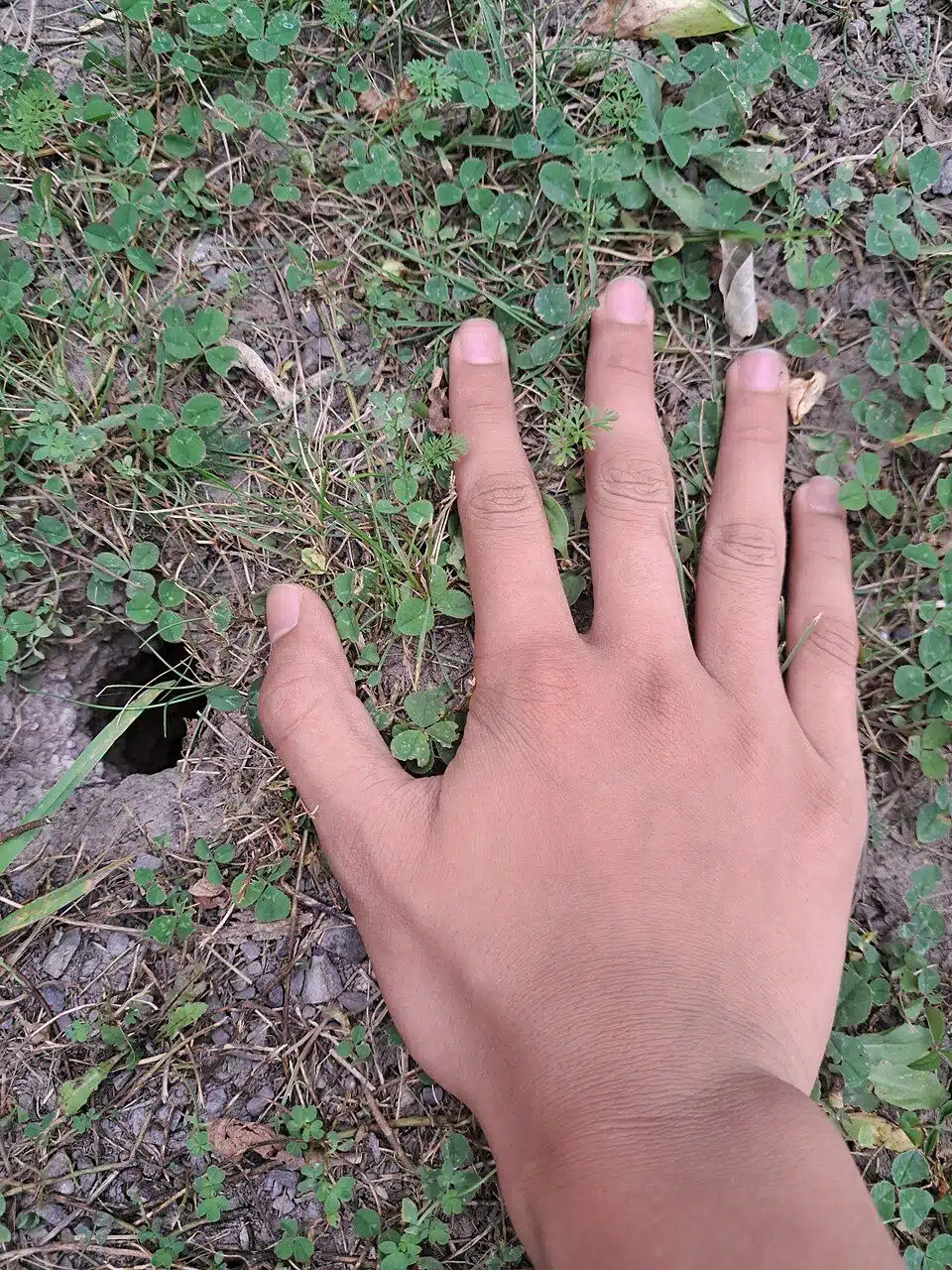
Burrow
Several feet, no mound
Why no spoil
They carry it off
Real risk
Undermining structures
Fix
Buried hardware cloth
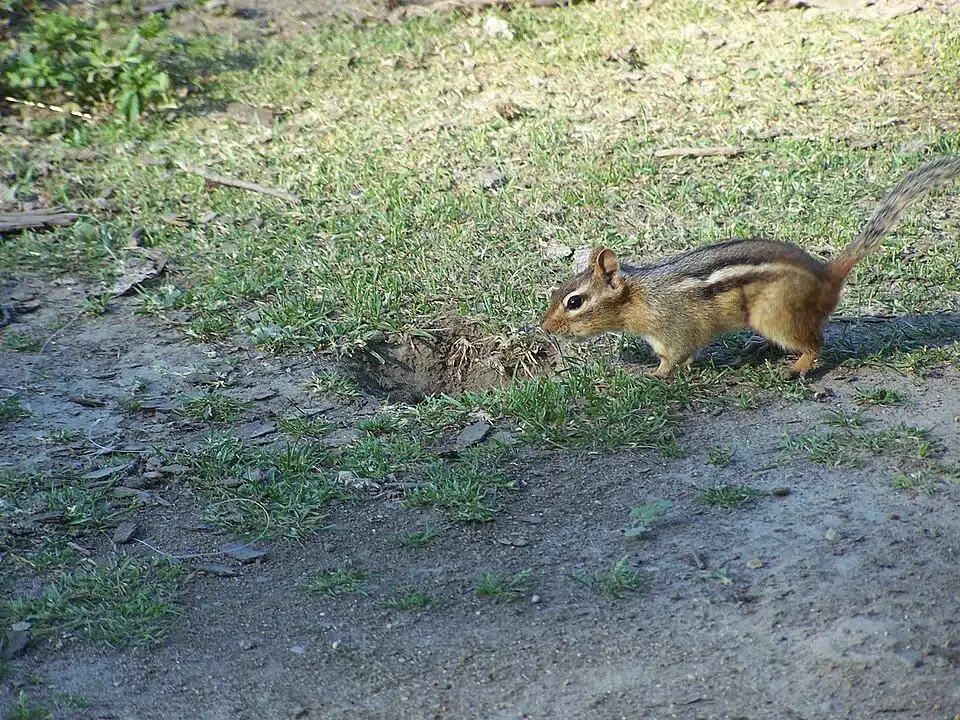
Is it actually a problem?
Location decides it entirely.
Leave it
Burrow in open lawn
A neat hole with no mound, away from anything structural. Cosmetically negligible and ecologically fine. There’s usually nothing to do.
Act
Against a patio or path
Burrowing under a slab removes support progressively. The first sign is usually a corner settling or a crack appearing, by which point the void is established.
Act
Under a retaining wall
Retaining walls depend on the compacted material behind and beneath them. A burrow system there is a structural matter rather than a wildlife one.
Act
Against a foundation
Same logic. Small amounts of soil, removed steadily, from under something bearing load.
Why trapping alone doesn’t work
Chipmunk territories are small and densely packed in suitable habitat. Removing one vacates a territory that a neighbouring animal expands into within weeks, and the existing burrow system is still there to be occupied.
Which makes exclusion the only durable answer: hardware cloth buried below grade along the structure you’re protecting, turned outward at the base so nothing digs under it. That protects the thing that matters regardless of how many chipmunks are in the garden.
What attracts them in the first place
Bird feeders are the single biggest factor. Spilled seed under a feeder is a concentrated food source, and a population builds around it. Moving the feeder well away from structures, or using a seed tray, changes the density considerably.
Fallen fruit, unsecured pet food and accessible bulbs do the same thing on a smaller scale.
Protecting the structure
Exclusion at the thing you care about, not removal from the garden.
Identify what’s at risk
Patio, path, retaining wall, foundation, steps. That’s what gets protected, rather than the whole property.
Move the bird feeders
Well away from structures, with a seed tray to catch spillage. This alone reduces local density substantially.
Trench and bury hardware cloth
Along the structure, a foot or so down, turned outward at the base so digging meets wire.
Protect bulbs with wire
Baskets or mesh over planting areas. Cheaper than replacing bulbs annually.
Clear cover near structures
Woodpiles, dense ground cover, rock piles against walls. They use cover to move safely.
Leave the open-lawn burrows
They’re not doing harm, and removing them just makes room for the next occupant.
When to act
Where this stops being a DIY job
Any settlement or cracking already visible. That means a void has formed under something bearing load, and the question is structural rather than about the animal.
Burrowing under a retaining wall. Retaining walls fail in ways that are dangerous, and undermined backfill is a recognised cause.
Extensive systems around a foundation. Assessing how much material has moved is not something you can do by looking at the entrances.
Advertising disclosure: calls are routed to an independent local provider. We’re paid a referral fee for the call. You pay the provider, never us.
What a competent operator does
Assesses
Looks at what’s above
The burrow only matters because of what it’s under. That determines whether anything needs doing.
Excludes
Buries and turns the wire
Below grade, flared outward. Surface mesh achieves nothing against a digger.
Advises
Raises the bird feeder
Because it’s usually the reason the density is high.
Common questions
Are chipmunks damaging my foundation?
They can be, and you can’t tell by looking. Burrows run several feet and the spoil is carried away, so there’s no mound indicating how much soil has moved.
How do I stop chipmunks burrowing under my patio?
Hardware cloth buried below grade along the edge, turned outward at the base. Exclusion protects the structure regardless of how many chipmunks are around.
Will trapping chipmunks solve the problem?
Not durably. Territories are small and densely packed, so a vacated one is occupied within weeks and the burrow system is still there.
What attracts chipmunks to a yard?
Bird feeders more than anything. Spilled seed is a concentrated food source and a population builds around it. Moving the feeder changes local density substantially.
Settlement showing, or burrows under a wall?
Moving the bird feeder and burying hardware cloth along the structure you care about is genuinely yours and it’s the durable fix. Visible settlement, or burrowing under a retaining wall, is a structural question rather than a wildlife one.
Call (855)-321-3088