
Home › Services › Wildlife Removal
Vole Damage
Narrow runways at soil level with the grass chewed along them, appearing all at once as the snow goes. It looks alarming and it is one of the more genuinely fixable problems in this section — mostly with a mower.
Advertising disclosure: calls are routed to an independent local provider. We’re paid a referral fee for the call. You pay the provider, never us.
In short
Voles cut runways at the soil surface and feed on stems and roots along them, working under snow cover all winter where the lawn is long. That’s the whole mechanism, and it’s why the fix is habitat: mow short going into winter, pull mulch and ground cover back from the lawn edge, and guard young tree trunks. Trapping treats the population; habitat treats the reason.
Damage shows
At snowmelt, all at once
Runways
Surface level, grass chewed
Main fix
Short autumn mow
Real risk
Girdled young trees
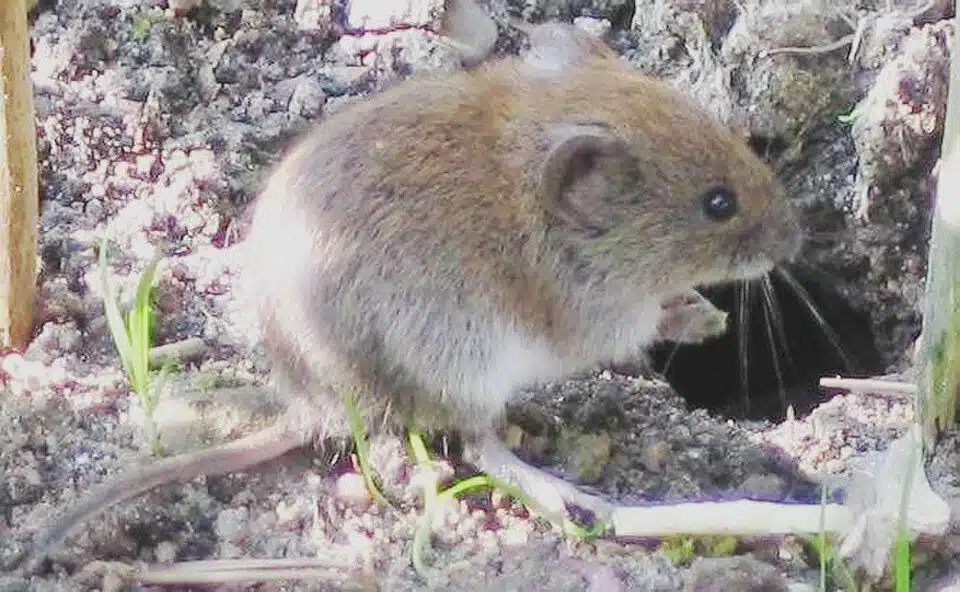
Voles or moles?
Constantly confused, entirely different animals, and the treatments have nothing in common.
This one
Voles
Flat runways worn at soil level with the grass chewed off along them. They eat vegetation — stems, roots, bark. Damage appears all at once at snowmelt.
Not this one
Moles
Raised ridges pushed up from underneath. They eat grubs and earthworms and don’t touch your plants. The fix is grub control, not habitat.
The real damage
Girdled trunks
Bark chewed all the way round a young tree under snow cover. Lawn damage is cosmetic and grows back; a fully girdled trunk is a dead tree in spring.
Voles against moles
Constantly confused, entirely different, and treated differently. Moles tunnel below the surface and push up raised ridges; they eat grubs and earthworms and don’t touch your plants. Voles run at the surface and eat vegetation — stems, roots, bark.
If you have raised ridges pushed up from underneath, that’s moles and the answer is grub control. If you have flat runways worn into the turf with the grass chewed off along them, that’s voles.
Why it all appears in March
Voles are active all winter and they work under snow, in the space between snowpack and soil. Long grass gives them cover to move safely and food to eat, and they build a runway network across the whole lawn while nothing is visible from above.
Then the snow goes and it’s all revealed at once, which is why it reads as sudden catastrophe. The damage happened over months.
The turf usually recovers on its own once growth starts — rake the runways lightly, overseed thin sections, and most lawns close over within a few weeks.
The habitat fix
Take the final autumn cut shorter than usual. Short grass gives no cover, and voles are heavily predated — hawks, owls, foxes, cats — so exposure is the strongest deterrent there is.
Pull mulch back from the lawn edge and from the base of trees and shrubs. Deep mulch against a trunk is exactly the habitat they want, and it puts them next to the bark.
Clear tall grass and weeds along fence lines and building edges, which is where the network usually connects.
The part that actually matters
Lawn damage is cosmetic and temporary. Girdling is not. Voles chew bark at the base of young trees and shrubs under snow cover, and a trunk gnawed all the way round is a dead tree in spring — nothing gets past the damage.
Hardware cloth cylinders around young trunks, pushed slightly into the soil and standing above expected snow depth, prevent it entirely. It takes minutes per tree in autumn and it is the single highest-value thing on this page.
The autumn checklist
Habitat, not trapping. Voles are heavily predated, so removing cover is the strongest deterrent available.
Cut the last mow short
Shorter than usual. Long grass under snow is cover and food both, and it’s how the runway network gets built unseen.
Pull mulch back
From trunks and from the lawn edge. Deep mulch against a trunk is exactly the habitat they want, right next to the bark.
Clear the edges
Tall grass and weeds along fence lines and building edges, which is where the network usually connects.
Guard young trunks
Hardware cloth cylinders pushed slightly into the soil and standing above expected snow depth. Minutes per tree, and it prevents the only permanent damage.
In spring, rake and seed
Rake the runways lightly and overseed thin sections. Most lawns close over within a few weeks on their own.
Voles or moles
Where doing it yourself stops working
Bark chewed all the way around a young tree or shrub. A fully girdled trunk will not recover — nothing moves past the damage — and replacement is the only answer. Partial damage on one side often survives. Check young trees at the base every spring, because this is easy to miss until the tree fails in summer.
Damage returning every year despite mowing short and clearing cover usually means a reservoir next door or adjoining rough ground, which changes what’s worth doing.
Rodenticide near a lawn where pets, children or raptors are around. Anticoagulants move up the food chain in whatever ate the rodent. For voles specifically, the habitat approach works well enough that the trade rarely makes sense.
Advertising disclosure: calls are routed to an independent local provider. We’re paid a referral fee for the call. You pay the provider, never us.
Where an opinion is worth having
Identification
Confirms it’s voles
Flat runways with chewed grass, not raised ridges. Different animal, different fix.
Habitat
Looks at the edges
Fence lines, building edges, mulch against trunks. That’s the habitat.
Damage
Checks the young trees
Girdling is the only permanent damage on the list.
The autumn checklist
- Take the last cut shorter than usual
- Pull mulch back from trunks and the lawn edge
- Clear tall grass along fences and building edges
- Hardware cloth guards on young trunks, above snow depth
- In spring: rake the runways, overseed thin patches
That is the entire treatment plan and none of it costs anything but an afternoon. The trunk guards are the part worth not skipping.
What people ask
What’s the difference between voles and moles?
Voles run at the surface and eat plants — flat runways with the grass chewed off. Moles tunnel below and eat grubs and worms — raised ridges pushed up from underneath.
Why does vole damage appear suddenly in spring?
It doesn’t. They work all winter under snow cover, between the snowpack and the soil. The damage is revealed at snowmelt, not caused then.
Will my lawn recover from vole damage?
Usually on its own once growth starts. Rake the runways lightly, overseed thin sections, and most lawns close over within a few weeks.
How do I stop voles killing young trees?
Hardware cloth cylinders around the trunk, pushed slightly into the soil and standing above expected snow depth. A fully girdled trunk won’t recover, so this is the part not to skip.
Same runways every spring?
For most lawns this is a mowing and mulch problem, the turf grows back on its own, and the trunk guards prevent the only damage that’s permanent. If it recurs every year despite all of that, the reservoir is probably adjoining ground rather than yours — and that’s worth a second opinion.
Call (484) 878-3487