
Lawn Care · Weeds
Creeping weeds root as they run, so one spray rarely finishes them.
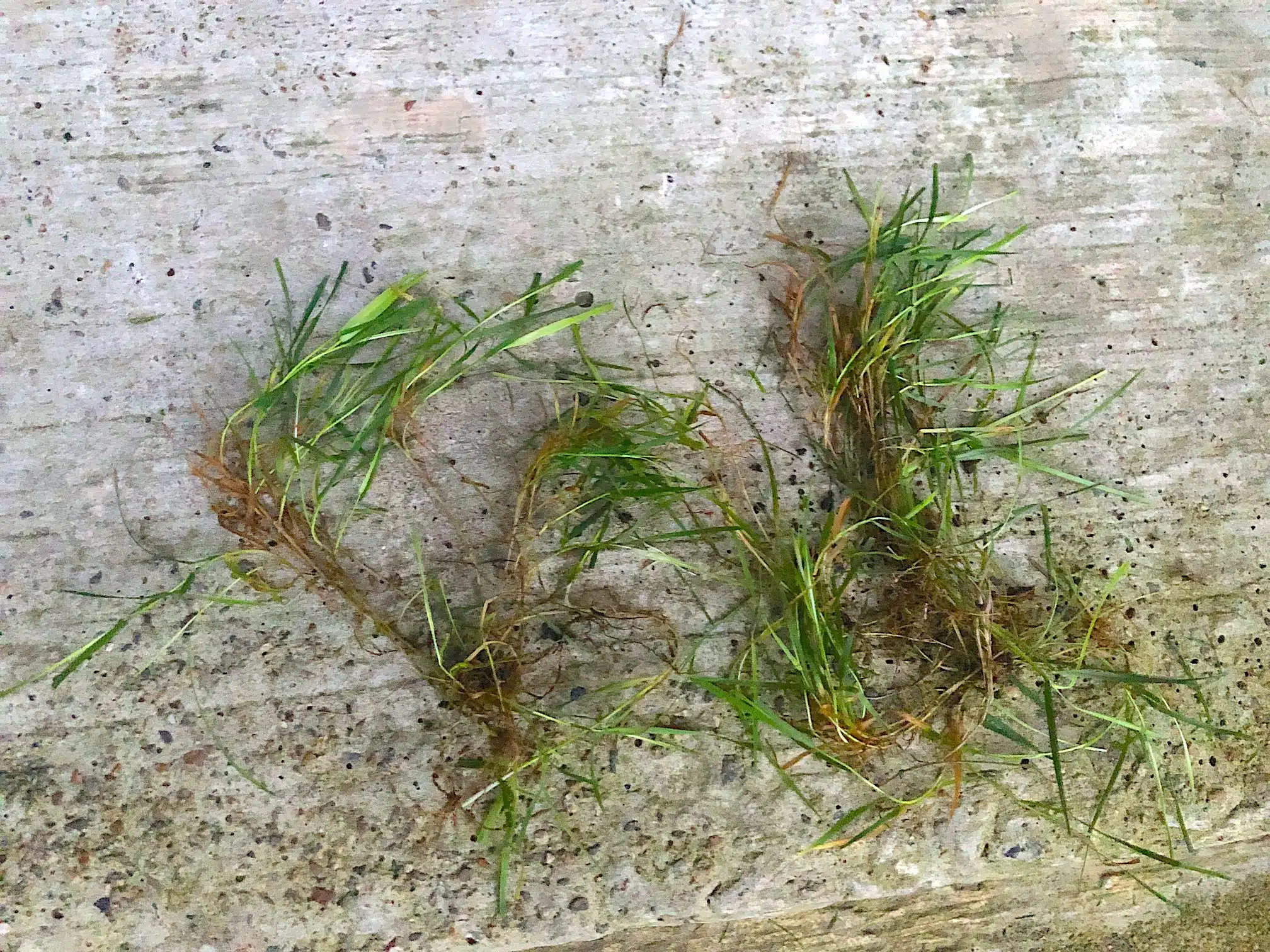
Creeping lawn weeds spread sideways on runners or underground stems and root wherever they touch soil. The common ones in Northeast lawns are ground ivy (creeping Charlie), wild violet, white clover, oxalis, spotted spurge and black medic, plus grassy creepers like bentgrass and Bermudagrass. Match the herbicide to the weed, spray in fall, and plan on a second round.

TOUGHEST CREEPERS
Ground ivy and wild violet
KEY INGREDIENT
Triclopyr
BEST WINDOW
Late Sept–Oct
PLAN FOR
A second application
Why creeping weeds are so hard to kill
Most lawn weeds you can pull out by the crown. Creepers don’t have just one crown. They grow stolons (runners above ground) or rhizomes (stems below ground), and new roots form along the way. Ground ivy does both: its stems root at the nodes and it also sends roots out under the surface, according to University of Minnesota Extension. Pull the patch you can see and the rooted pieces you missed keep going.
Three things follow from that:
- Spot-spraying misses runners you can’t see. On wild violet, LawnPhix blanket-sprays the whole area rather than chasing visible leaves, and on bentgrass treats at least six inches past the edge of each patch.
- The herbicide has to reach the roots. Burning the leaves off isn’t enough. That is why timing matters more for creepers than for most weeds.
- One application usually isn’t the end. UMass Extension notes repeat applications may be needed on ground ivy, and Rutgers expects a second application on white clover and spurge.
Identify the creeper first
The products that kill broadleaf creepers won’t touch creeping grasses, and the reverse is mostly true too. Identify the weed before you buy anything. Each name below links to the full LawnPhix guide for that weed.
| Weed | How it spreads | Quick ID | What controls it |
|---|---|---|---|
| Ground ivy (creeping Charlie) | Stolons that root at nodes, plus shallow roots | Round, scalloped leaves; square stem; minty smell; purple-blue flowers in spring | Triclopyr products |
| Wild violet | Underground rhizomes and seed | Heart-shaped waxy leaves; purple to white flowers in spring | Triclopyr products, repeated |
| White clover | Creeping stems that root as they go | Three round leaflets, often with a pale V; white flower heads | Triclopyr or quinclorac; dicamba also works |
| Oxalis (wood sorrel) | Creeping stems and seed flung from pods | Three heart-shaped leaflets; small five-petal yellow flowers | Triclopyr products |
| Spotted spurge | Annual; one taproot with a flat mat of stems | Small oval leaves, often with a red spot; milky sap | Two- or three-way broadleaf mix; often two applications |
| Black medic | Annual from seed; sprawling stems | Clover-like leaves, center leaflet on a short stalk; tiny yellow flowers; black seed pods | Broadleaf herbicide; feed the lawn |
| Creeping bentgrass | Stolons | Fine, lime-green patches that go brown in midsummer heat | Mesotrione (Tenacity), 2–3 applications |
| Bermudagrass | Stolons and rhizomes | Coarse, light-green warm-season grass that browns out early in fall | Fluazifop (Fusilade II) in tall fescue, repeated |
Not sure whether it’s clover or oxalis? See oxalis vs clover. If it has square stems and purple flowers, compare henbit vs creeping Charlie. Henbit is a winter annual that doesn’t root along its stems.
Ground ivy (creeping Charlie)
This is a mint-family plant, so look for a square stem and a minty smell when you mow it. UMass describes round, scalloped leaves and small purplish-blue flowers from April to June. It does best in damp, rich soil and tolerates shade, so it tends to start under trees and along shrub lines before it moves into the lawn. LawnPhix’s creeping Charlie guide covers hand-pulling and smothering small patches.
Wild violet
Violets spread from rhizomes and build a waxy leaf coating by summer, which helps them shed herbicide. LawnPhix treats them in spring and fall, two weeks apart, and mows the flowers off a day or two before spraying to protect pollinators. Full method in the wild violet guide.

White clover, oxalis and black medic
These three are easy to confuse. Clover has rounded leaflets and white flowers. Oxalis has heart-shaped leaflets and five-petal yellow flowers. Black medic has small yellow flower clusters, black seed pods, and a center leaflet on its own short stalk. Clover and black medic both fix their own nitrogen, so they thrive in lawns that are short on it. More feeding is part of the fix, not just more spraying. Guides: clover, oxalis, black medic. If you’d rather keep clover on purpose, read clover lawn pros and cons.
Spotted spurge
Spurge is a summer annual. Each plant grows from one root, but it lies flat in a mat and sets seed fast in thin, hot spots like curb edges and driveway seams. Snap a stem and you’ll see milky sap. Wear gloves, because the sap can irritate skin. Compare it with purslane in spurge vs purslane.

Creeping bentgrass and Bermudagrass
These are grasses, so broadleaf weed killers do nothing to them. Bentgrass shows up as fine, lime-green patches on its own stolons. Bermudagrass is a warm-season grass that sneaks into cool-season lawns on both stolons and rhizomes. LawnPhix has done several bentgrass renovations using mesotrione, and the bentgrass guide has the full timeline with photos.
How to get rid of creeping lawn weeds
1. Pick the herbicide by weed, not by brand
For broadleaf creepers, use a selective lawn herbicide that contains triclopyr. Rutgers rates triclopyr products as much more effective than standard 2,4-D mixes on ground ivy, violets, speedwell and oxalis. Minnesota Extension says 2,4-D alone does little to ground ivy. Three-way mixes with triclopyr, dicamba and 2,4-D work well for LawnPhix on clover and spurge. For the two grassy creepers, follow the bentgrass and Bermudagrass guides. Product picks are in the best weed killers for lawns.
2. Spray in fall, when the plant is feeding its roots
In fall, perennial creepers move sugars down to their roots for winter, and a systemic herbicide goes down with them. Minnesota Extension says this is why fall is the most effective time for ground ivy. Rutgers puts the fall window at late September through October, with May as the spring option, and advises against spraying above 85°F. See why fall is the best time to control lawn weeds for how LawnPhix sets up its fall tank mix.
- Spray actively growing weeds. UMass says to skip mowing for two to three days before and after, and to have no rain in the forecast for at least 24 hours.
- Add a surfactant if the label allows it. Ground ivy and violet leaves get waxy and shed spray.
- Treat the whole infested area plus a margin, not just the leaves you can see.
3. Plan the follow-up before you start
Expect a second round on creepers. Rutgers gives a 4–6 week interval for clover. On ground ivy and violets, LawnPhix’s routine is a fall application, then one or two early-spring follow-ups two weeks apart. Whatever you use, the label’s minimum retreatment interval comes first.
4. Thicken the turf so they can’t come back
Herbicide only clears the ground. Grass has to fill it, or the next creeper will. This step decides whether the weeds stay gone:
- Mow high. LawnPhix mows at 3.5–4 inches to shade out spurge and other low growers. See how often to mow.
- Overseed the gaps in late summer or early fall. Follow how to overseed a lawn. Check your herbicide label for a seeding interval. LawnPhix seeds 30 days after a triclopyr application on bentgrass renovations.
- Feed the lawn. Clover and black medic are signs of a nitrogen-hungry lawn. See when to fertilize.
- Fix shade and wet spots where ground ivy starts. Thin out low branches or improve drainage, or accept a shade-tolerant groundcover in deep shade.
New seedlings and herbicides: Rutgers advises waiting until a new seeding has been mowed at least three times, usually six to eight weeks, before spraying a broadleaf herbicide over it.
If the “weed” is a grass, a weed-and-feed won’t touch it.
Bentgrass and Bermudagrass patches are the most common reason people say their weed killer stopped working. Broadleaf herbicides aren’t built to kill grasses. Before you buy anything, check whether you’re looking at leaves (broadleaf) or blades (grass). Blades mean a mesotrione program or a kill-and-reseed job, not another bottle of three-way.
Creeping lawn weeds FAQ
What kills creeping Charlie without killing grass?
A selective lawn herbicide containing triclopyr, applied in fall while the plant is still growing. Expect a follow-up application. Rutgers and Minnesota Extension both rate triclopyr well ahead of 2,4-D for ground ivy.
Can I just pull creeping weeds by hand?
Only small, young patches. Ground ivy is shallow-rooted and pulls easily from moist soil, but any rooted runner you leave behind regrows. Rhizome spreaders like violet and oxalis are harder to pull out completely.
Why did the weeds come back after I sprayed?
Usually one of three reasons. The spray burned the leaves but didn’t reach the roots (summer timing or a waxy leaf). It missed runners outside the visible patch. Or the “weed” was actually a grass like bentgrass.
Is spring or fall better for creeping weeds?
Fall, for perennial creepers. Rutgers puts the fall window at late September through October. Spring (May) works as a follow-up, especially for violets before their leaves get waxy.
Will a pre-emergent stop creeping weeds?
Not the perennial ones. Ground ivy, violet and oxalis spread from plants that are already established. A pre-emergent can help with annual spurge in beds, but in lawns LawnPhix relies on dense turf instead.
Related guides
HOW THEY SPREAD
Stolons vs rhizomes
Runners above ground vs stems below, and why it matters for control.
TIMING
Fall is the best time to control lawn weeds
Fall tank mixes for ground ivy, chickweed and spurge.
Sources: UMass Extension: Ground Ivy in Lawns · University of Minnesota Extension: Ground ivy · Rutgers NJAES FS385: Broadleaf Weed Control in Cool Season Lawns
