
Home › Services › Pest Control
Stink Bug Control
Shield-shaped, brown-grey, and they arrive on warm autumn walls in numbers. They don’t bite or breed indoors — and the two obvious responses both make things worse.
Advertising disclosure: calls are routed to an independent local provider. We’re paid a referral fee for the call. You pay the provider, never us.
The short answer
Brown marmorated stink bugs overwinter inside structures, entering through gaps as nights cool. Sealing in late summer — before the first cool nights — works. Sealing in October traps them in the wall void, where they trickle into rooms all winter. And vacuuming them contaminates the vacuum with an odour that persists in the bag for weeks.
Seal window
Late summer, before cool nights
Sealing in autumn
Traps them inside
Vacuuming
Contaminates the machine
Harmful?
No — nuisance only
Is it a stink bug?
Four autumn invaders behaving identically, all with the same answer.
Likely
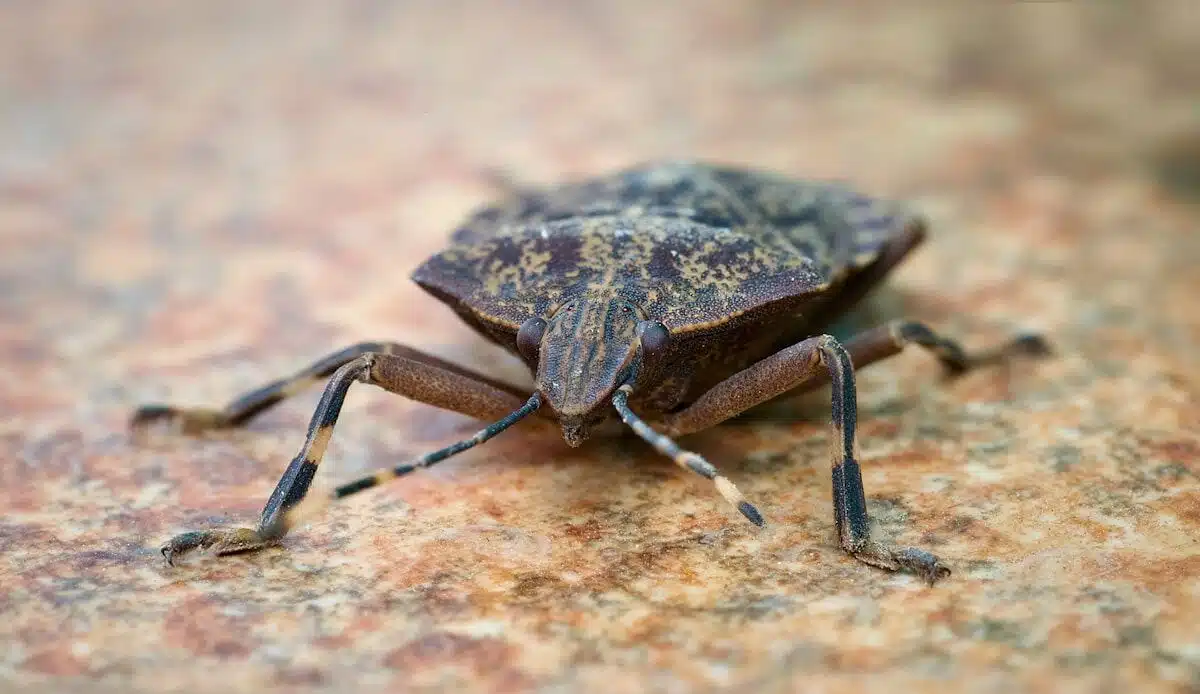
Brown marmorated stink bug
Shield-shaped, mottled brown-grey, with alternating light and dark bands on the antennae and the edge of the abdomen. Congregates on sunny south and west walls in autumn.
Similar
Box elder bugs
Black with red or orange lines. Same walls, same season, same seal-in-summer answer.
Similar
Asian lady beetles
Ladybird-like, and these stain surfaces when disturbed. Same treatment window.
Similar
Cluster flies
Sluggish flies at windows on warm days. Also overwintering, also the same exclusion timing.
Why not to vacuum them
The defensive compound is released when they’re disturbed or crushed, and it persists. A vacuum used on stink bugs holds that smell in the bag and the filter, and it comes back every time the machine runs.
If you’re going to vacuum, use a dedicated machine or a stocking-in-the-hose trick that lets you seal and discard the catch without it entering the machine body. Otherwise sweep them into a container of soapy water instead.
The agricultural side
Outdoors they’re a genuine agricultural pest of fruit and vegetables, feeding with piercing mouthparts that leave dimpled, corky damage. That matters if you grow produce; it doesn’t change the indoor answer, which remains exclusion in late summer.
Doing it in the right order
Timing is the entire method, same as box elder bugs.
Seal in late summer
Before the first cool nights. Window and door frames, utility penetrations, siding gaps, soffit joins.
Prioritise sunny walls
South and west faces, where they gather before entering.
Screen the vents
Fine mesh behind soffit and gable vents keeps ventilation and stops entry.
Repair window screens
Small tears are enough. They’re a common overlooked route.
Sweep, don’t vacuum
Into soapy water. Or use a dedicated vacuum you don’t mind smelling.
Don’t spray indoors
They’re not breeding inside. Killing the ones in a room does nothing about the void.
Timing decides the outcome
Where this stops being a DIY job
Large numbers already overwintering in a wall or attic. Sealing then makes it worse, and reaching them means opening something up.
Sealing work above single storey. Most of the entries that matter are at soffit and gable height.
Agricultural-scale damage to produce. That’s a different problem with different products and it’s outside domestic pest control.
Advertising disclosure: calls are routed to an independent local provider. We’re paid a referral fee for the call. You pay the provider, never us.
What a competent autumn visit does
Timing
Books it for late summer
Anyone selling exclusion in October is selling the version that traps them inside.
Where
Treats the sunny faces
South and west walls, before they enter.
Honest
Says it’s cosmetic
They do no structural damage. Anyone implying otherwise is overselling.
Common questions
Are stink bugs harmful?
Not indoors. They don’t bite, don’t breed inside and don’t damage the building. Outdoors they’re a genuine agricultural pest of fruit and vegetables.
Why shouldn’t I vacuum stink bugs?
The odour persists in the bag and filter and returns every time the machine runs. Sweep them into soapy water, or use a dedicated vacuum.
When should I seal gaps against stink bugs?
Late summer, before the first cool nights. Sealing in autumn traps a population inside the wall void, which is worse than leaving it.
Do stink bugs come back every year?
The same structure tends to attract them repeatedly, because the gaps are still there. Sealing properly in late summer is what breaks the pattern.
Already in the wall, or entries above reach?
Sealing in late summer is the whole answer and it’s ordinary ground-level work. A population already overwintering in a void, and entry points at soffit height, are the two that need someone else.
Call (720) 389-2293