
Home › Services › Pest Control
Fly Control
Flies are always breeding somewhere, and which species you have narrows down where. Finding the source ends it; treating the room does not.
Advertising disclosure: calls are routed to an independent local provider. We’re paid a referral fee for the call. You pay the provider, never us.
The short answer
Each common indoor fly breeds in a specific medium, so identification points straight at the source. Drain flies mean organic film in a trap. Fruit flies mean fermenting material. Cluster flies overwinter in wall voids. And a sudden swarm of large blowflies in one room almost always means something has died in a cavity or chimney nearby.
Drain flies
Organic film in a drain
Fruit flies
Fermenting material
Cluster flies
Overwintering in voids
Sudden blowflies
Something dead nearby
Which fly, and therefore where
Four common ones, each pointing at a different source.
Drain
Drain flies
Small, fuzzy, moth-like, resting on walls near sinks and showers. They breed in the gelatinous film inside traps and drains. Pouring bleach down does almost nothing — the film has to be scrubbed out mechanically.
Kitchen
Fruit flies
Tiny, tan, hovering around fruit bowls and bins. Breeding in anything fermenting, including a splash under a fridge or residue in a recycling bin.
Seasonal
Cluster flies
Sluggish, appearing at windows on warm days in autumn and late winter. They overwinter in wall and roof voids — essentially the same problem as box elder bugs, and the same seal-in-summer answer.
Investigate
Large blowflies, suddenly, in numbers
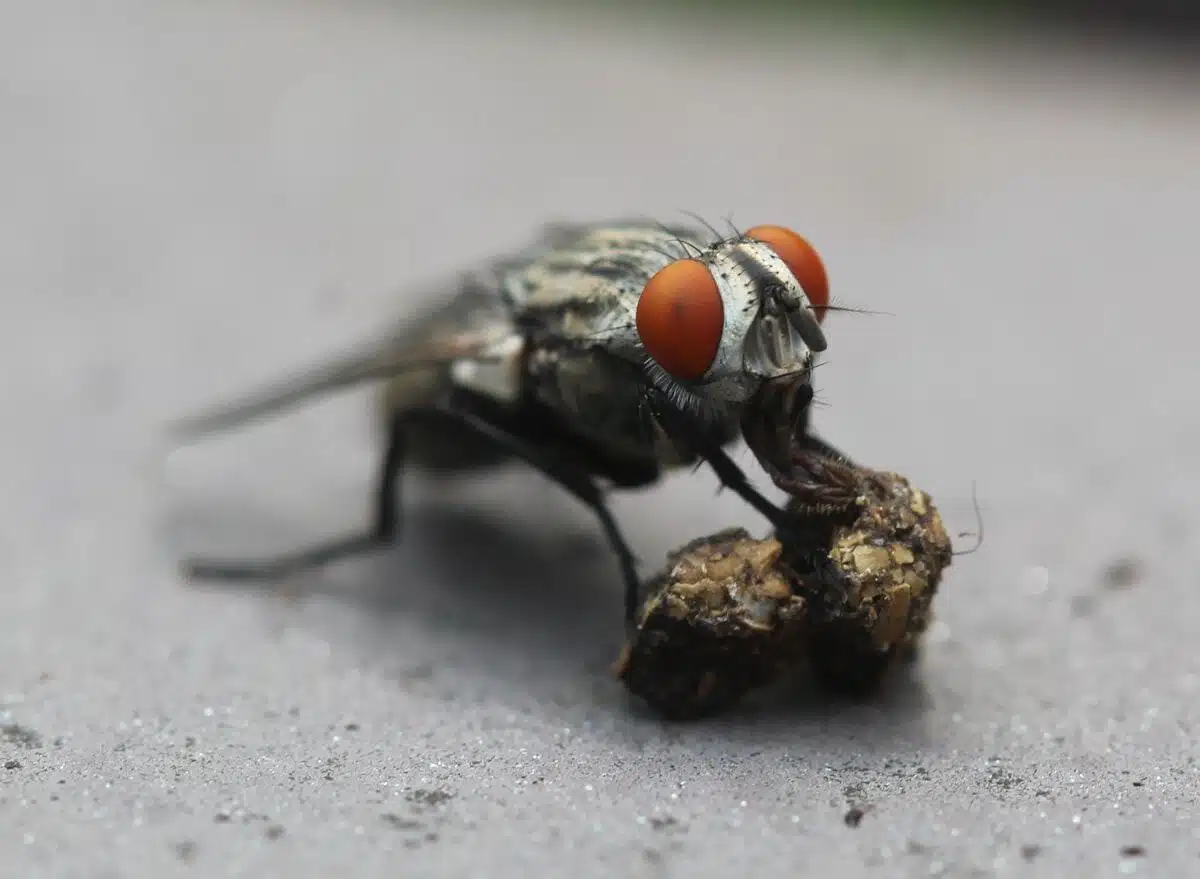
Metallic blue or green, appearing in one room over a day or two. Almost always something dead in a wall, chimney or roof void. A source to locate, not an insect to spray.
Why the drain fly test is worth knowing
People assume drain flies come up from the sewer. They breed in the film lining the drain itself, which is why pouring anything down — bleach, boiling water, enzyme cleaner — passes straight through and achieves little.
To confirm which drain, tape a clear bag or a cup of tape sticky-side-down over the opening overnight. Flies emerging get caught underneath. That tells you exactly which drain to scrub, and a stiff brush down the pipe does what no product poured in will.
The sudden swarm
Blowflies appearing suddenly in one room, in numbers, over a day or two is worth taking seriously. Something has died in an accessible cavity — a rodent behind plasterboard, a bird in a disused chimney, a squirrel in a soffit. The flies stop when the source finishes, but locating and removing it is the actual job and it usually means opening something up.
Finding the source
Identification first. Then the specific test for that species.
Identify the fly
Small and fuzzy near drains, tiny near fruit, sluggish at windows in autumn, or large and metallic. Each points somewhere different.
Tape-test the drains
Clear tape or a bag over each opening overnight identifies which one is producing them.
Scrub, don’t pour
A stiff drain brush removes the film. Anything poured down passes through it.
Hunt fermenting material
Under the fridge, in the recycling, a splash behind a bin, an overripe item at the back of a bowl.
Seal in late summer
For cluster flies. Same window and logic as box elder bugs — sealing in autumn traps them inside.
Locate the source on a swarm
Follow the concentration to a wall or void. This is where it usually stops being a homeowner job.
Fly to source
Where this stops being a DIY job
A sudden blowfly swarm you can’t trace. Something has died in a cavity. Locating it usually means opening plasterboard or accessing a void, and leaving it produces weeks of flies and a smell.
Flies from a disused chimney. Frequently a bird, and chimney access is its own job.
Persistent drain flies after scrubbing. That can indicate a broken or leaking drain below floor level, which is a plumbing question rather than a pest one.
Advertising disclosure: calls are routed to an independent local provider. We’re paid a referral fee for the call. You pay the provider, never us.
What a competent visit does
Identifies
The species first
Because it points at the source. Spraying a room without that is treating symptoms.
Locates
Finds the breeding site
Drains, voids, or something dead. That’s the job.
Advises
Says what to change
Bins, drains, sealing. A visit that’s only chemical will need repeating.
Common questions
Why do I have flies in my bathroom?
Almost certainly drain flies, breeding in the organic film inside a trap or drain. Pouring products down does little — the film has to be scrubbed out mechanically.
What causes a sudden swarm of large flies indoors?
Usually something dead in a wall, chimney or roof void. The flies stop when the source finishes, but locating it is the actual job.
How do I get rid of fruit flies?
Find what’s fermenting rather than trapping the flies. A splash under the fridge or residue in a recycling bin is a breeding site producing new ones daily.
Do fly sprays work?
On the adults in the room, briefly. They do nothing about the breeding site, which keeps producing, so the flies return within days.
Sudden swarm, or a source you can’t reach?
Identifying the fly, tape-testing the drains and hunting the fermenting material solves most fly problems without anyone visiting. A blowfly swarm from a cavity is the one that needs someone opening something up.
Call (720) 389-2293
Related
Blowflies indoors
Dead animal removal
A sudden swarm can mean a dead animal nearby. How to find it.