
Home › Services › Wildlife Removal
Skunk Removal
Two quite different skunk problems get treated as one. Digging in the lawn is a food problem you can solve without touching the animal. Denning under a structure isn’t.
Advertising disclosure: calls are routed to an independent local provider. We’re paid a referral fee for the call. You pay the provider, never us.
The short answer
Small cone-shaped divots appearing across a lawn overnight means a skunk is foraging for grubs. Treat the grubs and the food source disappears, and so does the skunk — no trapping required. Denning under a deck, shed or porch is a different problem: that’s shelter rather than food, and it needs exclusion done in the right season and the right order.
Lawn divots
Grubs — treat the cause
Under a structure
Shelter — needs exclusion
Kits
Spring, and they’re helpless
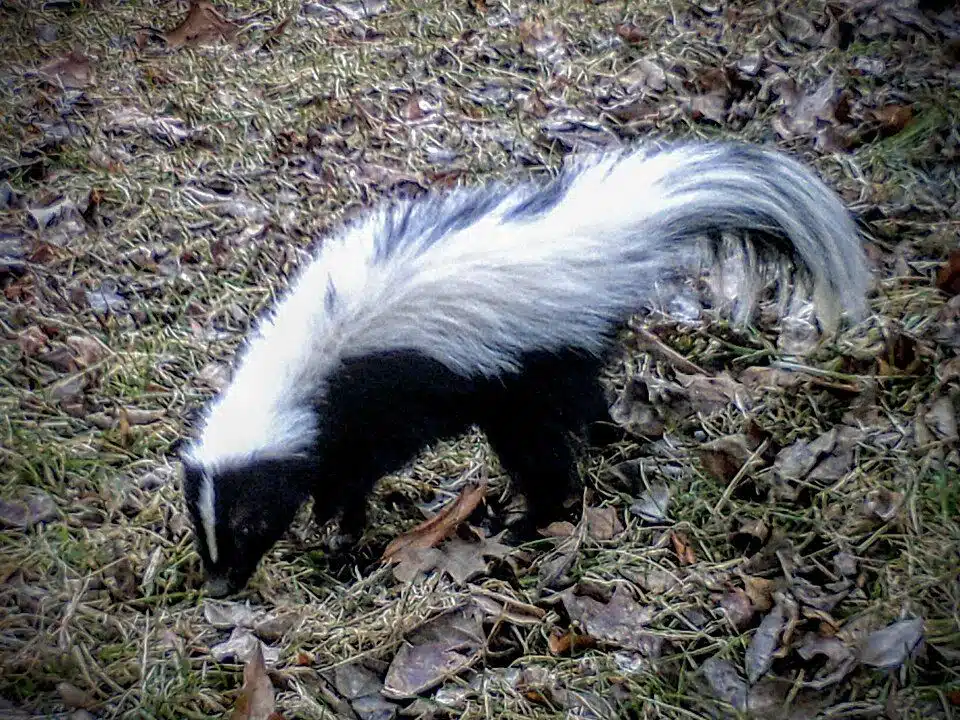
They warn
Stamp, then tail up
Digging or denning?
Two problems, two answers, and one of them you can solve yourself.
Solve the cause
Cone divots in the lawn
Small, roughly conical holes appearing overnight across open turf. That’s a skunk rolling back sod for grubs. Deal with the grubs and the visits stop.
Needs exclusion
Under a deck or shed
A dug entry against a foundation, a skirting board pushed aside, or a strong smell near ground level. Shelter rather than food, and it doesn’t resolve on its own.
Different animal
Larger, ragged holes
Raccoon damage is coarser and often at the roofline rather than in turf. Armadillo digging is deeper and more scattered.
Also grubs
Raccoon rolling sod
Sod peeled back in sheets rather than dug in cones. Same grub cause, different technique.
The grub connection
Skunks, raccoons and armadillos all dig lawns for the same reason, and it’s the thing under the turf rather than the turf itself. Where digging appears suddenly across a lawn in late summer or autumn, a grub count is more useful than a trap.
Cut a square foot of sod and lift it. A handful of white C-shaped larvae under that patch is a population worth treating; a couple is normal and not what’s drawing anything. Treating the grubs removes the reason for the visits, which is why this is one of the few wildlife problems with a genuinely non-wildlife solution.
Why they rarely spray
Spraying is a last resort for a skunk — it takes time to replenish and leaves them defenceless meanwhile. They give a clear sequence of warnings first: stamping the front feet, hissing, then raising the tail. Backing away slowly at the stamping stage almost always ends it without incident.
Which matters practically, because it means a skunk crossing a garden is not an emergency, and reacting suddenly is what turns it into one.
Dealing with the digging
Ground-level work, and it addresses the actual cause.
Count the grubs
Lift a square foot of sod. A significant count under the damaged areas confirms the diagnosis before you spend anything.
Treat at the right time
Grub control is timed to the larval stage rather than applied whenever. Wrong timing means product that does nothing.
Remove other food
Pet food, fallen fruit, unsecured bins, and bird feeder spillage.
Light the area
Motion-activated lighting is a reasonable deterrent for a nocturnal forager and costs little.
Close off den sites before the season
Hardware cloth around deck and shed skirting, buried and turned outward at the base. Do this in autumn or midwinter, not spring.
Never seal in spring
Kits are helpless and can’t follow the mother out. Same rule as every other denning species.
Which problem is it?
Where this stops being a DIY job
Denning under a structure in spring. Kits are helpless for weeks and cannot follow the mother out. Sealing at that point kills them under your deck, which is both cruel and a smell problem you can’t reach.
Anything under a foundation or slab rather than a deck. The question becomes structural rather than about the animal.
Any bite or scratch. Skunks are a rabies vector species. That’s a doctor or public health immediately, and no number here is the right one.
What a competent operator does
Diagnoses
Checks for grubs first
Because half of these problems have a lawn-care answer rather than a wildlife one.
Seasons
Asks about kits
Spring exclusion without checking is the mistake that can’t be undone.
Excludes
Buries the wire
Hardware cloth turned outward at the base, or they dig straight under it.
Common questions
Why is a skunk digging up my lawn?
Grubs. Small cone-shaped divots appearing overnight are a skunk rolling back turf to reach larvae. Treat the grubs and the visits stop.
How do I keep skunks out from under my deck?
Hardware cloth around the skirting, buried and turned outward at the base so they can’t dig under. Do it in autumn or midwinter, never in spring.
Will a skunk spray me?
Rarely, and not without warning. They stamp their front feet, then hiss, then raise the tail. Backing away slowly at the first stage almost always ends it.
Are skunks dangerous?
They’re a rabies vector species, so any bite or scratch is a medical matter immediately. Otherwise they’re avoidant and give clear warnings.
Under the deck, or spring with young?
Counting the grubs and treating them properly solves the digging version outright, and that’s genuinely yours. Denning under a structure — especially in spring — is where the sequence matters more than the method.
Call (855)-321-3088