
Home › Services › Wildlife Removal
Armadillo Removal
Armadillos are digging for grubs and worms, which means two useful things: baited traps mostly don’t work on them, and treating what’s in your soil removes the reason they’re visiting.
Advertising disclosure: calls are routed to an independent local provider. We’re paid a referral fee for the call. You pay the provider, never us.
Straight answer
They forage by smell for invertebrates underground, so bait in a trap is largely irrelevant to them. What does work is funnelling — boards angled out from either side of a trap set on an active path, using the fact that they have poor eyesight and follow edges. And like skunks, the lawn damage is a symptom: fewer grubs, fewer visits.
What they’re after
Grubs and earthworms
Baited traps
Largely ineffective
What works
Funnel boards on a path
Root cause
Soil invertebrates
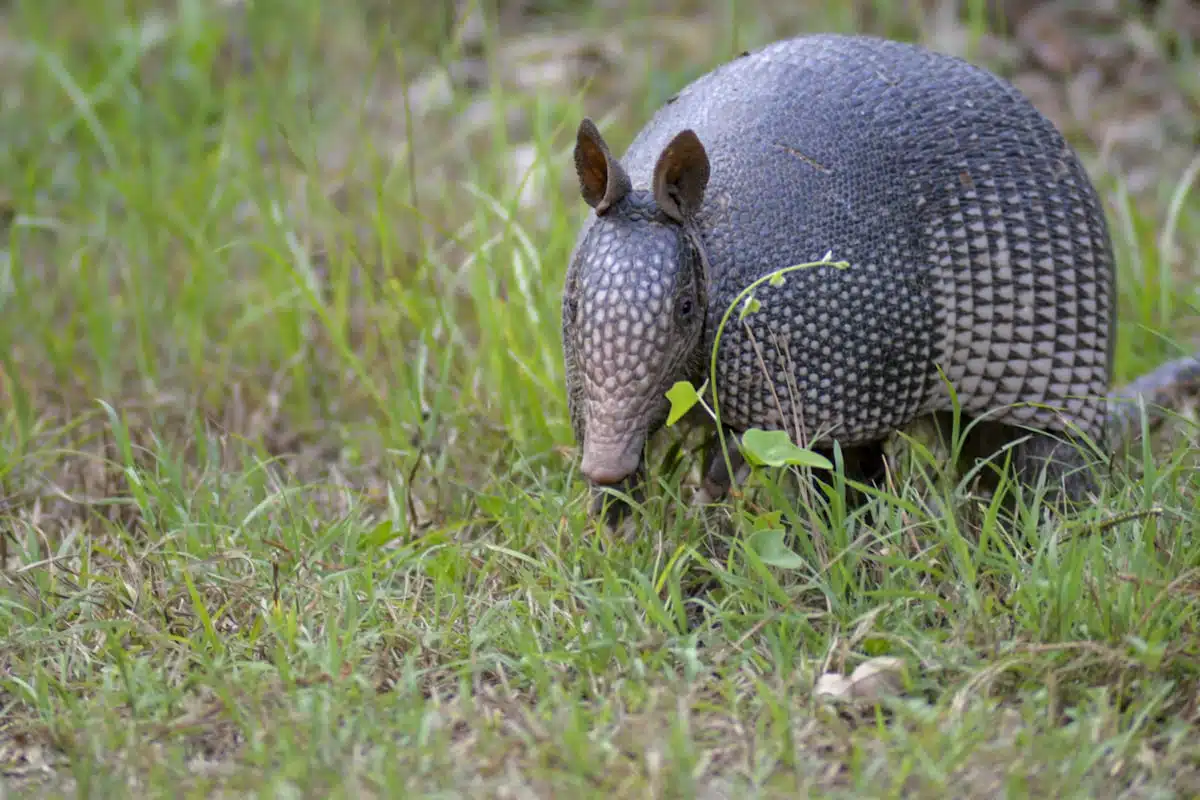
Armadillo, skunk or raccoon?
All three make cone-shaped divots overnight and all three are after the same thing. What separates them is the burrow and whether they’ll take bait.
Won’t take bait
Armadillo
Cone divots plus uprooted bedding plants, and a burrow seven to ten inches across against a structure, bank or tree base. Ignores anything you put in a trap.
Takes bait
Skunk
Cone divots across the lawn, no burrow dug — dens under decks and sheds instead. Responds to a baited trap, which armadillos don’t.
Takes bait
Raccoon
Turf rolled back in sheets like carpet rather than dug through. Same grubs underneath, entirely different technique.
Common cause
What all three want
Grubs and earthworms near the surface. Heavy foraging damage means a good supply, and treating it reduces the attraction for all three.
Reading the damage
Shallow cone-shaped holes a few inches across scattered across the lawn, appearing overnight, often with uprooted bedding plants and disturbed mulch. It looks a lot like skunk damage and the cause is identical — something underground worth digging for.
What distinguishes armadillos is the burrow: a hole roughly seven to ten inches across, usually against a structure, under a shed or deck, at the base of a tree, or in a bank. They may maintain several. If you have both the foraging divots and a burrow of that size, that’s your answer.
Why bait doesn’t work and funnelling does
Almost every trapping guide written for raccoons gets applied to armadillos and fails, because the animal is not interested in what’s in the trap. They hunt by smell for things in the soil.
The technique that does work uses their behaviour instead. Armadillos have poor eyesight and tend to follow edges — a fence line, a foundation, the side of a shed. Set a live trap directly on an active route, flush against that edge, then run two boards outward from the trap mouth at an angle to form a funnel. The animal follows the edge, meets the funnel, and continues into the trap because that’s the way the edge leads. No bait required.
Set it in the evening; they’re mostly nocturnal. Check it early — leaving any animal in a trap through a hot day is both cruel and, in many places, a legal problem.
Removing the reason
This is the durable half. Heavy foraging damage means a good supply of grubs and earthworms near the surface, and grub control genuinely reduces the attraction — the same logic that applies to skunks and raccoons digging cone divots.
Worth being honest that earthworms are good for your soil and you don’t want to eliminate those. But a large grub population is a lawn problem in its own right, and treating it deals with two things at once. The tests and timing for that are in the lawn pest guidance on this site.
Exclusion is the same construction as for groundhogs: wire below grade with an outward L-footer around decks, sheds and foundations. They dig, so a fence that stops at ground level is decorative.
One thing worth stating plainly
Armadillos are one of the few animals that can carry the bacterium causing leprosy, and transmission to people is documented but very rare. It is not a reason for alarm and it is a reason not to handle one, not to let a dog worry one, and not to butcher one. Gloves and distance are the whole precaution.
Funnel trapping
Baited traps sit empty because the animal hunts by smell for things in the soil. This uses their behaviour instead.
Find an active route
They have poor eyesight and follow edges — a fence line, a foundation, the side of a shed. Look for a worn path rather than guessing.
Set the trap on the edge
Flush against whatever they’re following, so the edge leads straight into the mouth.
Build the funnel
Two boards running outward from the trap mouth at an angle. The animal follows the edge, meets the funnel, and continues in. No bait required.
Set it in the evening
They’re mostly nocturnal. A trap set at dawn is a trap sitting in the sun all day.
Check early
Leaving any animal in a trap through a hot day is cruel and, in many places, a legal problem.
Then treat the grubs
The durable half. Fewer grubs, fewer visits — and a large grub population is a lawn problem in its own right.
Armadillo, skunk or raccoon
Where this needs someone else
A burrow under a foundation, slab, deck footing or driveway. Multiple burrows undermine what’s above them, and by the time it shows at the surface a lot of soil has already moved.
Trapping, if you haven’t checked your state’s rules. Relocation is prohibited in many places and restricted in others, and armadillo rules specifically vary more than most because they’re a relatively recent arrival across much of their current range.
Don’t handle one, and keep dogs off them. The leprosy risk is genuinely small, but it isn’t zero, and there’s no reason to take it.
Advertising disclosure: calls are routed to an independent local provider. We’re paid a referral fee for the call. You pay the provider, never us.
How this job should be run
Trapping
Funnels rather than baits
Funnel boards on an active path. If the answer involves bait, they’ll catch nothing.
Survey
Locates the burrows
Seven to ten inches across, usually against a structure or bank.
Prevention
Raises grub control
Same logic as skunks. Fewer grubs, fewer visits.
What to ask before you book
- How are you trapping — baited, or funnelled on a path?
- Have you found the burrows, and how many?
- Is exclusion included, and how deep does the wire go?
- What are you recommending about the grub population?
- Where is the animal released, legally?
If the answer to the first question involves bait, they are about to spend a week not catching anything.
What people ask
Why won’t armadillos go into a baited trap?
They forage by smell for invertebrates in the soil, so what’s inside the trap is irrelevant to them. Funnel boards angled out from the trap mouth on an active path work instead.
What are armadillos digging for in my lawn?
Grubs and earthworms. The shallow cone-shaped holes are foraging damage, and it’s the same root cause as skunk digging — treating the grub population reduces the attraction.
Do armadillos carry leprosy?
They can carry the bacterium and transmission to people is documented but very rare. It’s a reason not to handle one and to keep dogs off them, not a reason for alarm.
How do I keep armadillos out?
Wire below grade with an outward L-footer around decks, sheds and foundations. They dig, so a fence stopping at ground level does nothing.
Multiple burrows, or one under a structure?
Funnel trapping and grub control are both genuinely doable, and the grub work is the half that stops it recurring. Burrows under a slab or footing are the ones worth handing over — along with the trapping rules, which vary more for this animal than most.
Call (855)-321-3088