
Home › Services › Pest Control
Millipede Control
They curl into a spiral, they arrive in numbers after heavy rain, and every one you find indoors is already dying. Understanding why makes the answer obvious.
Advertising disclosure: calls are routed to an independent local provider. We’re paid a referral fee for the call. You pay the provider, never us.
The short answer
Millipedes need constant moisture and can’t survive indoor humidity. Every one you find inside is dehydrating and will be dead within a day or two, which is why you find them curled up. They come in after heavy rain when their habitat floods, or in autumn when they migrate. Spraying kills things already dying — the useful work is drying the band of ground against the house.
Harmful?
No — no bite, no damage
Indoors
They dehydrate and die
Triggered by
Heavy rain, autumn migration
Real fix
Dry perimeter band
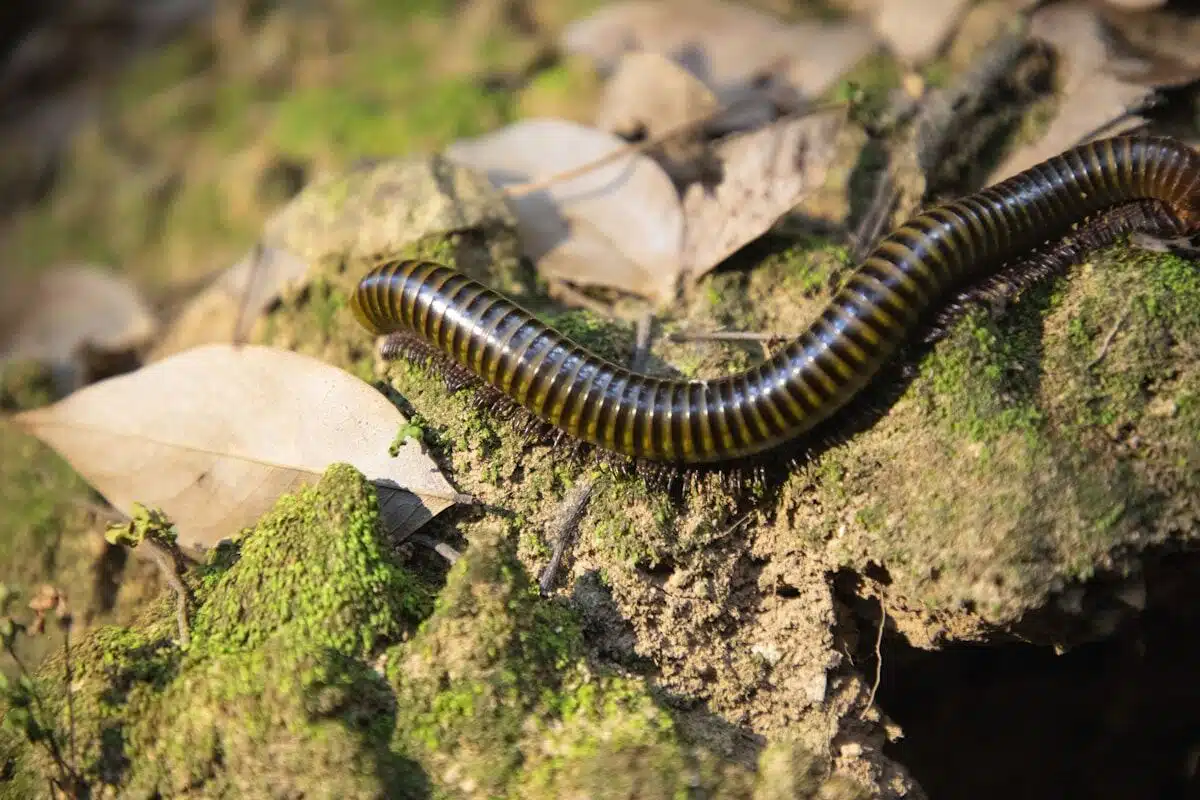
Millipede or centipede?
Confused constantly, and only one of them is worth reacting to.
This page
Millipedes
Cylindrical, slow, two pairs of legs per body segment, and they curl into a tight spiral when disturbed. Harmless detritivores that eat decaying plant matter.
Different
Centipedes
Flatter, fast, one pair of legs per segment, and they don’t curl. Predators, and the larger species can deliver a painful bite. Different page, different answer.
Also confused
Wireworms and larvae
Beetle larvae in soil, often mistaken for millipedes in a plant pot. Different again.
Context
Numbers after rain
A sudden influx following heavy rain is the classic pattern — their habitat has flooded and they’re moving.
Why they’re at the foundation
Millipedes live in soil, leaf litter and mulch, eating decaying plant matter. That habitat gets deliberately placed right against houses — mulched beds, leaf accumulation at the wall, damp soil where a downspout discharges.
So the population is at the threshold before anything drives it inward. Pulling mulch back to leave a dry band of bare soil or gravel between planting and siding removes the reservoir rather than treating what emerges from it.
Why perimeter spraying underperforms
A barrier treatment kills millipedes that cross it, and after heavy rain there are more crossing than any barrier handles. The population in the mulch is unaffected and keeps supplying.
Which is why the same houses have the same problem every autumn regardless of how many times they’ve been treated — the habitat never changed.
Drying the perimeter
Ground-level work, and it addresses the reservoir.
Pull mulch back from the wall
Leave a dry gap of bare soil or gravel between planting and siding. The single most effective change.
Clear leaf accumulation
Especially in corners and against foundations, where it stays damp longest.
Fix the discharge
Downspout extensions taking water several feet from the wall. A permanently damp band at the foundation is exactly their habitat.
Seal ground-level gaps
Under thresholds, at utility penetrations, at slab joins. Ordinary sealant — they don’t chew.
Change exterior lighting
Warmer colour temperatures and motion activation reduce what gathers at doors at night.
Sweep up the ones indoors
They’re dying anyway. No treatment needed for the individuals you find.
What works
Where this stops being a DIY job
Persistent damp at the foundation you can’t resolve. Grading, drainage or a discharge problem, and it matters for reasons beyond millipedes.
Numbers that don’t fall after the perimeter is dry. Something is still wet, possibly inside a wall or crawl space.
Gutter work above single storey. The usual reason a moisture problem becomes a height problem.
Advertising disclosure: calls are routed to an independent local provider. We’re paid a referral fee for the call. You pay the provider, never us.
What a competent visit addresses
Traces
Looks at the perimeter
Mulch, grade, discharge. Not the insects, which are already dying.
Advises
Names what to change
A quote that’s only chemical will be needed again next autumn.
Honest
Says they’re harmless
No bite, no damage, no health risk.
Common questions
Are millipedes dangerous?
No. They don’t bite or sting, they don’t damage property, and they eat decaying plant matter. Some species release a mild irritant if handled, which is why not to pick them up bare-handed.
Why do millipedes come inside?
Their habitat floods after heavy rain, or they migrate in autumn. Every one indoors is dehydrating and will be dead within a day or two.
How do I stop millipedes getting in?
Pull mulch back from the wall to leave a dry band, fix downspout discharge, and seal ground-level gaps. That removes the reservoir rather than treating what emerges.
What’s the difference between millipedes and centipedes?
Millipedes are cylindrical, slow, and curl into a spiral. Centipedes are flatter, fast, and don’t curl — and the larger ones can bite.
Damp at the foundation, or numbers every autumn?
Pulling mulch back, fixing the discharge and sealing ground-level gaps ends this permanently, and it’s all ground-level work. Persistent damp you can’t resolve is where it needs someone else.
Call (720) 389-2293