
Lawn Care
Leave your grass clippings on the lawn. Bag them only when there’s a reason.
Most of the time, leave grass clippings where they fall. Short clippings break down fast, don’t cause thatch, and can cut your nitrogen needs by 25–50%. Bag them during a leaf-disease outbreak, when weeds are in seed, or when wet or overgrown grass leaves clumps. Keep clippings from herbicide-treated lawns out of compost and garden beds.
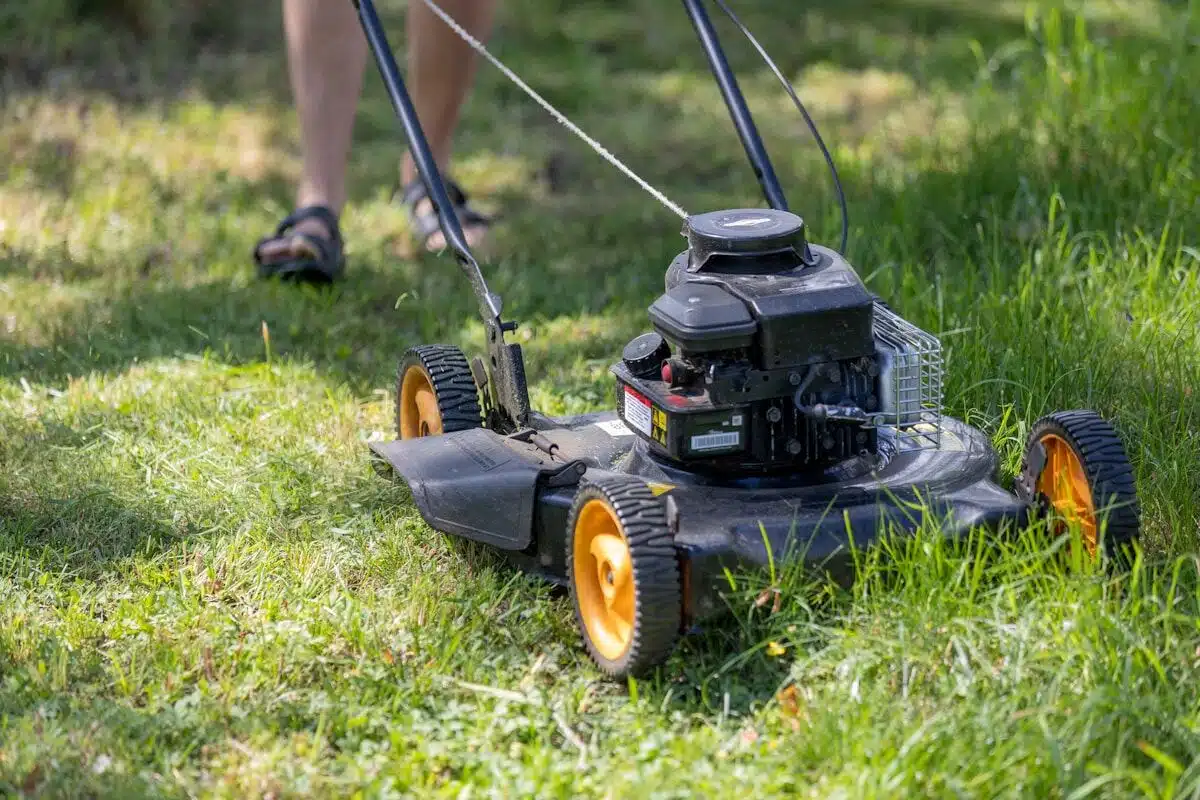
NITROGEN SAVED
25–50% less N needed
THATCH
Clippings don’t cause it
AFTER QUINCLORAC
Mulch the first 3 mowings
AS GARDEN MULCH
1–2 in. max, untreated lawns only
Leave them or bag them? The decision table
Mulching back into the lawn is the default. Each row below is an exception, and most of them last only a mowing or two.
| Situation | Clippings | Why |
|---|---|---|
| Routine mow, dry grass, one-third rule kept | Leave | Short pieces break down fast and return nutrients |
| Grass got away from you (more than 1/3 to cut) | Bag the first pass, mulch the second | Long clippings mat down and shade the grass |
| Wet grass, or clumps left behind | Wait to mow, or rake/bag the clumps | Wet clippings mat together and smother the turf |
| Heavy leaf disease (dollar spot, leaf spot, rust) | Bag and clean the deck | Keeps infected tissue from being spread around |
| Weeds in seed (crabgrass, Poa annua seed heads) | Bag | Clippings can carry weed seed to new spots |
| First 3 mowings after quinclorac (Drive XLR8) | Leave (required) | The label keeps treated clippings on the treated area |
| Recent broadleaf weed killer (2,4-D, dicamba, MCPP, triclopyr) | Leave on the lawn, never in beds or compost | Residue can injure garden plants |
| Clippings blown onto the driveway or street | Blow or sweep back onto the lawn | Keeps nutrients out of storm drains |
The disease, wet-clump and storm-drain rows follow University of Minnesota Extension’s clipping guide. The overgrown-lawn routine and the weed-seed warning come from our one-third rule and 6 rules of lawn mowing guides. For the disease row, see dollar spot and melting out (leaf spot).
How much nitrogen do grass clippings return?
A lot. Cornell’s lawn program says returning clippings can cut your nitrogen need by 25 to 50 percent and lower your need for phosphorus. Penn State found Kentucky bluegrass clippings held 46 to 59 percent of the nitrogen applied as fertilizer over three years. Bag every mowing and you throw roughly half of each feeding into the trash.
Put it in pounds. Penn State suggests 2.0–3.5 lb N per 1,000 sq ft per year for Kentucky bluegrass. If your plan is 3 lb and you mulch every mowing, Cornell’s 25–50% range works out to roughly 0.75–1.5 lb you don’t need to buy. UMass turf guidance says to trim supplemental feeding when you return clippings, so the lawn isn’t overloaded with N and P. Plug your reduced number into the nitrogen calculator.
There’s a soil side too. Oklahoma State’s soil test fact sheet notes that lawns fed ammonium nitrogen year after year, with the clippings hauled away, tend to drift more acidic. If you’ve bagged for years, a lawn soil test will show whether your pH has slipped.
The thatch myth
Clippings don’t cause thatch. Clippings are mostly leaf tissue, and Penn State notes that leaf tissue decomposes rapidly and doesn’t contribute to thatch. Minnesota Extension says the same. Thatch is built from tougher stems, crowns, roots and runners. It piles up when the lawn makes that material faster than soil life can break it down, for example under heavy feeding or on compacted soil. If you have more than about half an inch of thatch, look at fertilizer rates and soil, not the clippings.
The one real exception is a mowing that leaves long clippings lying in rows. Those mat and shade the grass for days. The fix is mowing more often, not bagging forever.
Mulching mowers: get clippings small
A mulching mower keeps clippings under the deck and cuts them several times, so they drop down between the grass blades instead of sitting on top. Many standard mowers can be converted with a mulching blade and a chute plug. What matters most is the routine:
- Mow high and often. Keep tall fescue around 4 inches and Kentucky bluegrass and perennial ryegrass around 3.5 inches, per our mowing rules. Mow before you’d be cutting off more than a third: a 4-inch fescue lawn gets mowed by 6 inches.
- Mow dry. Wet clippings clump and clog the deck.
- Keep the blade sharp. A dull blade tears leaf tips and leaves ragged pieces that mulch poorly.
- Set the schedule by growth, not the calendar. During the spring flush that usually means once or twice a week. See how often to mow.
Using clippings as mulch or compost
Bagged clippings from an untreated lawn are useful in the garden if you handle them right:
- As mulch: spread no more than 1–2 inches at a time. Thicker layers mat, go slimy and smell.
- In compost: mix fresh clippings with dry browns like shredded leaves or straw. Clippings alone pack down and turn sour.
- In fall: mow leaves and grass together and leave the mix on the lawn. The mulching mower guide covers light leaf cover.
The catch is what was sprayed on the lawn. Some herbicides ride along in the clippings, and a few survive composting.
- Quinclorac (Drive XLR8): leave clippings on the lawn for the first three mowings, as the label requires and our quinclorac guide explains. Wait two days before and after spraying to mow. UMass adds that quinclorac-treated clippings shouldn’t be used as mulch or compost near flowers, vegetables or ornamental trees and shrubs.
- Broadleaf weed killers (2,4-D, MCPP, dicamba): Penn State says don’t put these clippings around trees, shrubs or garden plants.
- Labels that ban compost outright: Purdue’s turf team points to products like Imprelis that prohibit any mulching or composting of treated clippings. Where a label is silent, Purdue suggests waiting about a month (roughly three mowings).
- Clopyralid and aminopyralid: these persistent herbicides can stay active through composting, sometimes for years. Tomatoes, beans, peppers and potatoes are especially sensitive. NC State notes clopyralid hasn’t been registered for residential lawns since 2002. Clippings from a lawn service, a commercial property or an unknown source are still a gamble.
Stop: don’t put herbicide-treated clippings in the compost pile or the vegetable garden.
If anything but fertilizer went on the lawn in the past month, or you don’t know what your lawn service sprayed, leave the clippings on the lawn. Herbicide residue that is safe for grass can curl, twist and stunt tomatoes, beans and peppers. With the persistent products, the damage can show up a season or more after the compost goes down.
Not sure about a pile you already made? Run NC State’s simple pot test. Mix the compost 1:1 with bagged potting mix, plant peas or beans, and watch for 2–3 weeks. Cupped, twisted new leaves mean the compost stays out of the garden.
Grass clippings FAQs
Is it better to bag or leave grass clippings?
Leave them for most mowings. They feed the lawn and save fertilizer. Bag them only for heavy leaf disease, weeds in seed, or wet or overgrown cuttings.
Do grass clippings cause thatch?
No. Clippings are leaf tissue that breaks down quickly. Thatch comes from tougher stems, crowns and roots.
How long after weed killer can I use clippings in the garden?
Follow the product label first. Quinclorac requires the first three mowings to stay on the lawn. Where a label says nothing, Purdue suggests about a month. Some products ban composting the clippings entirely.
Should I bag clippings after fertilizing?
No. Bagging right after a feeding throws away much of the nitrogen you just paid for.
Do I need a special mulching mower?
No, but it helps. Any mower spreads clippings if you mow often enough, and a mulching blade and chute plug make the pieces smaller.
Related guides
Sources: Cornell Turfgrass: Feeding · Penn State Extension: Recycling turfgrass clippings · UMass Turf BMPs · UMass: Quinclorac overview · UMN Extension: What to do with lawn clippings · Purdue Turf Tips: Clippings and herbicides · NC State Extension: Herbicide carryover · OSU HLA-6468
