
Lawn Care · Grass Types
Tall fescue takes the heat and the wear. Bluegrass repairs itself.
Tall fescue vs Kentucky bluegrass comes down to roots versus rhizomes. Tall fescue roots deep, so it handles drought, heat, wear and some shade better, but it grows in clumps and can’t fill bare spots. Kentucky bluegrass spreads underground, so it knits a dense, self-repairing turf and survives hard winters, but it wants full sun and more water.

BETTER IN DROUGHT
Tall fescue
BETTER AT SELF-REPAIR
Kentucky bluegrass
SEEDS PER POUND
~227,000 vs ~2.2 million
NEW-LAWN SEED RATE
8–10 lb vs 3–4 lb per 1,000 sq ft
Tall fescue vs Kentucky bluegrass at a glance
The ratings below come from UMass Extension’s turfgrass selection tables, which are written for Massachusetts lawns. Disease notes are from Penn State Extension, and germination times from our own grass seed guide.
| Trait | Turf-type tall fescue | Kentucky bluegrass |
|---|---|---|
| Drought | Excellent. Deep roots keep it green longer | Good. Goes semi-dormant in long dry spells, then recovers |
| Heat | Good | Fair |
| Cold / winter | Fair | Excellent |
| Shade | Fair (part shade) | Poor |
| Wear (traffic) | Excellent | Fair |
| Recovery from damage | Poor. Bunch-type, doesn’t spread | Good. Rhizomes fill in |
| Compaction | Fair | Good |
| Main diseases | Brown patch, Pythium blight, net blotch, red thread, rust | Leaf spot, dollar spot, summer patch, necrotic ring spot, stripe smut |
| Fertility | Medium–high (3–5 lb N per 1,000 sq ft a year) | Medium–high (3–5 lb N per 1,000 sq ft a year) |
| Thatch | Low | Medium |
| Germination | About 2 weeks | About 3 weeks |
| Look | Wider, coarser blade; dark green | Finer blade; dense, dark blue-green carpet |
Read the table as two different strategies. Tall fescue survives stress by rooting deep and staying put. Kentucky bluegrass gives ground under stress, then grows back into the gaps. Neither one is the better grass overall; the right one depends on how much sun, water and wear your yard gets.
How to tell them apart in your lawn
If you’re overseeding, match what’s already growing. Pull a few shoots and check these four things, using Penn State’s cool-season grass ID guide:
LEAF TIP
Boat-shaped vs pointed
Kentucky bluegrass has a keeled tip shaped like the bow of a canoe. Tall fescue tapers to a simple point.
NEW LEAF
Folded vs rolled
Slice across the base of a shoot. A bluegrass leaf comes out folded in half, like a V. A tall fescue leaf comes out rolled, like a tube.
BLADE
One center line vs many ridges
Bluegrass shows one clear midrib and no other obvious veins. Tall fescue has many equal-sized veins running the length of the blade and feels rougher.
GROWTH HABIT
Runners vs clumps
Dig up a plug. Bluegrass has white underground rhizomes linking plants together. Tall fescue grows in tufts, with short rhizomes at most.
Which one fits your yard?
Use your worst conditions, not your best ones. A lawn is only as good as the hottest, driest or most-trampled spot in it.
| Your yard | Lean toward | Why |
|---|---|---|
| Full sun, irrigated, a showcase front lawn | Kentucky bluegrass (with 10–20% perennial ryegrass) | Densest turf and best self-repair. UMass’s sunny-lawn mixes are mostly bluegrass |
| No irrigation, hot south-facing slope | Tall fescue | Most heat and drought tolerant of the cool-season grasses, per Penn State |
| Part shade (4–6 hours of sun) | Tall fescue | UMass rates its shade tolerance fair vs poor for bluegrass. For dense shade, see grass for shade |
| Kids, dogs, a play area | Tall fescue with 5–10% bluegrass | Fescue takes the wear, and the bluegrass helps patch damage (University of Maryland) |
| Northern New England, long hard winters | Kentucky bluegrass | UMass rates its cold hardiness excellent vs fair for tall fescue |
| Hot, humid summers, history of brown patch | Bluegrass, or tall fescue with a fungicide plan | Brown patch is tall fescue’s most serious disease (see brown patch) |
| Overseeding an existing lawn | Whatever is already there | Mismatched blades show up as clumps of a different color and texture |
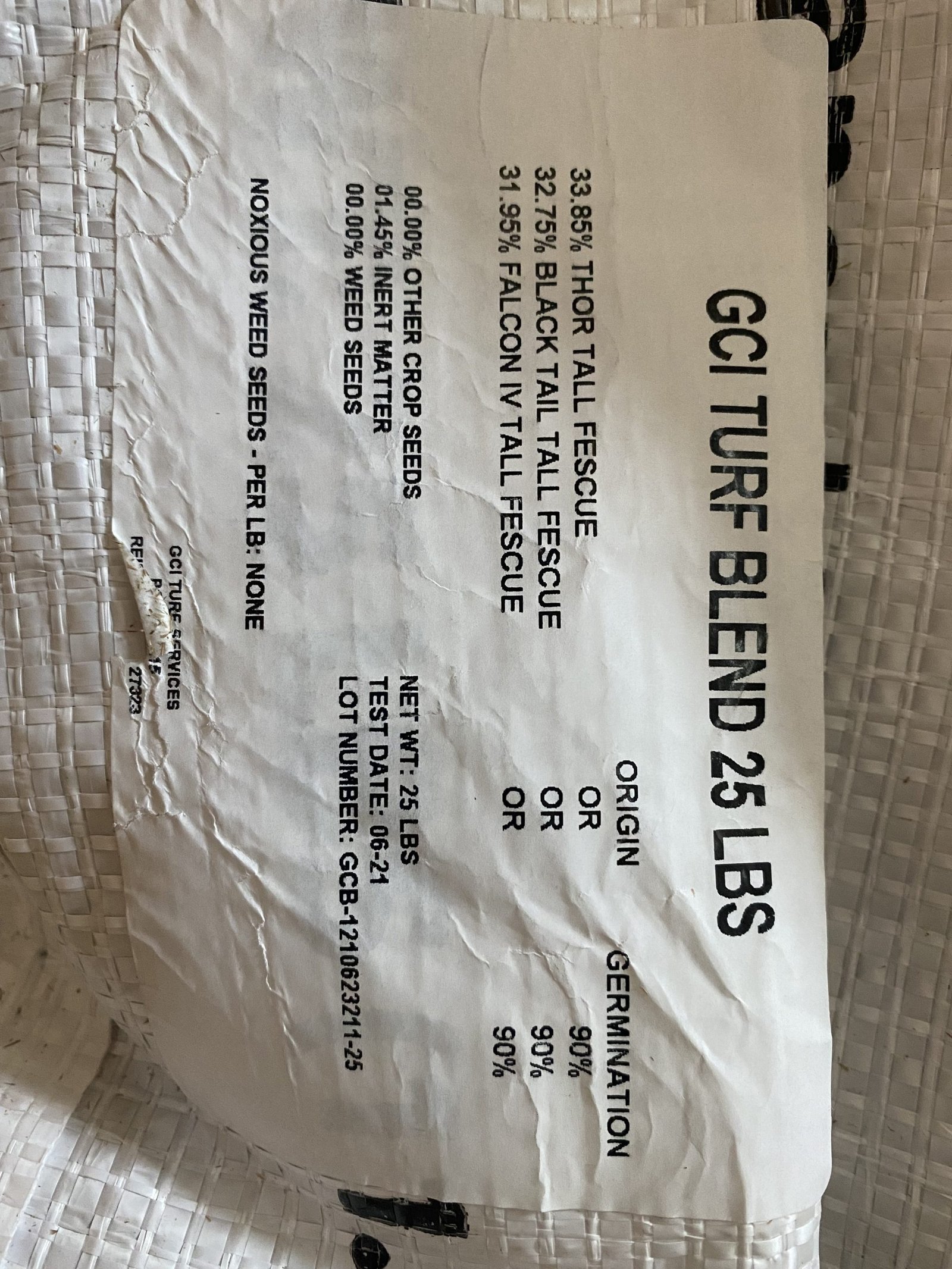
In the LawnPhix backyard, which had two kids, two dogs and about half partial shade, a tall fescue and ryegrass blend stood up to the traffic and rarely needed watering at a 3–4 inch mowing height (Black Beauty Heavy Traffic review). After switching the front lawn to straight tall fescue, the trade-off was disease: fungus problems increased and took two DiseaseEx applications and one propiconazole spray to control (Black Beauty vs GCI review).
Mixing tall fescue and bluegrass
You can mix them, and many sod farms do, but keep the bluegrass small. UMass says a tall fescue lawn mix should be no less than 80% tall fescue, and the University of Maryland suggests 90–95% tall fescue with 5–10% bluegrass for high-traffic areas. The bluegrass rhizomes knit the fescue clumps together and slowly fill thin spots.
Here’s why the bluegrass share looks so small. Seed mixes are labeled by weight, and the two seeds are very different sizes. UMass puts Kentucky bluegrass at about 2,177,000 seeds per pound and tall fescue at about 227,000, nearly ten times fewer. So the seed count works out like this:
| Mix by weight | Tall fescue seeds per lb of mix | Bluegrass seeds per lb of mix | Bluegrass share of seeds |
|---|---|---|---|
| 90% fescue / 10% bluegrass | ~204,000 | ~218,000 | About half |
| 80% fescue / 20% bluegrass | ~182,000 | ~435,000 | About 70% |
A “10% bluegrass” bag is really about half bluegrass seedlings. Push past 20% and the bluegrass can take over the stand, which defeats the point of buying tall fescue. (The seed counts are calculated from the UMass per-pound figures.)
Tall fescue won’t fill its own bare spots.
A pure tall fescue lawn has no runners, so a dog path, a dead patch or a winter-kill spot stays bare until you reseed it. Plan on overseeding every fall (late August to September in New England; see when to overseed), or blend in 5–10% bluegrass so the lawn has some way to repair itself. If you go with bluegrass instead, the reverse applies: it heals itself, but it needs full sun and steady water to keep its density.
Seeding rates for each
These are the rates from our how much grass seed do I need guide. Tall fescue needs far more seed by weight because each seed is so much bigger.
| Grass | Overseeding a nice lawn | Overseeding a thin lawn | New lawn on bare soil |
|---|---|---|---|
| Turf-type tall fescue | 3–6 lb / 1,000 sq ft | 6–8 lb / 1,000 sq ft | 8–10 lb / 1,000 sq ft |
| Kentucky bluegrass | 1–2 lb / 1,000 sq ft | 2–3 lb / 1,000 sq ft | 3–4 lb / 1,000 sq ft |
For a mix, use the rate for the main grass. A 90/10 tall fescue blend seeds at tall fescue rates. In LawnPhix’s own fall overseeding, GCI tall fescue went down at about 6–7 lb per 1,000 sq ft and started germinating in around 14 days in September in Massachusetts. Plug your square footage into the grass seed calculator to get pounds for your lawn.
FAQ
Is tall fescue or Kentucky bluegrass better for New England?
Both are grown widely. Bluegrass is hardier in cold winters and recovers on its own, so it suits sunny, irrigated lawns, especially farther north. Tall fescue is the safer pick for unirrigated, hot or part-shade lawns in southern New England.
Which needs less water?
Tall fescue. UMass rates its drought tolerance excellent because of its deep roots. Bluegrass rates good: it goes semi-dormant and tan in long dry spells, then greens up again when rain returns.
Can I overseed Kentucky bluegrass into a tall fescue lawn?
Yes, in small amounts. Keep it to about 10% of the seed by weight. Because bluegrass seed is so small, that’s already about half the seeds in the mix.
Why does my tall fescue lawn look clumpy?
Tall fescue is a bunch grass. When it’s seeded too thin or loses plants to heat or disease, the surviving clumps stand out. Overseeding at 3–6 lb per 1,000 sq ft each fall keeps it dense.
Which grass germinates faster?
Tall fescue, at about two weeks against about three for bluegrass. That’s why bluegrass seedings are often mixed with perennial ryegrass, which comes up in 5 to 7 days.
Related guides
GRASS SEED
How to choose grass seed
All the warm- and cool-season grass types compared, with a pick for your climate.
Sources: UMass Extension: Turfgrass Selection · UMass Extension: Seeding Rate Considerations · Penn State Extension: Turfgrass Species for Pennsylvania · Penn State Extension: Cool-Season Turfgrass Identification · University of Maryland Extension: Grass Seed
