
The short answer
Identify the species, buy a jet-stream aerosol rated for twenty feet, wait until full dark rather than dusk, stand to the side rather than underneath, spray five to eight seconds into the opening, and leave. Return after twenty-four hours to confirm no traffic before removing the nest. The timing is the part people get wrong — at dusk a third of the colony is still returning.
Timing
Full dark, not dusk
Aerosol
Rated 20ft jet stream
Torch
Red cellophane over it
Position
To the side, never beneath
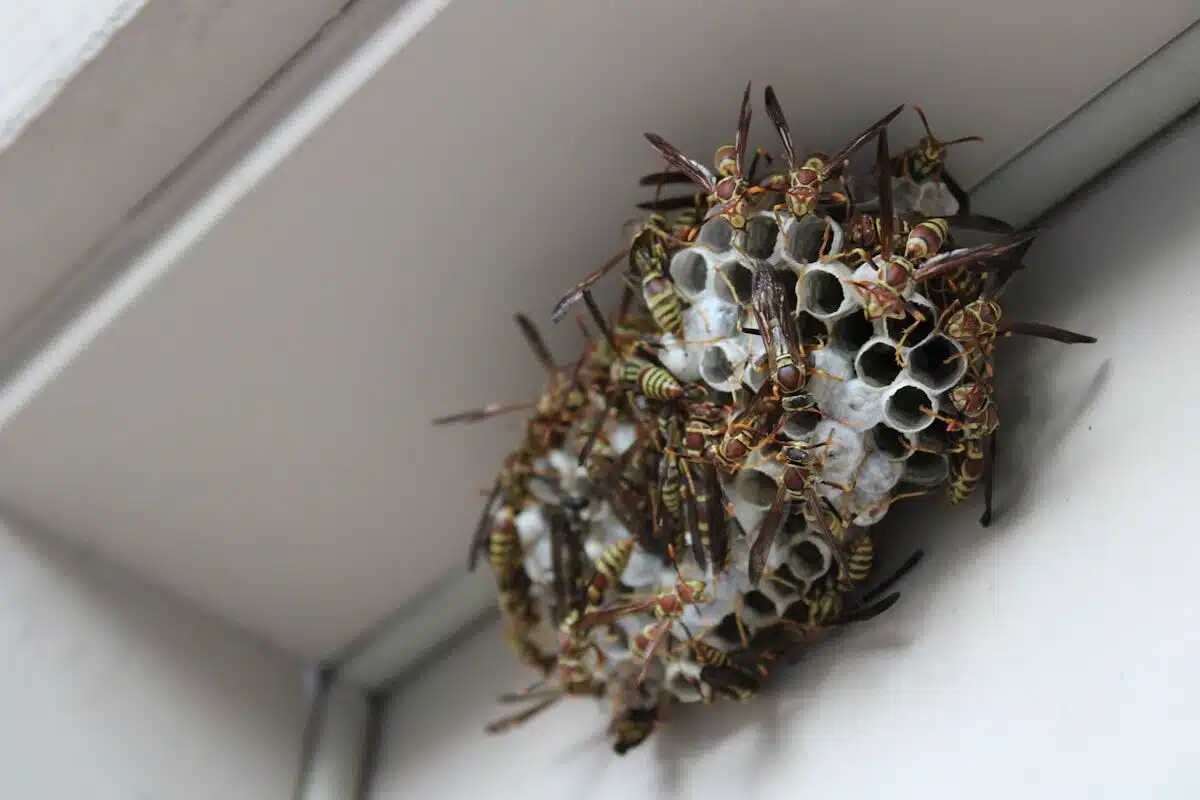
Which one do you have?
This decides whether the method below applies at all.
This method works
Paper wasps
Open grey umbrella nest with visible cells, usually under an eave or a rail. Twenty to thirty insects, defensive only within a few feet. This is the one you can handle.
Care needed
Bald-faced hornets
Enclosed grey football with one opening near the bottom, usually well above ladder reach. Defends a wide radius and pursues. Height decides it, and usually the answer is no.
Don’t
Yellow jackets in a cavity
No visible nest, just traffic at a hole in the ground, a wall or siding. Thousands of insects, they defend an area rather than a nest, and they sting through clothing.
Leave alone
Solitary wasps
Mud daubers and digger wasps. Single females, no colony, no defence of territory. They’re predators of spiders and caterpillars and they’re worth keeping.
Why full dark and not dusk
Foragers return to the nest through the evening. At dusk a meaningful share of the colony is still out, which means they come back to a treated nest and then to whatever is nearby — usually you. Full dark means everyone is home.
You need light to aim, and a white torch beam draws them straight up it. Red cellophane taped over the lens solves this: wasps see red poorly, so you can see the nest and they can’t follow the beam back.
Why the aerosol rating matters
A ten-foot spray on a fifteen-foot nest falls short and leaves you standing beneath an alerted colony with no useful retreat. Buy for the distance you actually need, check it before dark, and know your exit before you start.
The method
For a visible paper wasp nest within step-ladder reach. If that isn’t what you have, stop at the section below.
Confirm the species in daylight
Open cells visible from below means paper wasp. An enclosed football or traffic at a hole means stop — different situation entirely.
Buy the right can
Jet-stream aerosol rated for twenty feet. Read the label for the actual distance rather than assuming.
Prepare a red torch
Red cellophane taped over the lens. White light draws them up the beam.
Wait for full dark
Not dusk. An hour after sunset at minimum, on a cool night if you can choose.
Stand to the side
Never directly beneath, and know your retreat before you start. Not down a ladder.
Spray five to eight seconds, then leave
Into the opening where the cells face. Don’t stay to watch. Come back tomorrow.
Check after 24 hours
No traffic means it’s done. Knock the nest down and bin it so scavengers don’t work the remains.
Seal the spot
They don’t reuse nests but they do reuse good locations. Closing the gap stops the same eave getting one next year.
When this method applies
Where this stops being a DIY job
Inside a wall. A colony in a cavity can’t be sprayed from outside and must not be sealed from outside — blocked at their entrance, a few thousand insects find another way, and the other way is usually into the room.
Above ladder height. The hazard isn’t the stings, it’s being on a ladder when they come out.
A known sting allergy in the household. Not a cost comparison, and not a job to attempt.
What a professional does differently
First
Identifies before treating
Ground nests get dust, aerial nests get aerosol. The wrong one scatters a colony.
Then
Treats the entry, not the nest
For anything in a cavity. Returning foragers carry material inward.
After
Seals only once traffic stops
A second visit, and it’s usually the difference between two quotes.
Common questions
What time of day should I spray a wasp nest?
Full dark, at least an hour after sunset. At dusk a third of the colony is still returning, and they come back to a treated nest and then to you.
Can I use a torch?
Yes, with red cellophane over the lens. Wasps see red poorly, so you can aim without them following the beam back up to you.
What if the nest is inside a wall?
Stop. It can’t be sprayed from outside and sealing the entrance drives them inward, which usually means into the room.
Will they come back to the same spot?
Not to the same nest — they’re annual and never reused. But they do reuse good locations, so sealing the gap prevents next year’s.
In a wall, or above what a step ladder reaches?
Everything above is genuinely yours for a visible nest within reach. A colony inside a cavity is the one where order of operations decides whether they end up outside or in the room, and that’s worth the call.
Call (720) 389-2293
Calling connects you with a pest control company serving your area. We’re paid for that referral, which is how these guides stay free.