
Home › Services › Wildlife Removal
Opossum Removal
Almost always the least problematic animal in this section. They eat ticks, slugs and carrion, they rarely stay long, and their body temperature makes rabies unusual in the species.
Advertising disclosure: calls are routed to an independent local provider. We’re paid a referral fee for the call. You pay the provider, never us.
The short answer
Opossums are transient — individuals move between den sites every few days rather than establishing a permanent home. Left alone, one under a deck usually moves on within a week or two. They also eat large numbers of ticks, slugs and carrion, which makes them a net positive in most gardens. The reasonable approach is to remove the attraction and close the den site once it’s empty.
Typical stay
Days, not months
They eat
Ticks, slugs, carrion
Rabies
Unusual — low body temperature
Best approach
Wait, then exclude
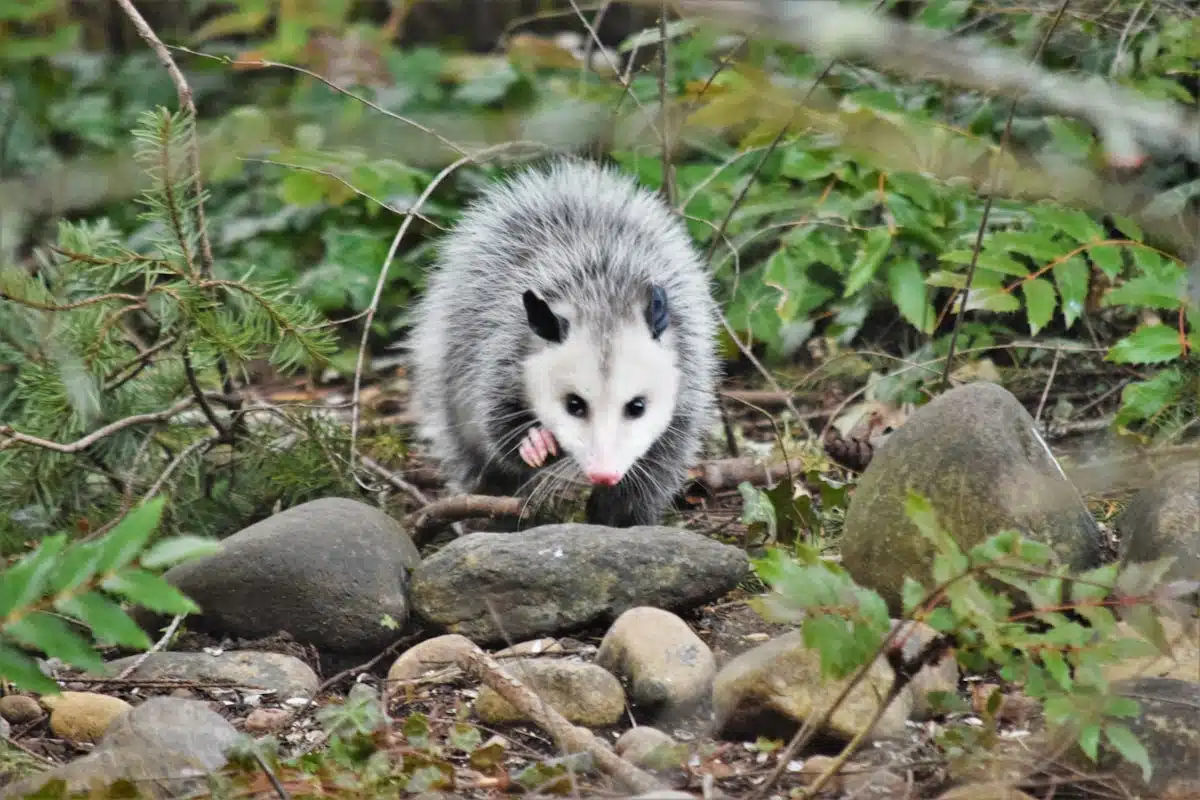
Is it actually a problem?
Four situations, and two of them resolve themselves.
Leave it
Passing through the garden
Seen at night, moving on. They’re nomadic by nature and there’s usually nothing to do. The tick consumption alone is worth more than the inconvenience.
Usually resolves
Under a deck for a few days
A temporary den. Most move on within a week or two unaided. Removing food sources speeds it up considerably.
Act
Denning with young
A female carrying or with young stays longer. Same rule as every other species — don’t seal until they’ve gone.
Different problem
Getting into the house
Attic, garage or crawl space rather than under a deck. That means an opening that needs closing, and it’s the opening rather than the animal that matters.
Playing dead, and why it confuses people
The threat response is involuntary — the animal collapses into a catatonic state that can last minutes to hours. People conclude it’s dead or ill, and either bury a live animal or call for a removal that isn’t needed.
If you find one apparently dead with no visible injury, leave it alone and check again in a couple of hours. It will almost always be gone.
The tick thing, with a caveat
Opossums groom fastidiously and consume ticks that attach to them, which has led to some large figures circulating about how many they eat. Those numbers come from a single laboratory study and later fieldwork suggests they’re considerably overstated.
What’s reasonable to say is that they consume ticks along with slugs, carrion and rodents, and that a resident opossum is a net benefit rather than a problem. The specific number is worth being sceptical about wherever you see it.
Encouraging one to move on
Remove the reason, then close the site once it’s empty.
Remove the food
Pet food indoors overnight, bins with locking lids, fallen fruit cleared. This alone resolves most cases within days.
Confirm it has gone
Flour or sand at the entrance overnight and check for tracks. Never seal on the assumption that it’s empty.
Check for young first
Especially spring and early summer. A female with young stays longer and sealing traps them.
Close the den site
Hardware cloth around deck and shed skirting, buried and turned outward at the base so nothing digs under.
Cap the chimney
Uncapped chimneys are a common den site and capping is straightforward on a single storey.
Leave the ones passing through
They’re eating ticks and slugs. This is genuinely the right answer more often than not.
When to act
Where this stops being a DIY job
Anything inside the house rather than under a structure. Attic, garage or crawl space means an opening that needs finding and closing, and that’s exclusion work.
Any bite or scratch. Rabies is unusual in this species but not impossible, and any bite from a wild animal is a medical matter. That’s a doctor, immediately, and no number on this page is right for it.
An animal that appears injured or genuinely ill. That’s a wildlife rehabilitator rather than a removal company, and handling it yourself is the wrong move.
What a competent operator says
Honest
Tells you to wait
On a transient animal under a deck. Anyone quoting immediately for a passing opossum is selling a visit.
Checks
Confirms it’s empty
Before any sealing, and asks about young.
Excludes
Buries the wire
Hardware cloth turned outward at the base, or something digs under it.
Common questions
Are opossums dangerous?
Rarely. Rabies is unusual in the species because of their low body temperature, and they’re avoidant rather than aggressive. Any bite from a wild animal is still a medical matter.
Will an opossum leave on its own?
Usually. They’re nomadic and move between den sites every few days. Removing food sources speeds it up, and most move on within a week or two.
Do opossums really eat thousands of ticks?
That figure comes from one laboratory study and later fieldwork suggests it’s considerably overstated. They do eat ticks, along with slugs and carrion — just be sceptical of the specific number.
What do I do if I find one playing dead?
Leave it. The response is involuntary and can last hours. Check again later and it will almost always be gone.
Inside the house, or denning with young?
Removing food, confirming the den is empty and closing it with buried wire is genuinely yours, and for a transient animal the right answer is usually to wait. Anything inside the structure, or a female with young, is where this needs someone else.
Call (855)-321-3088
Related
If one dies inside
Dead animal removal
Smell under the deck or the house? Follow the flies, not your nose.