
Lawn Weeds
Grass-like weeds give themselves away by color, speed and stem shape
Weeds that look like grass fall into three groups: annual grasses (crabgrass, foxtail, poa annua), perennial grasses (quackgrass, poa trivialis, creeping bentgrass, orchardgrass, dallisgrass) and grass-like sedges and bulbs (nutsedge, kyllinga, wild onion). Check the color, the speed, the stem and the season. That tells you which ones a selective spray can kill and which need spot-killing and reseeding.
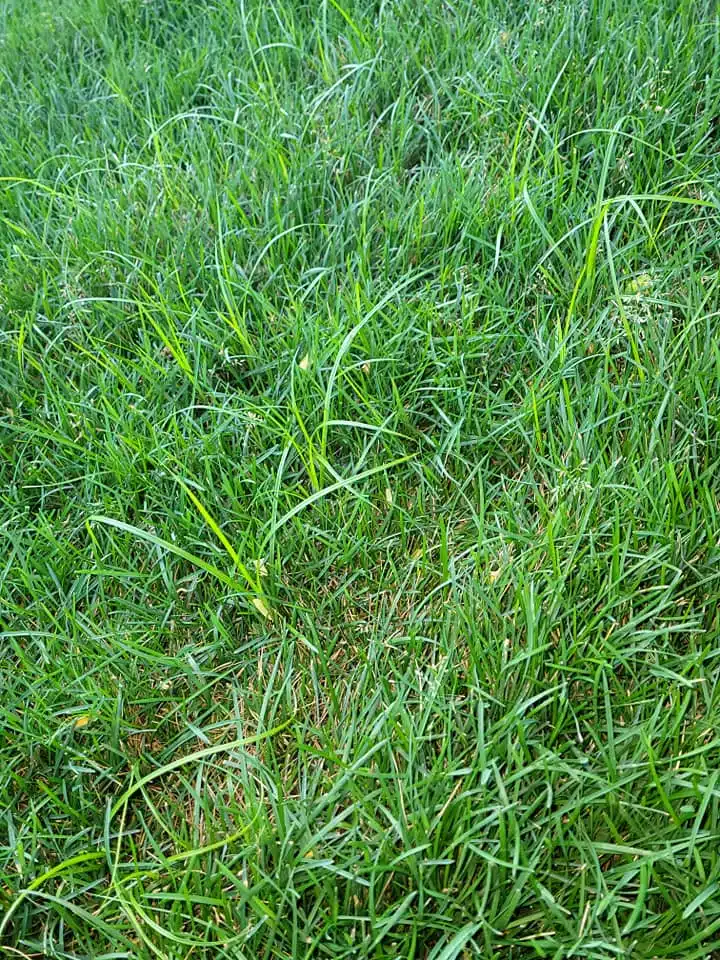
THREE GROUPS
Annual grasses, perennial grasses, sedges and bulbs
FASTEST TELL
Roll the stem: three edges means a sedge
HARDEST TO KILL
Poa trivialis, bentgrass, quackgrass
BROADLEAF KILLER
Won’t touch most of them
This guide is part of our common lawn weeds series and covers the 11 grass-like weeds LawnPhix has guides for. If your weed has wide, net-veined leaves and flowers, it is a broadleaf; see broadleaf weeds instead. First, rule out your own grass: tall seed stalks on a lawn in late spring are often just the turf going to seed. See why your lawn is going to seed.
Four checks that identify a grass-like weed
- Roll the stem. Penn State Extension separates the groups by stem: grasses have round stems that are hollow between the joints, and sedges such as nutsedge have stiff, triangular ones you can feel when you roll them between your fingers. A round, hollow tube that smells of garlic is wild garlic. Flat, solid leaves with an onion smell are wild onion.
- Compare the color. Lime or yellow-green patches point to poa annua, poa trivialis, creeping bentgrass or nutsedge. A bluish tint points to quackgrass or orchardgrass. Pale, coarse, flat-lying clumps are crabgrass. Coarse gray-green clumps are dallisgrass.
- Note the season. Green in early spring and still green late in fall: a cool-season perennial such as quackgrass, poa trivialis or orchardgrass. Up in late spring and dead at the first frost: crabgrass or foxtail. White seedheads in May and June, then thinning in heat: poa annua. Brown, matted patches in mid-summer: poa trivialis or bentgrass going dormant.
- Look at the habit and the leaf base. Claw-like auricles wrapping the stem mean quackgrass. Blades splayed flat from a center are crabgrass. Upright clumps that outgrow the lawn days after mowing are orchardgrass, dallisgrass or nutsedge. A wiry mat of runners across the soil is bentgrass or poa trivialis.
Grassy weed identification chart
The color, habit and season clues come from the linked LawnPhix guides and the Penn State fact sheets cited below. The control column is the approach each LawnPhix guide recommends.
| Weed | Leaf | Color | Growth habit | Season | Control |
|---|---|---|---|---|---|
| Crabgrass | Wide, coarse; hairy sheaths on large crabgrass | Pale to light green | Flat star-shaped clump | Summer annual; dies at first frost | Pre-emergent (prodiamine, dithiopyr) in spring; quinclorac once up |
| Foxtail | Flat; fine hairs at the base on yellow foxtail | Green | Upright tufts with bristly bottlebrush heads | Summer annual | Same spring pre-emergent window; quinclorac or fenoxaprop once up |
| Poa annua | Soft, boat-shaped tip | Bright lime green | Low tufts with white seedheads even when mowed | Sprouts fall; seeds May–June | Pre-emergent in late summer to early fall |
| Quackgrass | Wide; auricles clasp the stem | Bluish green | Upright, long white rhizomes | Cool-season perennial; greens up early | No selective option. Mow short in spring and spot-spray glyphosate |
| Poa trivialis | Fine, glossy; papery ligule | Lime to yellow-green | Mats of stolons in shade and wet spots | Perennial; browns in mid-summer | Glyphosate and reseed, or repeated Tenacity to weaken it |
| Creeping bentgrass | Very fine, soft | Lime green | Spongy, wiry patches of runners | Perennial; browns in mid-summer heat | 2–3 Tenacity passes in late summer, or glyphosate, then reseed |
| Orchardgrass | Pointed, coarse | Blue to light green | Tall bunches that outgrow the lawn | Cool-season perennial | Dig out small clumps or spot-kill; frequent mowing blends it in |
| Dallisgrass | Coarse | Gray-green | Clump that widens every year; large seedheads | Perennial, mainly a warm-climate weed | Pre- and post-emergent together; spot-kill clumps |
| Yellow nutsedge | Stiff, shiny, V-shaped, in threes | Yellow-green | Upright, faster than the lawn; tubers underground | Summer; dies back at hard frost | Sedge products (halosulfuron, sulfentrazone) while young |
| Kyllinga | Finer than nutsedge | Dark green | Dense mats; round green seedhead; no tubers | Summer perennial | Same sedge products as nutsedge |
| Wild onion and garlic | Onion: flat and solid. Garlic: round and hollow | Dark green, waxy | Clumps that outgrow the lawn; smell when mowed | Grows late fall to spring | Dig bulbs; dicamba + mecoprop blend in late fall and early spring |
The 11 grass-like weeds up close
Photos are from the LawnPhix library. Each card links to the full identification and control guide.
Annual grassy weeds
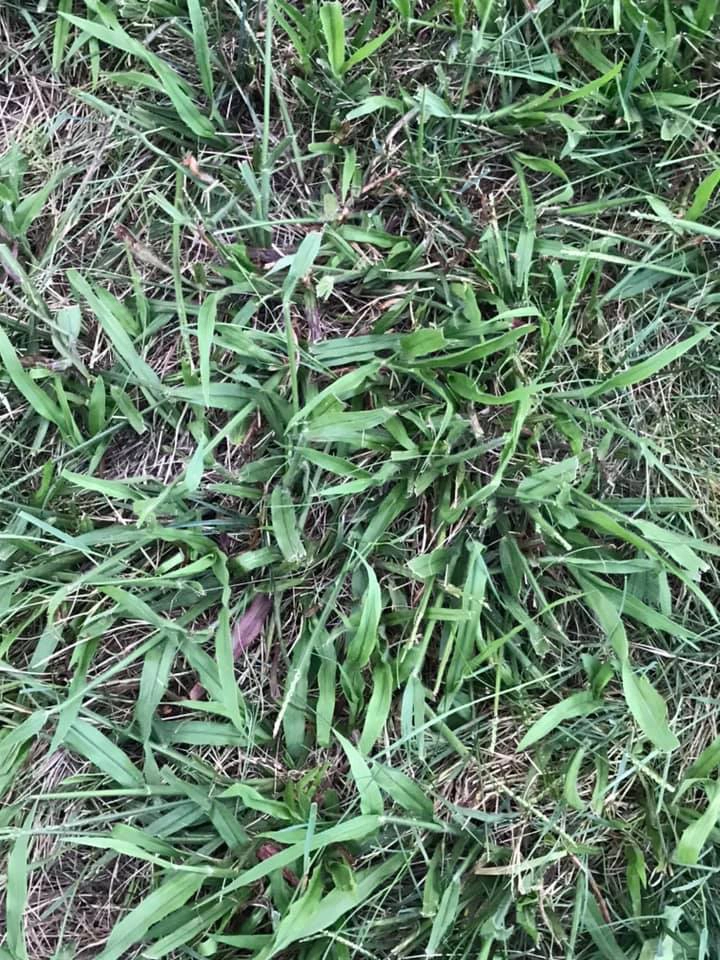
SUMMER ANNUAL
Crabgrass
Light green, coarse blades that splay outward from the center like crab legs and hug the ground, so mowers skip it. It sprouts mid to late spring and browns at the first frost, leaving bare spots for next year’s seed.

SUMMER ANNUAL
Foxtail
Blends in until the bristly, bottlebrush seedhead appears. Yellow foxtail has fine hairs at the base of the blade; giant foxtail is larger, with drooping heads and hairy leaves. LawnPhix starts the pre-emergent once soil holds about 55°F, the same window as crabgrass.

WINTER ANNUAL
Poa annua (annual bluegrass)
Bright lime-green tufts with boat-shaped leaf tips and white seedheads that appear even at low mowing heights in May and June. It thins out in summer heat, then its seed sprouts again in fall.
Perennial grassy weeds

COOL-SEASON PERENNIAL
Quackgrass
Bluish, wide blades growing upright, and the giveaway: claw-like auricles that wrap the stem where blade meets sheath. It spreads by long white rhizomes and greens up before crabgrass sprouts. See crabgrass vs quackgrass.
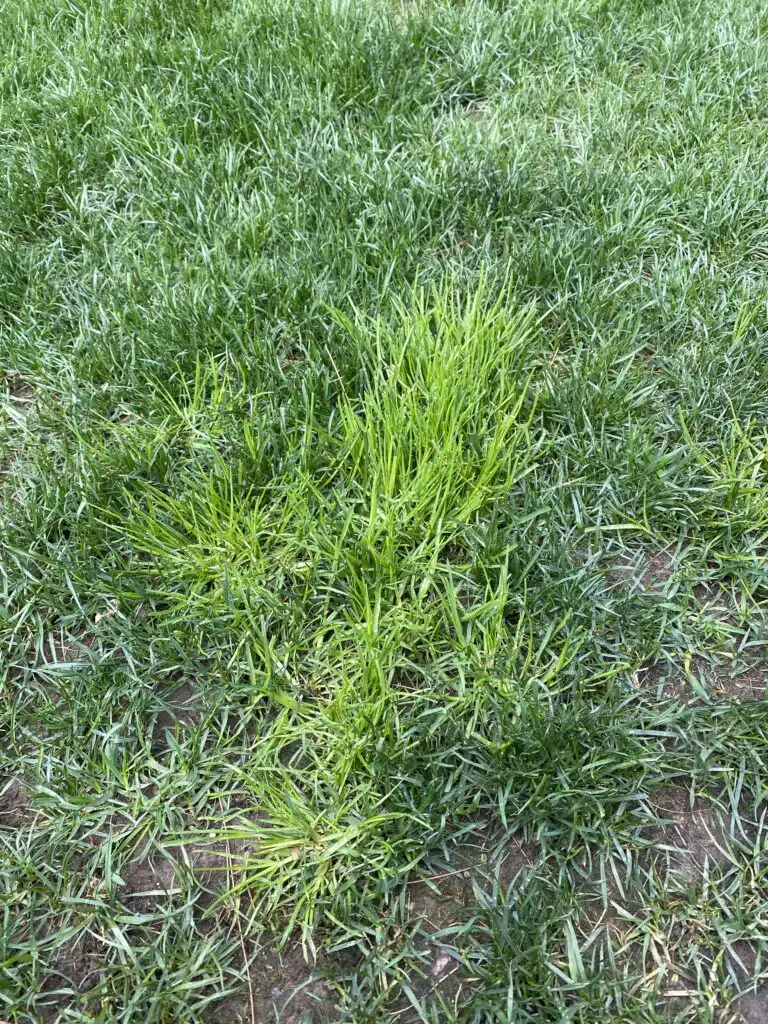
PERENNIAL
Poa trivialis (rough bluegrass)
Lime to yellow-green patches with a glossy leaf underside and a papery ligule (Penn State). It creeps by above-ground runners in shade and damp soil, then turns brown and matted in mid-summer heat. Compare it in poa annua vs poa trivialis.
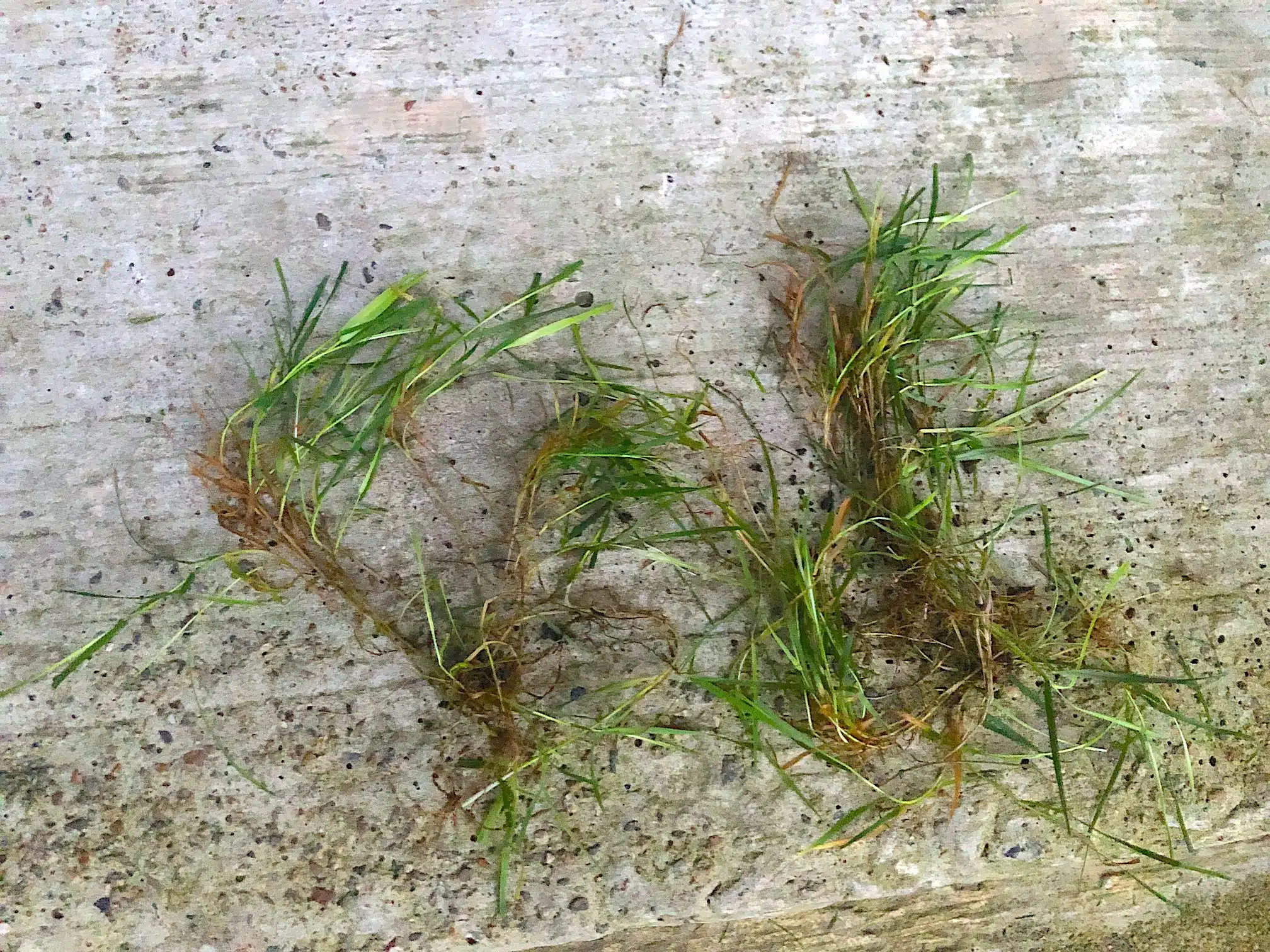
PERENNIAL
Creeping bentgrass
Very fine, almost lime-green grass in spongy, wiry patches, with runners that reach well beyond the visible patch. It often arrives as a contaminant in seed mixes and browns out in mid-summer.

COOL-SEASON PERENNIAL
Orchardgrass
Blue to light green bunches with pointed blades, thicker stems and a fluffy, wheat-like head if left unmowed. It grows faster than the lawn in spring and fall and often comes in with tall fescue seed.

PERENNIAL
Dallisgrass
A coarse, gray-green clump that gets wider each year, with tall seed stalks carrying large, flat seeds. LawnPhix’s guide notes it is mainly a problem in warm-season lawns; in the Northeast it is far less common than crabgrass, which it is often mistaken for.
Sedges and bulbs (not true grasses)

SEDGE · PERENNIAL
Yellow nutsedge
Shiny yellow-green blades in sets of three on a triangular stem, shooting above the lawn within days of mowing. It loves wet, poorly drained spots. Penn State notes new tubers start forming in late June or early July, so treat it before then. See nutsedge vs crabgrass.

SEDGE · PERENNIAL
Kyllinga
Finer blades than nutsedge, forming dense mats with a small, round green seedhead and no tubers. The form that reaches mid-Atlantic lawns is false green kyllinga; true green kyllinga stays in the South.
BULB · WINTER PERENNIAL
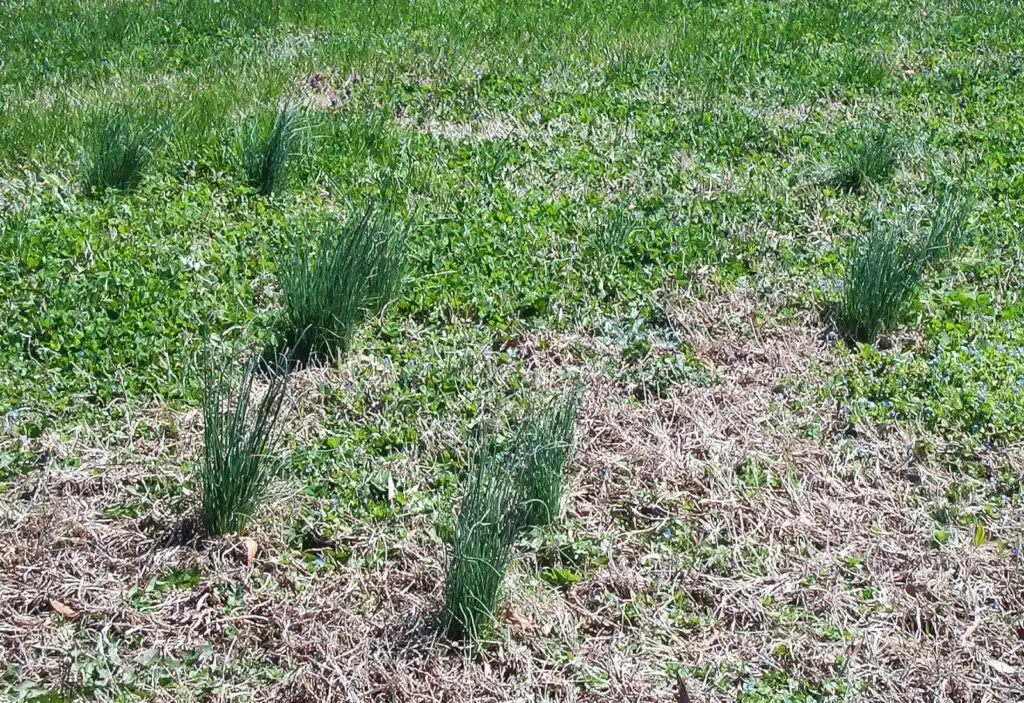
Wild onion and wild garlic
Dark, waxy clumps that shoot above the lawn from late fall to spring and smell strongly when mowed. Wild onion has flat, solid leaves; wild garlic’s are round and hollow. LawnPhix has no wild garlic photo yet, so use the leaf test.
How to control grass-like weeds, group by group
ANNUAL GRASSES · DIY
Stop the seed
Crabgrass, foxtail and poa annua come back from seed every year, so a pre-emergent on time does most of the work: spring for crabgrass and foxtail (timing guide), late summer for poa annua. Anything that gets through can be spot-treated with quinclorac (quinclorac calculator).
SEDGES · DIY
Use a sedge product
Grass killers and broadleaf killers both miss nutsedge and kyllinga. UMass lists halosulfuron, sulfentrazone, bentazon and mesotrione for nutsedge; compare products in our best nutsedge killers. Don’t pull nutsedge, because the tubers stay behind.
PERENNIAL GRASSES · DIY
Spot-kill, then reseed
Quackgrass, poa trivialis, bentgrass, orchardgrass and dallisgrass are grasses too, so few selective products touch them. LawnPhix’s bentgrass method uses repeated Tenacity passes (see the Tenacity calculator). Otherwise, spot-spray glyphosate and reseed.
Perennial grass weeds have no clean selective fix, so plan the kill around fall seeding
Penn State notes there is no selective post-emergent herbicide labeled for poa trivialis in Pennsylvania, and LawnPhix’s quackgrass and bentgrass guides reach the same answer: glyphosate on the patch, or a multi-pass Tenacity program, followed by reseeding. Time it so the reseeding lands in the fall window. LawnPhix starts its bentgrass program at least 30 days before the seeding date, in late summer, and sprays at least six inches past the visible edge of the patch because the runners spread further than you can see. A crabgrass killer or a broadleaf weed killer on these patches will not do anything.
Weeds that look like grass: FAQ
What weed looks like grass but grows faster than the lawn?
Nutsedge is the usual answer in summer: shiny, yellow-green and back above the lawn within days of mowing. In spring and fall, wild onion and orchardgrass do the same. Crabgrass doesn’t grow tall; it spreads flat.
What is the grass-like weed with a triangle-shaped stem?
A sedge, most often yellow nutsedge, or kyllinga. Roll the stem between your fingers: three edges means a sedge, and it needs a sedge-specific herbicide.
Will crabgrass killer kill nutsedge?
No. Nutsedge is a sedge, not a grass or a broadleaf, so crabgrass killers and broadleaf killers both miss it. Use a product with halosulfuron or sulfentrazone while the plants are young.
How do I get rid of grassy weeds without killing my lawn?
Annual grassy weeds can be handled selectively: a pre-emergent before they sprout and quinclorac or fenoxaprop after. Perennial grassy weeds like quackgrass, poa trivialis and bentgrass usually need a spot-kill and reseed, because anything that kills them can also harm the lawn.
Is light green grass in my lawn a weed?
Often, yes: poa annua, poa trivialis and creeping bentgrass are all lighter than Kentucky bluegrass or tall fescue. But nutrient shortages and other problems cause pale patches too, so check our light green patches in lawn guide before you spray.
Related guides
BROADLEAF WEEDS
Broadleaf weeds
Dandelion, clover, violets and the rest, with herbicides and fall timing.
Sources: Penn State Extension, Weed management in turf · Penn State Extension, Yellow nutsedge · Penn State Extension, Roughstalk bluegrass (Poa trivialis) · UMass Extension, Weed management with herbicides (turf)
