
Lawn Care · Seeding
Before you reseed, find out why the first seed failed.
When grass seed isn’t growing, it’s usually one of two things: it hasn’t had enough warm, moist days yet, or something stopped it, most often seed that never touched soil, a surface that dried out, the wrong season or a crabgrass preventer still in the ground. Check the calendar first, then work through the causes below in order.
PERENNIAL RYEGRASS
5–7 days
TALL FESCUE
5–10 days
KENTUCKY BLUEGRASS
14–21 days
CENTIPEDE
2–3 weeks, up to 4
Step 1: Has it actually had long enough?
A lot of “failed” seedings are simply early. Each grass has its own germination window in good conditions, and cool weather stretches all of them. In a blend, the fast species come up first and the slow ones a week or two later, so a thin first flush isn’t the final result.
| Grass | Typical germination | Wait at least this long before calling it | Source |
|---|---|---|---|
| Perennial ryegrass | 5–7 days | 2 weeks | Penn State |
| Tall fescue | 5–10 days | 3 weeks | University of Maryland |
| Fine fescue | 5–12 days | 3 weeks | U of Minnesota |
| Kentucky bluegrass | 14–21 days | 4 weeks | University of Maryland |
| Centipede | 2–3 weeks; NC State plans for 28 days | 5 weeks | Auburn, NC State |
The “wait” column is our own buffer, roughly the top of the range plus a week, for cooler or drier spells. If you’re still inside it, keep the surface moist and wait. More on timing in how long it takes grass to grow.
Step 2: Match what you see to the cause
If the window has passed, look closely at the seeded area. What’s there, or not there, usually points to one cause.
| What you see | Likely cause | Fix |
|---|---|---|
| Seed still sitting on top of thatch or old grass | No seed-to-soil contact | Rake, dethatch or core aerate so seed reaches soil; K-State wants thatch at about ¼ inch or less before overseeding |
| Seedlings came up, then shriveled | Surface dried out before roots formed | Water lightly and often; Rutgers says to keep the top 2 inches moist until seedlings root |
| Seed collected in low spots or lines; bare on slopes | Washed away by heavy watering or rain | Shorter watering cycles; a light straw cover, about 1–2 bales per 1,000 sq ft with soil still showing through (Rutgers) |
| Nothing anywhere, despite good watering, after a spring crabgrass treatment | Pre-emergent herbicide still active | Check the label’s reseeding interval and wait it out (see the stop panel below) |
| Nothing, seeded in late fall | Too cold to germinate | Seed often waits in the soil for spring; treat it as a dormant seeding |
| Warm-season seed (centipede, bermuda) sown in early spring, nothing yet | Soil still too cool | Wait for steady warmth; NC State’s cue for centipede is daytime temperatures continually above 60°F |
| Patchy everywhere, even where it was watered well | Old or low-quality seed, or too light a rate | Check the tag’s germination percentage and test date; reseed at the right rate |
| Came up in sun, failed under trees | Not enough light, plus root competition | See grass for shade; below about 4 hours of sun, seed won’t hold |
| Thick, spindly seedlings that thin out | Seeded too heavily | UMass warns crowded seedlings are weaker; use the rates below next time |
| Nothing where the soil was raked deep or topdressed heavily | Seed buried too deep | Rake in lightly, about ¼ inch (Rutgers); Maryland notes grass seed needs some light |
Sources for the table: K-State Research and Extension, Rutgers FS584, University of Maryland Extension, NC State and the UMass seeding rate fact sheet.
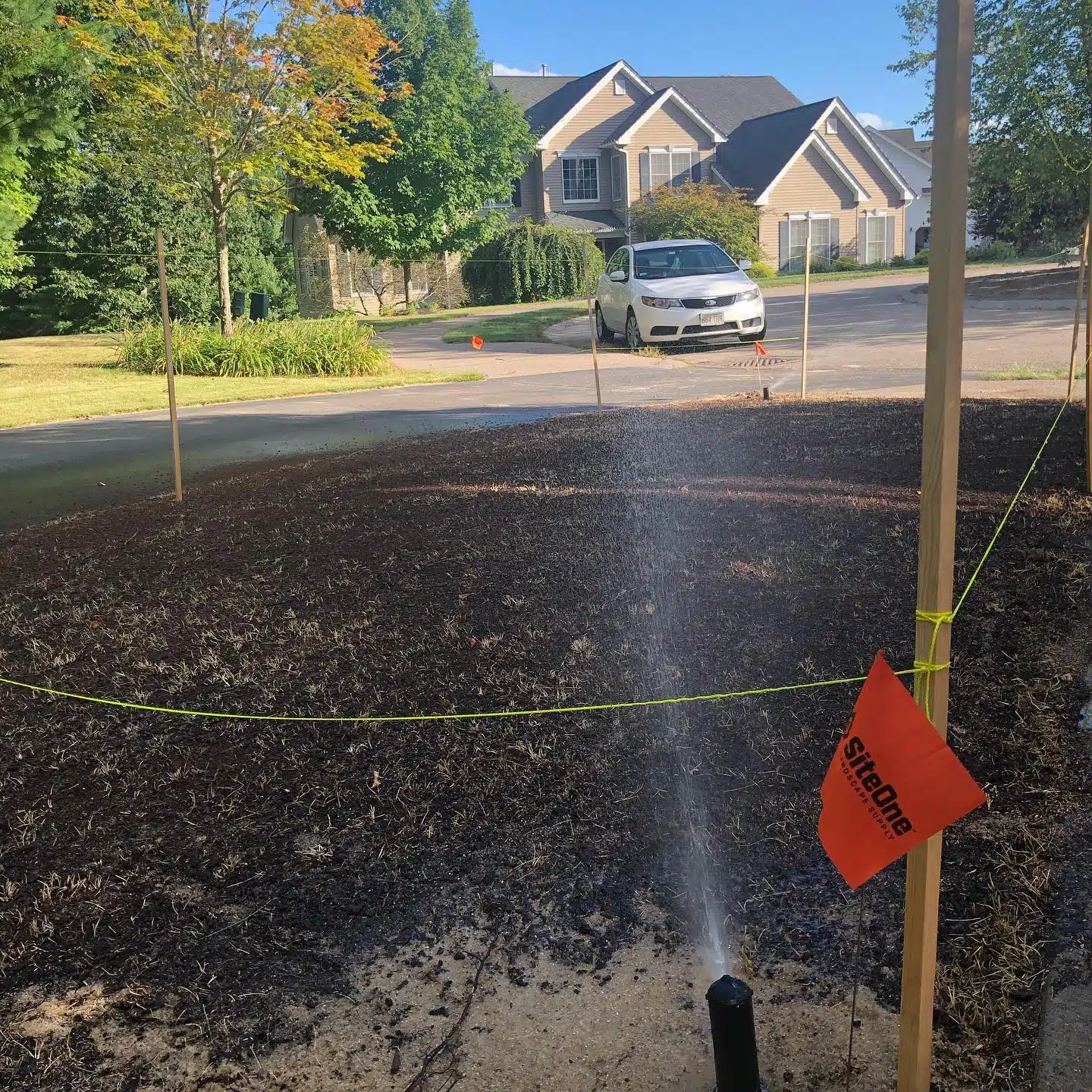
Step 3: Check the seed itself
If conditions were right and the seed still underperformed, read the tag on the bag.
- Germination percentage. Penn State’s minimums are 80% for Kentucky bluegrass and the fescues and 85% for perennial ryegrass. Lower than that and you’re paying for seed that won’t grow.
- Test date. Germination drops as seed ages. A bag left over from two seasons ago, or stored somewhere hot and damp, may come in well under its printed figure. Maryland recommends certified seed packaged for the current year.
- Rate. Too little seed leaves a clumpy stand; too much crowds itself out. Compare what you spread with the rates below.
| Seed | New lawn (lb / 1,000 sq ft) | Overseeding (lb / 1,000 sq ft) |
|---|---|---|
| Tall fescue | 7–9 | 3.5–4.5 |
| Perennial ryegrass | 7–9 | 3.5–4.5 |
| Fine fescue | 4–6 | 2–3 |
| Kentucky bluegrass | 1–2 | 0.5–1 |
New-lawn rates are from UMass; overseeding rates are about half of those. Our how much grass seed do I need guide and grass seed calculator work it out for your area.
Don’t reseed on top of an active pre-emergent.
Most crabgrass preventers work by stopping seeds from rooting, and they can’t tell crabgrass from the grass you just sowed. If you applied one this year, find the product label and its reseeding interval before buying more seed; until that interval passes, new seed is wasted. Rutgers names mesotrione (Tenacity) and siduron as the weed-control options that are safe around new seedings (Rutgers); see our Tenacity review. And if the same area fails two seasons running with the watering and timing right, stop buying seed: compaction, drainage, shade or a soil problem is the more likely cause, and that’s the point a soil test or a professional look pays off.
If you’d rather hand the next attempt off, our lawn seeding page connects you with a lawn care company serving your area.
Step 4: Decide whether to reseed now or wait
Once you’ve fixed the cause, the calendar decides the next move.
- Cool-season lawns in late summer or early fall: reseed now. UMass’s preferred New England window runs roughly from the third week of August to the third week of September (UMass); Maryland’s runs mid-August through October.
- Cool-season lawns after that window: seedlings may not establish before winter. Consider dormant seeding once the soil is cold, or wait for early spring.
- Warm-season lawns: reseed in late spring to early summer once it’s reliably warm; for centipede, April to July (Auburn).
For the full process, see how to overseed a lawn and how often to water grass seed.
Grass seed not growing: FAQs
Why did only some of my seed mix come up?
Probably timing, not failure. Ryegrass sprouts in about a week, tall fescue a little later and Kentucky bluegrass in two to three weeks. Keep watering until the slowest species has had its window.
Can you overwater grass seed?
Yes. K-State says to keep soil moist but not waterlogged, and Rutgers warns against constantly muddy conditions. Heavy watering also washes seed into low spots. Short, frequent cycles work better than long soaks.
Does grass seed need to be covered?
Lightly. Rake it in to about ¼ inch and roll it so it touches soil. A thin straw cover helps hold moisture, but soil should still show through. Our straw cover guide covers the options.
Will grass seed that didn’t sprout in fall grow in spring?
Often, if it wasn’t eaten or washed away. That’s how dormant seeding works. Don’t apply a crabgrass preventer over that area in spring or you’ll stop it.
Is old grass seed still good?
It can be, but its germination falls with age and poor storage. Check the test date on the tag. If in doubt, sprinkle a pinch on a damp paper towel in a warm room and count how many sprout over the species’ normal window.
Why won’t grass grow under my tree even after reseeding?
Shade and tree roots, not the seed. Below about four hours of direct sun no grass makes a lasting stand. See grass for shade.
Related guides
Sources: University of Maryland Extension: Poor Seed Germination in Lawns · Rutgers NJAES FS584: Seeding Your Lawn · K-State Research and Extension: Seed lawn in September (2020) · UMass: Seeding Rate Considerations · UMass: Establishment, Renovation & Repair · Penn State: Turfgrass Species for Pennsylvania · Penn State: Turfgrass Seed and Seed Mixtures · University of Minnesota Extension: Fine Fescue Lawns · Alabama Extension: Centipedegrass · NC State: Centipedegrass Lawn Maintenance Calendar · Rutgers: Weed Control in Spring Seedings
