
Lawn Care · Grass Seed
Pick cool-season seed by your yard and the label, not the bag art
For most Northeast lawns, buy a turf-type tall fescue blend for sun and wear, a fine fescue mix for shade or low upkeep, and a Kentucky bluegrass mix only where you can water. Then check the label: named varieties, weed seed at 0.5% or less, and a recent test date. In New England, seed from about the third week of August to the third week of September.
BEST SEEDING WINDOW (MA)
~3rd week Aug to 3rd week Sept
WEED SEED ON LABEL
0.5% or less
VARIETY LINE
Named cultivars, not “VNS”
TTTF, NEW LAWN
8–10 lb per 1,000 sq ft
This page is about the shopping step: which cool-season seed to put in the cart and how many pounds to buy. For what each grass species is and how warm- and cool-season types differ, start with our guide to choosing grass seed. Here we narrow it to cool-season lawns in the Northeast and lean on two things most seed roundups skip: the seed label and what actually happened when we seeded these bags ourselves.
Which cool-season seed to buy for your yard
Extension mixtures are the best starting point because they are written for the region, not for a brand. The mixes and rates below come from UMass Extension turfgrass selection guidance and Penn State Extension. Where the two disagree on rate, follow the bag of the seed you actually buy, then sanity-check it with the LawnPhix numbers further down.
FULL SUN, KIDS AND DOGS, LITTLE OR NO IRRIGATION
Turf-type tall fescue blend (2–3 named cultivars), or a mix that is mostly tall fescue
Rate: 6–8 lb per 1,000 sq ft (Penn State). UMass rates tall fescue excellent for drought and wear. It is a bunch grass, so it will not knit bare spots, and UMass flags it as prone to brown patch and Pythium (brown patch guide).
FULL SUN, IRRIGATED, YOU WANT THE LAWN TO SELF-REPAIR
Kentucky bluegrass-heavy mix: 65–75% KBG, 10–20% perennial ryegrass, about 15% fine fescue
Rate: 3–4 lb per 1,000 sq ft (UMass). Bluegrass spreads by rhizomes and fills in, but it is slow from seed and wants more nitrogen (UMass lists 3–5 lb N per 1,000 sq ft a year).
SHADE UNDER TREES (AT LEAST 4 HOURS OF DIRECT SUN)
Fine fescue mix: 80–90% fine fescues, 10–20% perennial ryegrass
Rate: 4–6 lb per 1,000 sq ft (UMass). Fine fescues have excellent shade tolerance but poor traffic tolerance. Below about four hours of sun, no seed will hold; see best grass for shade.
LOW INPUT: LITTLE FERTILIZER, NO WATERING
About 65% fine fescue, 10–20% perennial ryegrass, rest Kentucky bluegrass
Rate: 4–6 lb per 1,000 sq ft (UMass). Fine fescues get by on 1–2 lb N per 1,000 sq ft a year. Do not put this mix where people play every day.
WORN PATHS AND QUICK PATCH-UPS
Perennial ryegrass (or a ryegrass-heavy patch mix)
Rate: 6–8 lb per 1,000 sq ft for overseeding wear areas (UMass). Fastest to germinate and excellent for wear, but poor in shade and it does not spread to fill gaps.
If you are matching an existing lawn, buy what is already there. A fine fescue lawn overseeded with tall fescue will look patchy because the blades are a different width. Want the drought angle in more depth? See drought-tolerant grass for Northeast lawns.
What we bought, and how it grew
These are the cool-season bags LawnPhix has put down on its own Massachusetts lawns. Each card links the full write-up.
BEST ALL-PURPOSE BLEND
Jonathan Green Black Beauty Ultra
Mostly tall fescue with bluegrass and ryegrass mixed in (80% tall fescue, 10% KBG, 10% perennial ryegrass by weight, per our grass seed hub). It is the blend we list as the best cool-season mix in our seeding-rate guide. The bluegrass fills gaps that tall fescue alone leaves open.
BEST VALUE MONOSTAND
GCI Turf-Type Tall Fescue
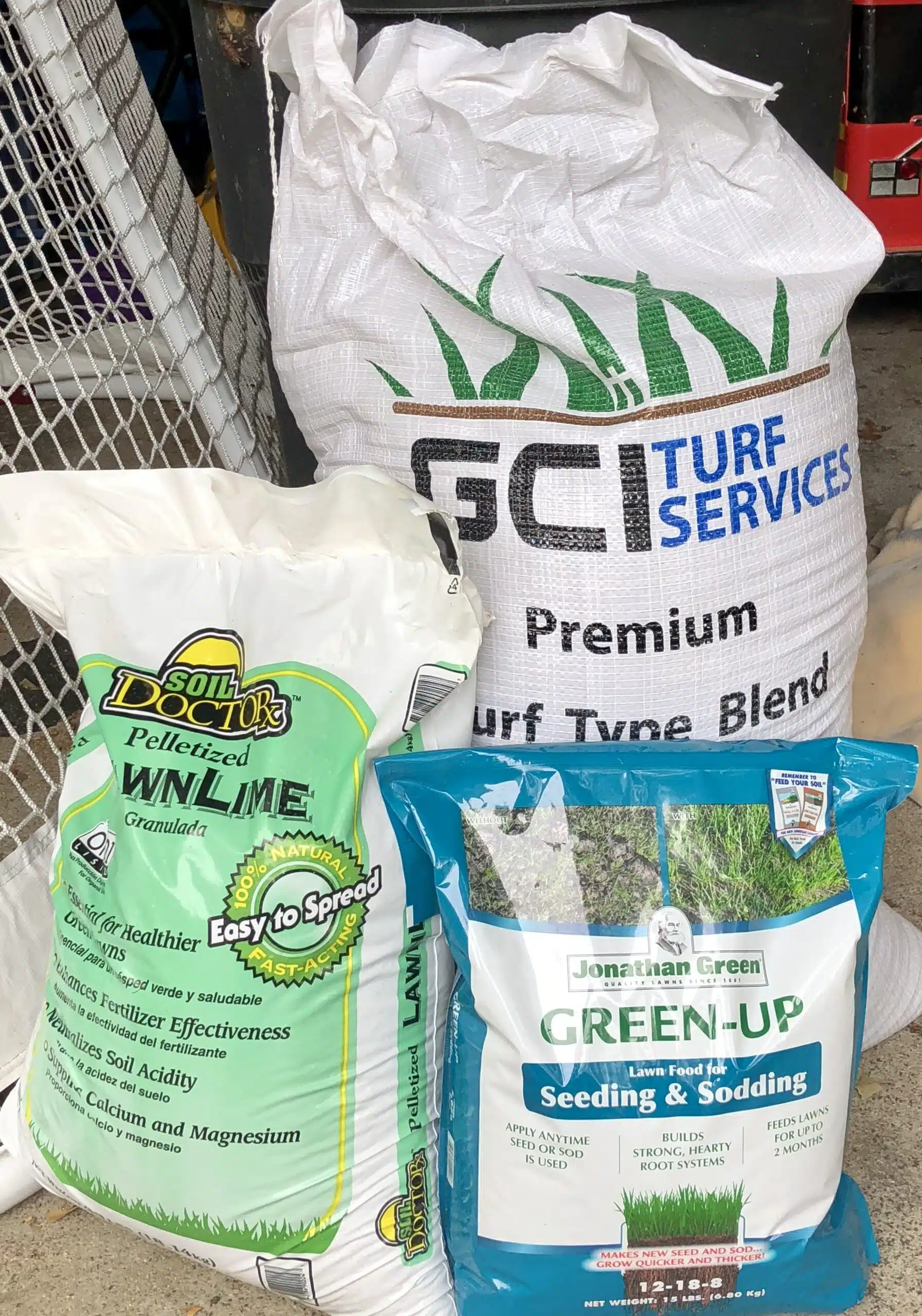
Three tall fescue cultivars on one label. In our Black Beauty vs GCI test we overseeded roughly 16,000 sq ft with two 50 lb bags (about 6 lb per 1,000) for under $250. It took about 14 days to start germinating against about 10 for Black Beauty Original, color was a shade lighter at first, and we saw more fungus that season.
FOR HEAVY USE
Black Beauty Heavy Traffic
Tall fescue plus perennial ryegrass. In our Heavy Traffic review, seeding about 6,000 sq ft at the bag’s roughly 4 lb per 1,000 came in thin; a later 4,000 sq ft section at 7 lb per 1,000 filled in thick. Ryegrass came up in about a week, the fescues in about 12 days.
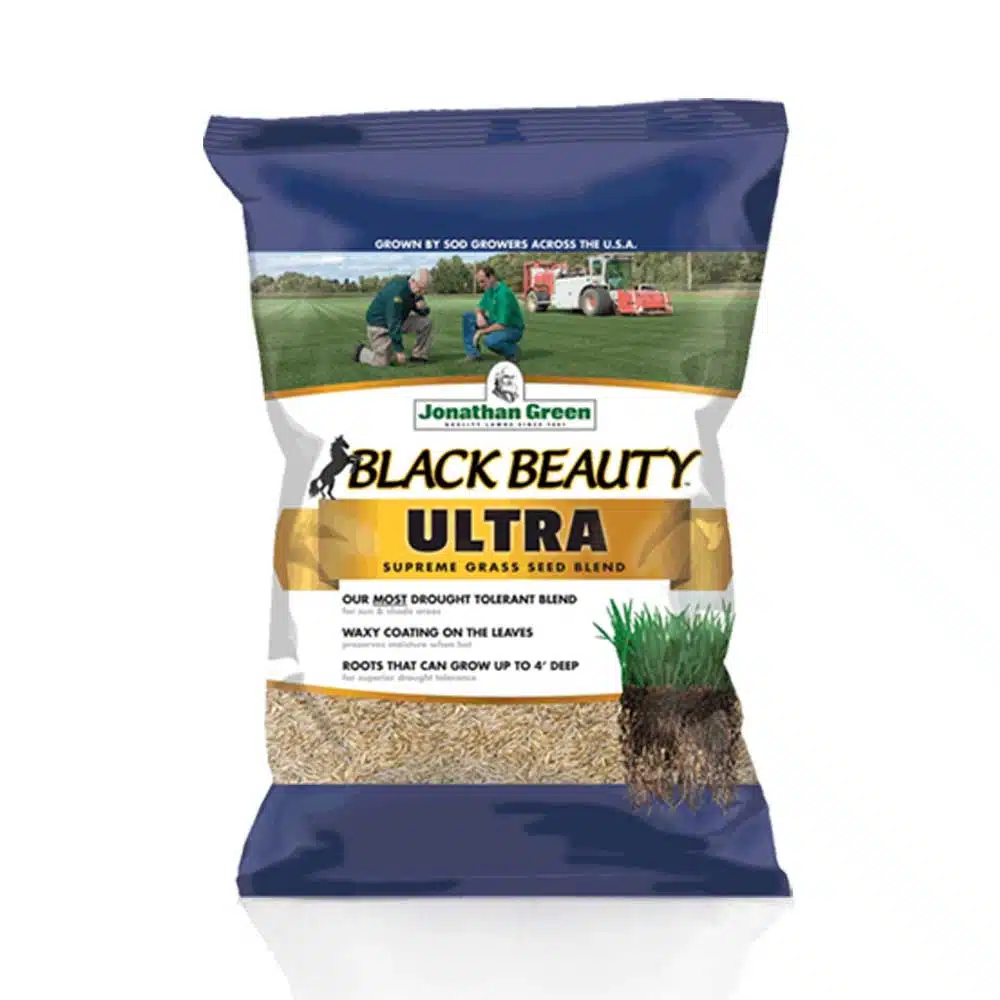
The lesson from both reviews is the same: the “covers up to” number on the front of the bag is a ceiling, not a target. Jonathan Green rates a 50 lb Black Beauty bag at up to 15,000 sq ft, which works out to just over 3 lb per 1,000 sq ft, below the 4–7 lb that GCI recommends for overseeding the same kind of grass.
How to read a grass seed label
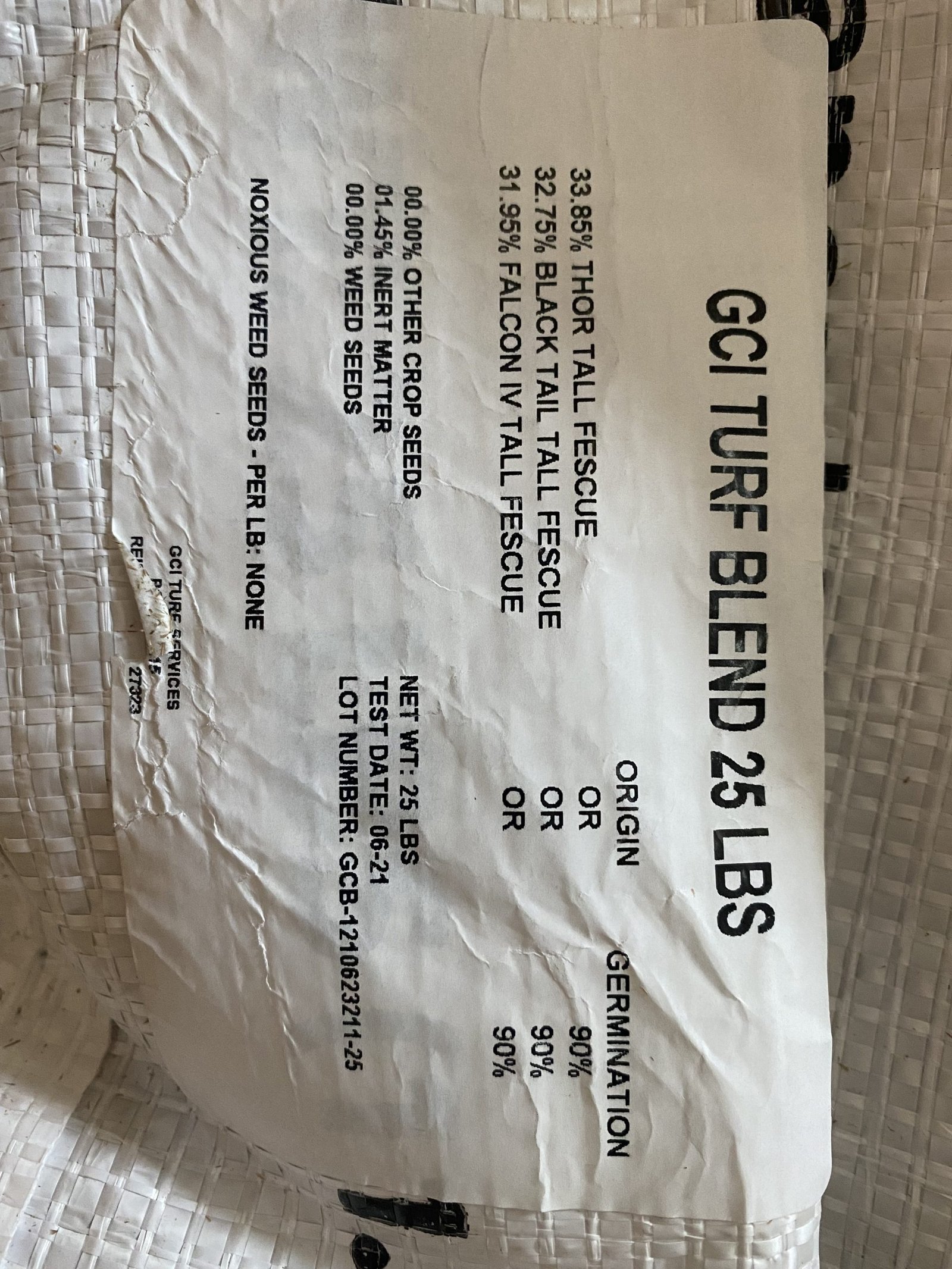
Seed laws require every bag to carry an analysis tag. Penn State Extension and UMass Extension both tell homeowners to judge seed by that tag. Here is what each line means and the number to look for.
| Label line | What it means / what to look for |
|---|---|
| Kind and variety | Each species, with its cultivar name, listed in order of how much is in the bag. A real variety name on every line. Skip bags that say “variety not stated” (VNS), which University of Minnesota turf scientists tell buyers to avoid even when it is cheaper. |
| Pure seed % | Share of the bag’s weight that is the listed grass seed. Penn State minimums: 90% for Kentucky bluegrass, 95% for perennial ryegrass and the fescues (Penn State). |
| Germination % | Share of that pure seed that sprouted in the lab test. Penn State minimums: 80% for bluegrass and the fescues, 85% for perennial ryegrass. |
| Other crop seed | Seed of other cultivated plants, including grasses you do not want. As low as possible. Penn State caps undesirable grass seed at 0.5% and names timothy, orchardgrass, meadow fescue, annual ryegrass and clover as ones to avoid. |
| Weed seed | Weed seed by weight. 0.5% or less (UMass; Penn State says it should never top 1.0%). |
| Inert matter | Chaff, dirt and coating. Under 15% unless the seed is coated. Coated seed carries more inert weight, so you get fewer seeds per pound. |
| Test date and lot number | When the germination test was run, and which batch you have. A recent test date. Germination falls as seed ages, so an old date means the germination figure may no longer hold. |
Pure live seed: the number that tells you what you’re paying for
Multiply pure seed by germination to get pure live seed. A bag at 95% purity and 85% germination is about 81% live seed, so 10 lb of it delivers roughly 8 lb of seed that will grow. Use this to compare a cheap bag with a premium one: if the cheap bag has lower purity, lower germination and a heavy coating, the price per pound of live seed can end up close to the premium bag.
Certified seed and NTEP-tested varieties
Certified seed carries an official colored tag and has to meet tighter purity, weed seed and crop seed standards than ordinary seed (UMass). For variety names, the National Turfgrass Evaluation Program trials cultivars side by side at sites around the country. UMass calls NTEP data extensive and reliable, but notes that it does not make recommendations. Type a cultivar name from your label into the NTEP results for a Northeast trial site and see how it ranked for color, density and disease.
How much cool-season seed to buy
Measure the area first; our lawn size calculator does that from a map. Then use the LawnPhix rates below, from our how much grass seed guide, or let the grass seed calculator do the math.
| Grass type | Overseed a thin lawn | Overseed a good lawn | New lawn on bare soil |
|---|---|---|---|
| Kentucky bluegrass | 2–3 lb / 1,000 sq ft | 1–2 lb | 3–4 lb |
| Perennial ryegrass | 7–9 lb | 4–7 lb | 9–11 lb |
| Fine fescue | 6–8 lb | 3–6 lb | 8–10 lb |
| Turf-type tall fescue | 6–8 lb | 3–6 lb | 8–10 lb |
Worked example: a 5,000 sq ft thin tall fescue lawn at 6–8 lb per 1,000 needs 30–40 lb, so one 50 lb bag with some left for touch-ups. The same yard as a new lawn at 8–10 lb needs 40–50 lb. UMass suggests raising rates by up to 50% when conditions are poor, but warns that very heavy seeding produces crowded, weak seedlings (UMass).
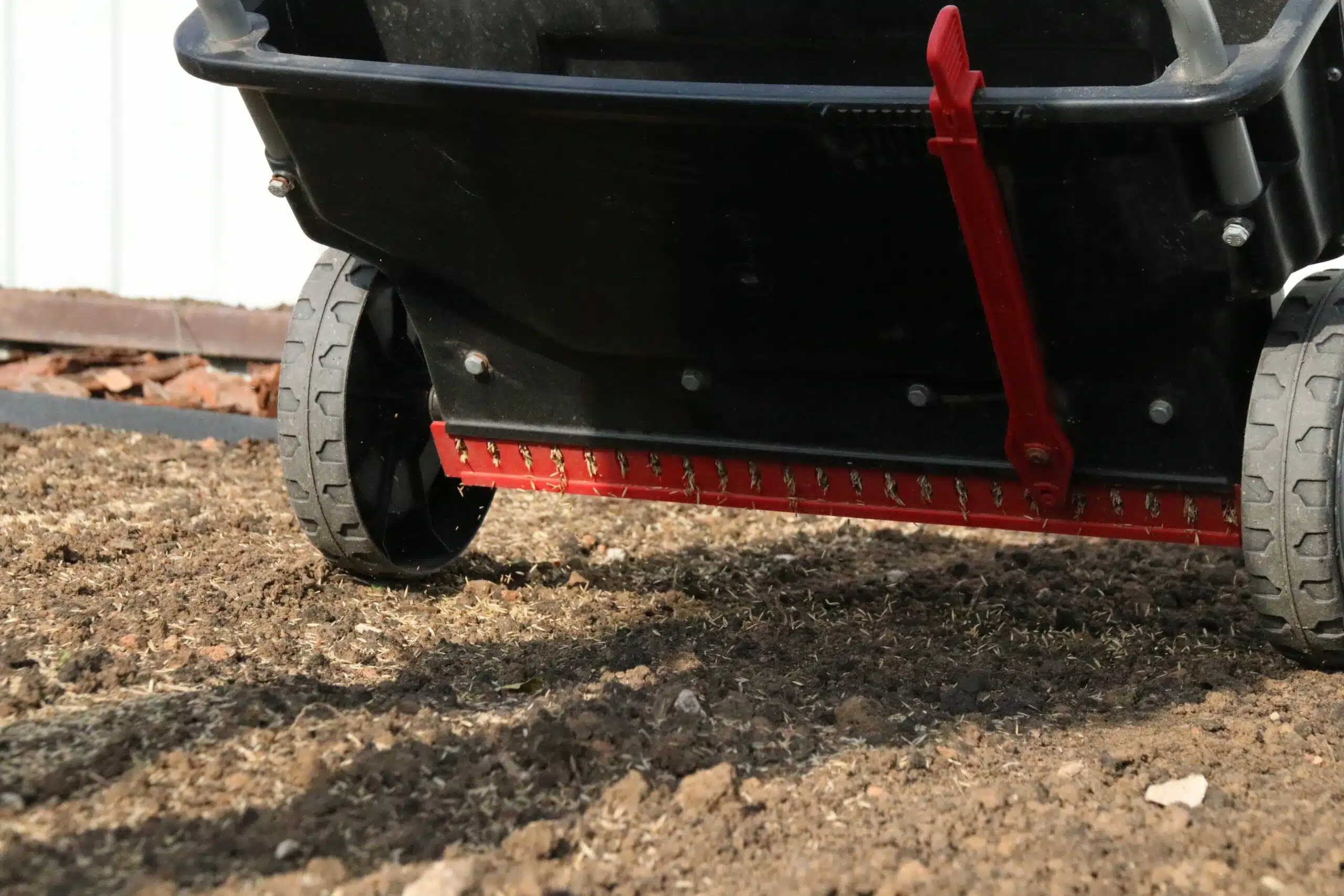
When to seed cool-season grass in New England
UMass puts the best window at roughly the third week of August to the third week of September, and says late summer beats spring for establishment in New England (UMass BMPs). Parts of Cape Cod and the islands stay warm later into fall, so that window can run a little later there. Rutgers gives a similar range for New Jersey: about August 15 to October 5 north of Trenton and August 20 to October 10 to the south (Rutgers FS584).
- Buying a bluegrass mix? Seed early in the window. UMass notes bluegrass establishes slowly, while ryegrass gives you more timing flexibility.
- Spring is second best. You get one growing period before summer stress and crabgrass competition. UMass points to mesotrione and quinclorac as the herbicides that work alongside new seed; see our Tenacity review and spring seeding guide.
- Dormant seeding (late fall, once soil drops into the 40s) is, in UMass’s words, a gamble. If you try it, raise the rate by about 50%.
- After you buy: put down a starter fertilizer at seeding and keep the surface moist until germination (how often to water grass seed). Full steps are in how to overseed a lawn.
Stop: check what you sprayed this spring before you buy fall seed.
Most crabgrass preventers work by stopping seeds from rooting, and they cannot tell crabgrass from the bag you just bought. Oklahoma State notes that common pre-emergents restrict root development in turf (OSU HLA-6476). If you applied a pre-emergent (prodiamine, dithiopyr and similar) this year, read its label for the reseeding interval before you seed. If seeding is not allowed yet, wait, or overseed only in spots that were never treated. Mesotrione (Tenacity) is the one UMass lists as compatible with new seed. Timing details are in when to apply crabgrass preventer.
Cool-season grass seed FAQs
Is Black Beauty Ultra or GCI tall fescue better?
In our side-by-side test the nod went to Black Beauty for color and disease, and GCI won on price per pound. Both made a good lawn. Black Beauty Ultra also carries bluegrass and ryegrass, so it suits a lawn that already has some of each. Details are in the full review.
Can I mix tall fescue and Kentucky bluegrass?
Yes. A small share of bluegrass in a tall fescue lawn helps fill gaps, because bluegrass spreads by rhizomes and tall fescue does not. Keep tall fescue as the majority by weight so the texture stays even.
What does VNS mean on a grass seed bag?
Variety not stated: the seller has not named the cultivar. You cannot look it up in NTEP trials, and extension turf specialists advise skipping it.
Is big-box store seed worth buying?
Sometimes. Judge the tag, not the shelf. Look for named varieties, weed seed at 0.5% or less, no annual ryegrass or timothy, and a recent test date. A cheap bag that passes those checks is fine.
Is it too late to seed in late September in Massachusetts?
UMass’s preferred window closes around the third week of September. Seed sown later has less time to establish before winter. Perennial ryegrass is the most forgiving if you are late; bluegrass is the least.
Related guides
Sources: UMass Extension: Establishment, Renovation & Repair · UMass Extension: Turfgrass Selection · UMass Extension: Lawn Renovation & Overseeding · Penn State Extension: Turfgrass Seed and Seed Mixtures · Rutgers NJAES FS584: Seeding Your Lawn · University of Minnesota Turfgrass Science: Finding the right grass seed · National Turfgrass Evaluation Program · Oklahoma State HLA-6476
