
Lawn Care
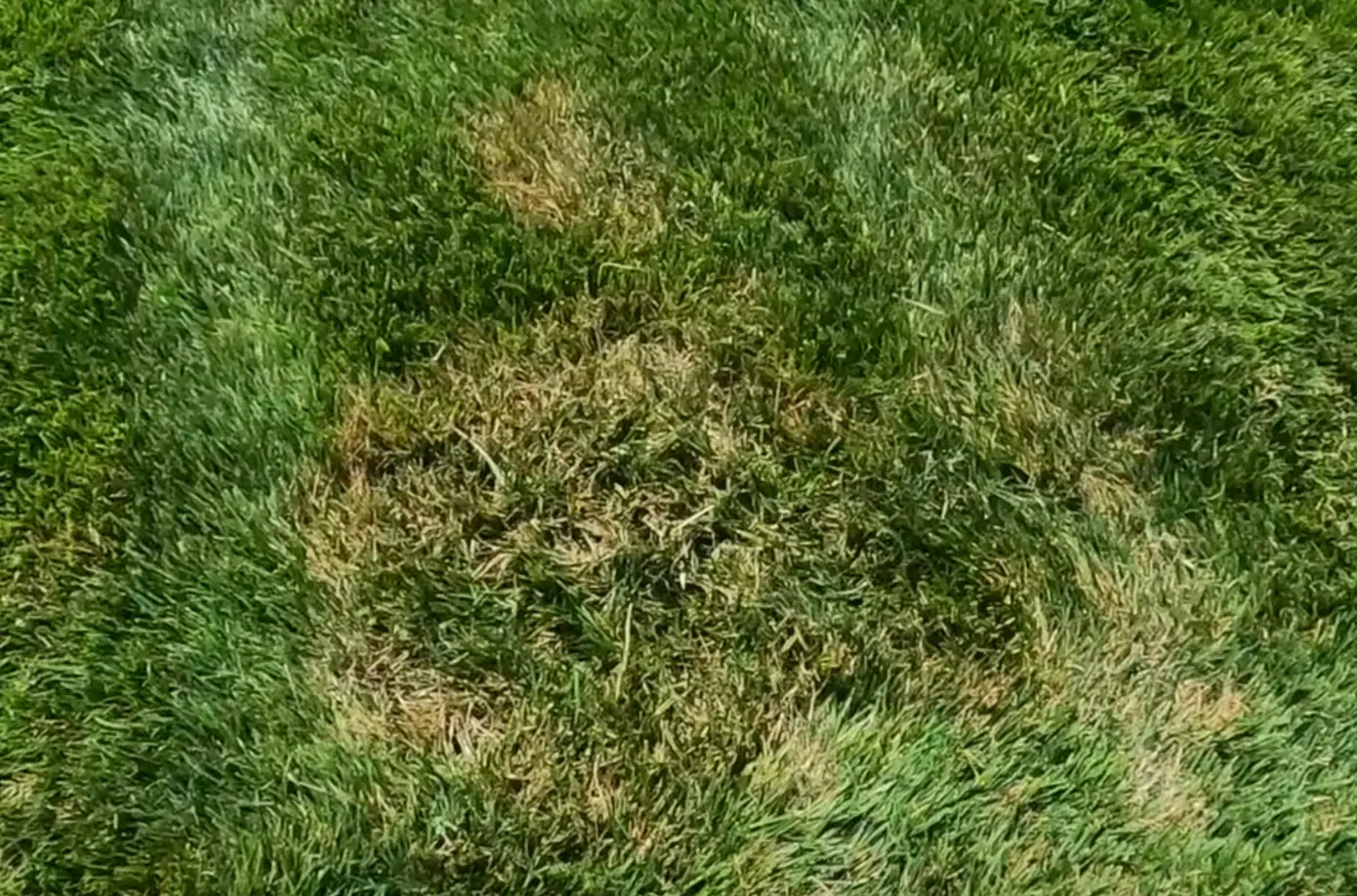
Most lawn diseases can be named from three clues: the shape, the season, and what’s on the blade.
Lawn diseases are mostly fungi that flare when grass stays wet and the weather suits them. Brown patch and summer patch peak in July–September, red thread and leaf spot in cool wet spells, and snow mold right after the snow melts. Match the symptom below to its guide. Most outbreaks are fixed with watering, mowing and nitrogen, not a spray.


Peak season (Northeast)
July–September
Guides indexed here
16
Fungicide on home lawns
“Seldom warranted” (UMass)
Biggest lever
Shorter leaf wetness
Check three things before you buy anything. The shape: is it rings, spots, crescents or a general thinning? The calendar: each disease has a temperature window. The blade: look for lesions, powder or threads up close, early in the morning while the dew is still on. If nothing below fits, the cause is probably drought, grubs or thatch rather than disease. See why is my grass turning brown.
Lawn disease identification chart
Start with what you can see from standing height, then confirm it on the blade. The seasons are for cool-season lawns in the Northeast.
| What you see | Likely cause | When | Guide |
|---|---|---|---|
| Brown circles from a few inches to several feet across, often green in the center, with a dark “smoke ring” edge at dawn | Brown patch | Jul–Sep, hot humid nights | Brown patch |
| Straw spots about the size of a silver dollar. Hourglass-shaped tan lesions with dark bands, and cobweb-like growth in the dew | Dollar spot | Jun–Sep | Dollar spot |
| Straw crescents and rings up to about 12 in, with a green “frog-eye” center, in bluegrass or fine fescue | Summer patch | Jul–Sep, hot soil | Summer patch |
| Greasy, water-soaked patches that appear overnight, with cottony growth in humid weather | Pythium blight | Days above 82°F, nights above 68°F | Pythium blight |
| Ragged pink-to-red patches up to 3 ft wide, with red antler-like threads on the tips | Red thread | Apr–Oct, cool and wet | Red thread |
| Orange powder that rubs off on shoes and pant legs, over yellowing blades | Rust | Jul–Oct, slow-growing turf | Lawn rust |
| White, dusty coating on the blades in shaded bluegrass | Powdery mildew | Spring to fall, in shade | Powdery mildew |
| Small brown or purple spots with tan centers and dark borders | Leaf spot | Apr–Oct, long leaf wetness | Leaf spot |
| Leaf spots that move down to the crowns, so turf thins and seems to melt away | Melting out | Cool, wet spring; mostly bluegrass | Melting out |
| Large straw-brown patches almost overnight, with bleached, pinched tips, often in tall fescue | Ascochyta blight | Late spring–summer, after wet spells | Ascochyta blight |
| Matted gray or straw circles, sometimes with cobwebs, as the snow melts | Snow mold (gray or pink) | Gray Jan–Apr; pink also Oct–Nov | Snow mold |
| A ring of darker green grass, dead grass or mushrooms after rain | Fairy ring / mushrooms | After wet weather | Mushrooms & fairy ring |
| Leopard-print brown spots after the first hard frost | Chilling injury (not a disease) | Fall cold snap | Chilling injury |
| Lime-green clumps that stand out from the rest of the lawn | Poa annua, Poa trivialis or bentgrass (not a disease) | Spring | Light green patches |
| Yellowing that turns into large, irregular dead patches in St. Augustine or Bermuda | Take-all root rot (mostly warm-season lawns) | Spring–early summer | Take-all root rot vs brown patch |
The months in that table come from the UMass Extension turf disease guide. The temperatures and symptoms come from each LawnPhix guide.
Northeast lawn disease calendar
UMass Extension lists when each common disease is active in New England and the temperatures it needs (UMass). Read it as a watch list. When a window opens, that’s the time to keep blades dry and get nitrogen right, before symptoms appear.
| Disease | Active | Temperature | Triggered by |
|---|---|---|---|
| Gray snow mold | Jan–Apr | 32–45°F | Long snow cover |
| Pink snow mold | Jan–May, Oct–Nov | 32–45°F | Any long cool, wet spell |
| Leaf spot / melting out | Apr–Oct | 45–75°F | Long leaf wetness from rain, dew or irrigation |
| Red thread | Apr–Oct | 45–75°F | Cool, wet weather, heavy dew, fog |
| Dollar spot | Jun–Sep | 45–80°F | Warm humid days, cool nights, heavy dew |
| Rust | Jul–Oct | 45–75°F | Slow-growing or droughty turf |
| Summer patch | Jul–Sep | Over 75°F | High soil temperatures |
| Brown patch | Jul–Sep | Over 75°F | Hot, humid days with warm nights, after rain |
Prevention that works on almost all of them
Water
Water early, so the blades dry
UMass’s first rule is to keep leaf wetness short (UMass). Water at dawn, never in the evening. Our powdery mildew guide puts the cut-off at 10 a.m.
Mow
Mow dry, sharp, and not too short
Mow when the grass is dry. Ragged cuts from a dull blade and scalped turf both open the door to leaf spot, dollar spot and ascochyta. Keep the deck clean between lawns.
Air
Thatch, compaction and shade
Core aeration, dethatching and limbing up trees shorten leaf wetness and cut stress. Almost every guide below lists them.
Nitrogen cuts both ways
This is the part most disease charts skip. Some lawn diseases are a sign the lawn is hungry. Others are a sign it’s been overfed. UMass warns that excess nitrogen makes soft growth that’s more prone to disease (UMass). Our own guides show the opposite problem too.
| Diseases of hungry lawns: feed | Diseases of overfed lawns: hold back |
|---|---|
| Dollar spot: tied to low-nitrogen lawns | Brown patch: worse with excessive nitrogen |
| Red thread: a classic low-nitrogen disease | Pythium blight: avoid heavy nitrogen in hot months |
| Lawn rust: low nitrogen is the leading cause, and feeding often clears it with no spray | Leaf spot / Melting out: worse with early-spring overfeeding |
When a fungicide is worth it
For home lawns, UMass’s view is that fungicide is seldom warranted. Spray preventively only where a disease was confirmed the season before, get a lab diagnosis first, and rotate chemical groups (UMass). Our guides agree in practice.
- Skip the spray for chilling injury, light green patches, ascochyta blight (it usually grows out in 2–3 weeks), and most rust and red thread, where nitrogen and mowing do the work.
- Consider it for brown patch, summer patch and dollar spot that come back in the same spots. Summer patch is best handled preventively in spring.
- Match the product to the disease. Our propiconazole and azoxystrobin guides cover the two workhorses, and propiconazole vs azoxystrobin explains when to rotate. Don’t use azoxystrobin on active dollar spot. Our dollar spot guide notes it can make it worse.
- Pythium is the exception. It isn’t a true fungus, so standard lawn fungicides may not touch it. It needs a mefenoxam product.
- Measure before you mix. The azoxystrobin calculator works out the rate for your square footage, and our 5 best lawn fungicides covers granular vs liquid and rotating across FRAC groups.
Where this stops being a DIY job: the same disease back in the same spots a second summer, or spreading across most of the lawn despite the fixes above.
That’s the point where UMass says to get a lab diagnosis before spending on fungicide. It’s also where a season-long preventive program, with products rotated by chemical group and timed to the temperature windows above, starts to beat buying single bottles. One-off spots, red thread, rust and anything on the not-a-disease list are still yours to handle.
Advertising disclosure: calls are routed to an independent local provider. We’re paid a referral fee for the call. You pay the provider, never us.
Common questions
What is the most common lawn disease in the Northeast?
In summer it’s brown patch and dollar spot. Red thread is common in cool, wet spells from spring to fall, and snow mold shows up after a snowy winter. The UMass calendar above shows when each one is active.
Will my grass recover from lawn fungus?
Usually, yes. Red thread, rust, snow mold and ascochyta normally grow out once conditions change. Brown patch often recovers too. Take-all root rot is the exception: it kills roots and stolons and can take out large areas.
Can I spread lawn disease with my mower?
Wet clippings carry spores, which is one reason UMass says to mow when the turf is dry. Bag clippings from rust-infected areas, and rinse the deck before mowing another lawn.
When should I apply fungicide to my lawn?
Preventively, just before a disease’s window opens, and only where it was confirmed last year. Our fungicide guide uses a simple trigger: when the temperature in °F plus the humidity percentage reaches about 150, fungal pressure is high.
Is it lawn disease or grubs?
Disease usually shows on the blades as lesions, threads, powder or cobwebs. Grub damage doesn’t. If the blades look clean and the patch keeps spreading, work through our brown-grass guide.
All lawn disease guides
Fungicide guides
Sources: UMass Extension: Disease Management (Lawn & Landscape Turf BMPs)
