
Lawn Care · Grass Types
Perennial ryegrass is the fast starter, not the whole lawn.
Perennial ryegrass is a cool-season grass that sprouts in 5 to 7 days and stands up to heavy wear, which makes it the best quick-cover grass in a seed mix. In the Northeast it’s also the least winter-hardy of the common lawn grasses, so extension turf programs keep it to about 10–20% of a blend with bluegrass or tall fescue.

GERMINATION
5–7 days
SHARE OF A BLEND
About 10–20%
SEED RATE, NEW LAWN
9–11 lb per 1,000 sq ft
BEST SEEDING WINDOW
Late Aug to late Sept (New England)
What perennial ryegrass is good at
Perennial ryegrass (Lolium perenne) is a bunch-type cool-season grass with a dark green, glossy leaf. Its big selling point is speed: Penn State Extension puts germination at 5 to 7 days, and Rutgers notes a seeding can reach full cover within about four weeks. Nothing else in a cool-season bag comes close.
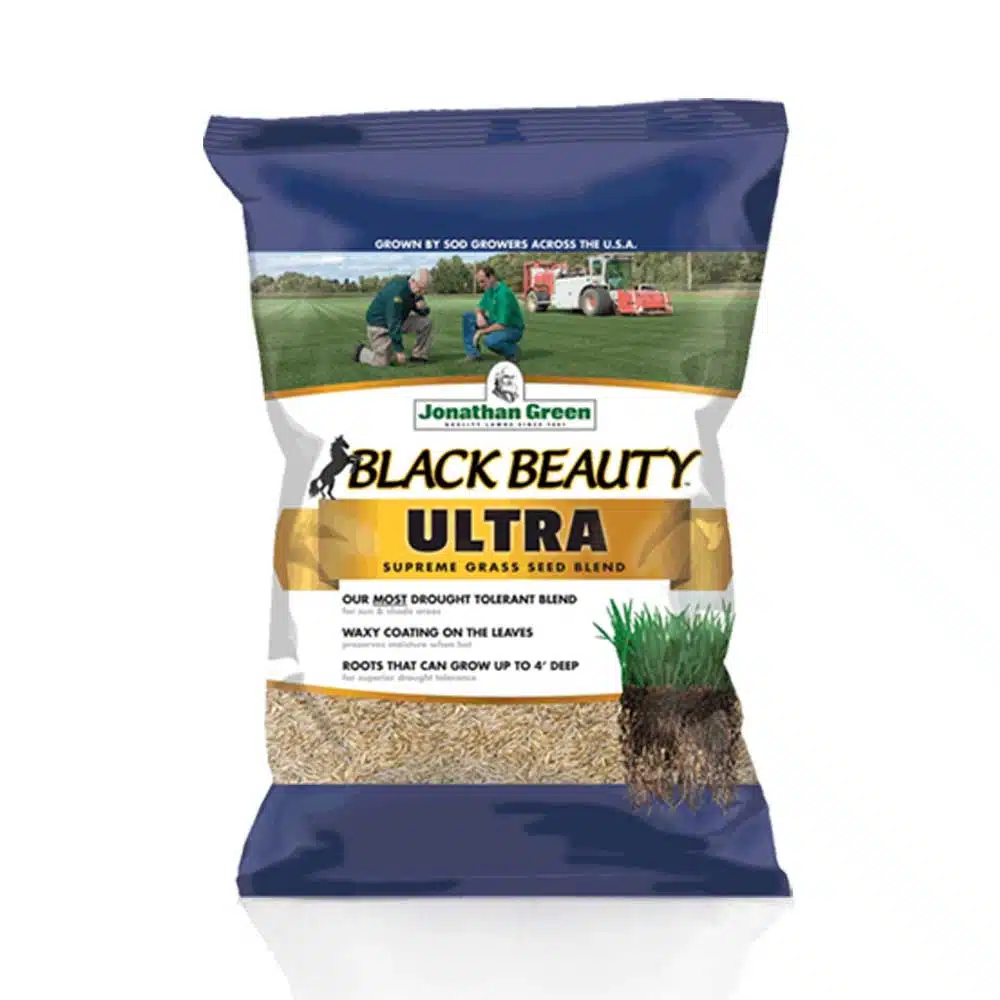
That speed is why it’s in so many blends. In our guide to choosing grass seed, the ryegrass in a mix germinates in five to seven days, tall fescue follows at around 14 and Kentucky bluegrass at around 21. The ryegrass acts as a nurse grass: it covers bare soil, holds seed in place and gives you something green to keep watering while the slower grasses catch up. In the LawnPhix Black Beauty Heavy Traffic review, a fescue and ryegrass blend, the ryegrass came up in about a week and the fescues at around 12 days.
It also wears well. UMass Extension rates perennial ryegrass excellent for both wear and compaction tolerance, which is why it shows up in athletic-field and “heavy traffic” blends.
Where it falls short in a Northeast lawn
The same UMass ratings show the trade-offs. Perennial ryegrass is only fair for cold hardiness, heat, drought and salt, and poor for shade. It also rates poor for recovery from traffic: it has no rhizomes or stolons, so it can’t creep back into a worn patch the way Kentucky bluegrass can. Penn State adds that it’s prone to ice damage and to brown patch, Pythium blight, dollar spot, red thread and rust.
None of that rules it out. It means ryegrass works best as a supporting player, which is how both UMass and Penn State recommend using it.
Where ryegrass fits: a decision table
Use this to decide how much ryegrass, if any, belongs in your seed. The shares come from the UMass lawn mixtures and Penn State seed mixture guidance; both land on roughly 10 to 20% perennial ryegrass.
| Your lawn | Ryegrass role | Why |
|---|---|---|
| Full sun, kids or dogs, heavy wear | Yes, 10–20% of a bluegrass or tall fescue blend | Excellent wear tolerance; the bluegrass or fescue does the long-term filling in |
| Thin lawn you’re overseeding in late summer | Yes, as part of the blend | Fastest germination, so new seed gets cover before fall leaves and frost |
| Bare patches you want green fast | Yes, mixed with your lawn’s main grass | Covers in weeks; match the rest of the blend to what’s already growing |
| Shade under trees | Keep it minor or skip it | UMass rates its shade tolerance poor; fine fescues do better (see grass for shade) |
| Low spots where ice sits all winter | Skip it | Survives far shorter ice cover than Kentucky bluegrass |
| Hot, humid, heavily watered and fed lawn | Only a gray-leaf-spot-tolerant variety, kept to a small share | Gray leaf spot hits ryegrass in late summer heat and humidity |
| Brand-new lawn, all one grass | Not recommended | Too exposed to winter injury and disease on its own |
| Bermuda lawn in the South, winter color | Yes, overseeded each fall | A different job entirely; see overseeding with Bermuda grass |
Don’t build a New England lawn on ryegrass alone.
A pure ryegrass stand bets the whole lawn on the grass New England winters are hardest on. In a UMass account of a hard New England winter, bluegrass, fine fescue and bentgrass all came back while perennial ryegrass never recovered, and UMass puts its tolerance of ice cover at roughly 75 to 90 days against 150 or more for Kentucky bluegrass (UMass winter injury fact sheet). In late summer, UMass says gray leaf spot builds fastest at 82 to 90°F with wet leaves, and Rutgers calls ryegrass highly susceptible. Because it doesn’t spread, thin spots stay thin until you reseed. Keep it to about a fifth of the blend, and pick a variety listed as tolerant to gray leaf spot.
Perennial ryegrass vs tall fescue vs Kentucky bluegrass
Most Northeast lawns are some mix of these three. Here’s how they compare on the things that decide the blend. Ratings are from UMass and UMass’s grass selection fact sheet; germination times are from our grass seed guide.
| Trait | Perennial ryegrass | Tall fescue | Kentucky bluegrass |
|---|---|---|---|
| Germination | 5–7 days | About 14 days | About 21 days |
| How it spreads | Bunch type, no spreading | Bunch type | Rhizomes; fills in gaps |
| Wear tolerance | Excellent | Excellent | Good |
| Recovery from damage | Poor | Poor | Good |
| Shade | Poor | Fair (best of the three) | Low |
| Drought and heat | Fair | Tolerant | Goes semi-dormant |
| Winter hardiness | Fair; ice-sensitive | Good | High |
| Main disease worry | Gray leaf spot, brown patch, red thread | Brown patch | Leaf spot, summer patch |
Ryegrass vs tall fescue
Tall fescue is the better backbone for a sunny or partly shaded lawn that doesn’t get much water: deeper roots, more drought and shade tolerance. It’s slow to establish, which is exactly the gap ryegrass fills. Many tall fescue blends, including the one in our Heavy Traffic review, carry some ryegrass for that reason. If brown patch is your recurring problem, both are susceptible; see preventing brown patch.
Ryegrass vs Kentucky bluegrass
Kentucky bluegrass is the most cold-hardy and the only one of the three that spreads and repairs itself. It’s also the slowest to come up. That’s why the classic Northeast sun mix is mostly bluegrass with 10 to 20% ryegrass: the ryegrass covers the soil in the first weeks, and the bluegrass knits the lawn together over the next season.
Annual vs perennial ryegrass
They share a name and look similar in the bag, but they do different jobs. Penn State says annual ryegrass belongs in temporary turf only, and it’s a common filler in cheap seed mixes.
| Perennial ryegrass | Annual ryegrass | |
|---|---|---|
| Botanical name on the tag | Lolium perenne | Lolium multiflorum |
| Life span | Comes back year after year | Temporary; for one season of cover |
| Young leaf | Folded in the bud | Rolled in the bud |
| Auricles (at the leaf base) | Small, rudimentary | Long and clasping |
| Best use | Permanent part of a cool-season blend | Quick erosion cover; winter color on dormant Bermuda |
Identification details are from Penn State’s cool-season grass ID guide. If a bag lists annual ryegrass and you want a permanent lawn, put it back.
Buying perennial ryegrass seed
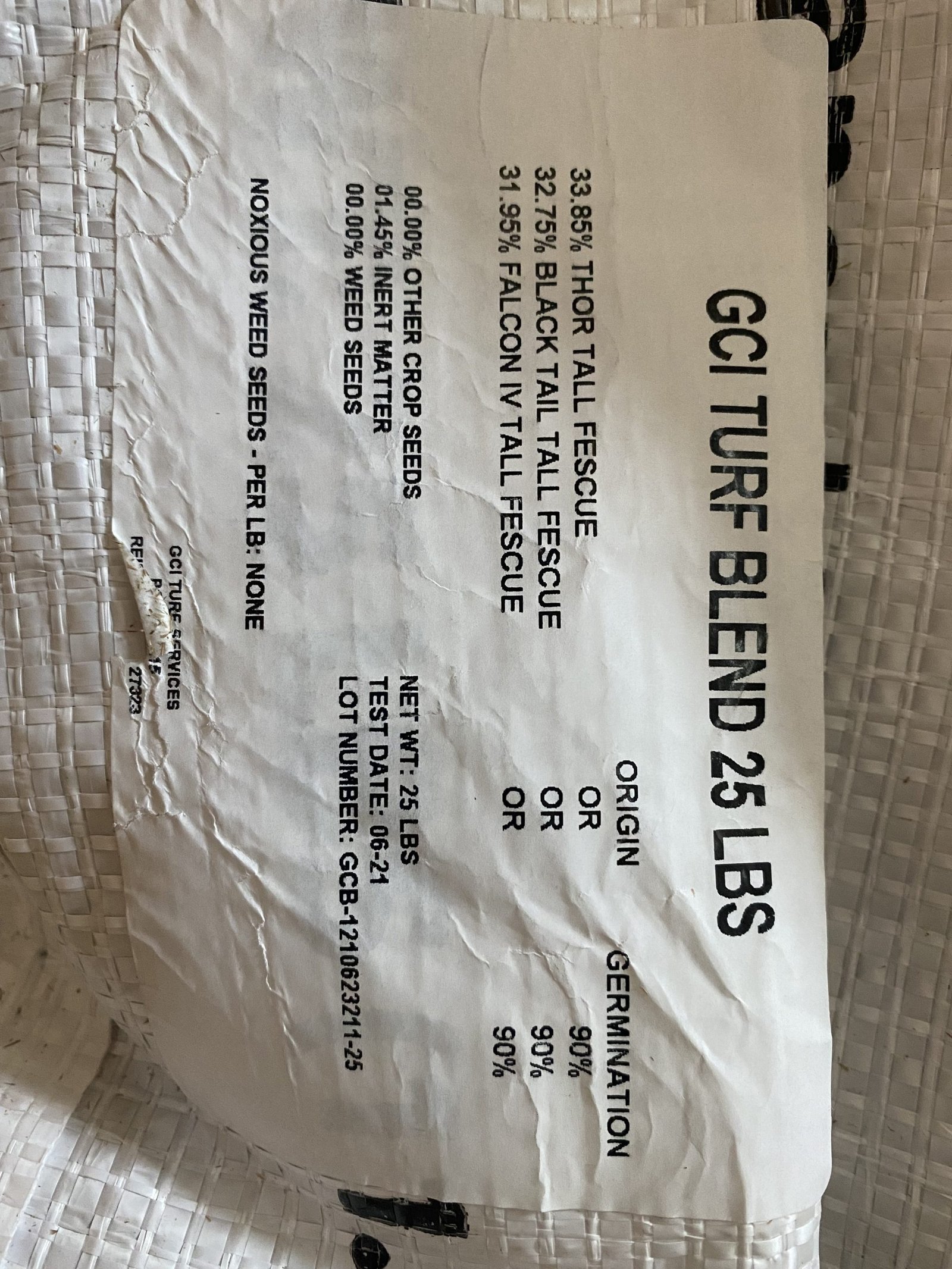
- Read the species list. You want Lolium perenne, ideally at 10 to 20% of the blend for a home lawn, with the rest bluegrass or tall fescue.
- Check purity and germination. Penn State sets minimums of 95% purity and 85% germination for perennial ryegrass seed, with weed seed and undesirable grasses each kept to 0.5% or less.
- Watch the “other crop” line. Rough bluegrass is a known contaminant of shade and ryegrass mixes; our Poa trivialis guide explains why certified seed is worth paying for.
- Pick a disease-tolerant variety. Rutgers trials show large differences between ryegrass varieties in gray leaf spot tolerance, so look for one the seller lists as resistant.
How much perennial ryegrass seed to use
These are LawnPhix’s standard rates from how much grass seed do I need. Use them for straight ryegrass; for a blend, follow the rate on the bag, which accounts for the mix.
| Job | Perennial ryegrass (lb per 1,000 sq ft) |
|---|---|
| New lawn on bare soil | 9 to 11 |
| Overseeding a thin lawn | 7 to 9 |
| Overseeding a healthy lawn | 4 to 7 |
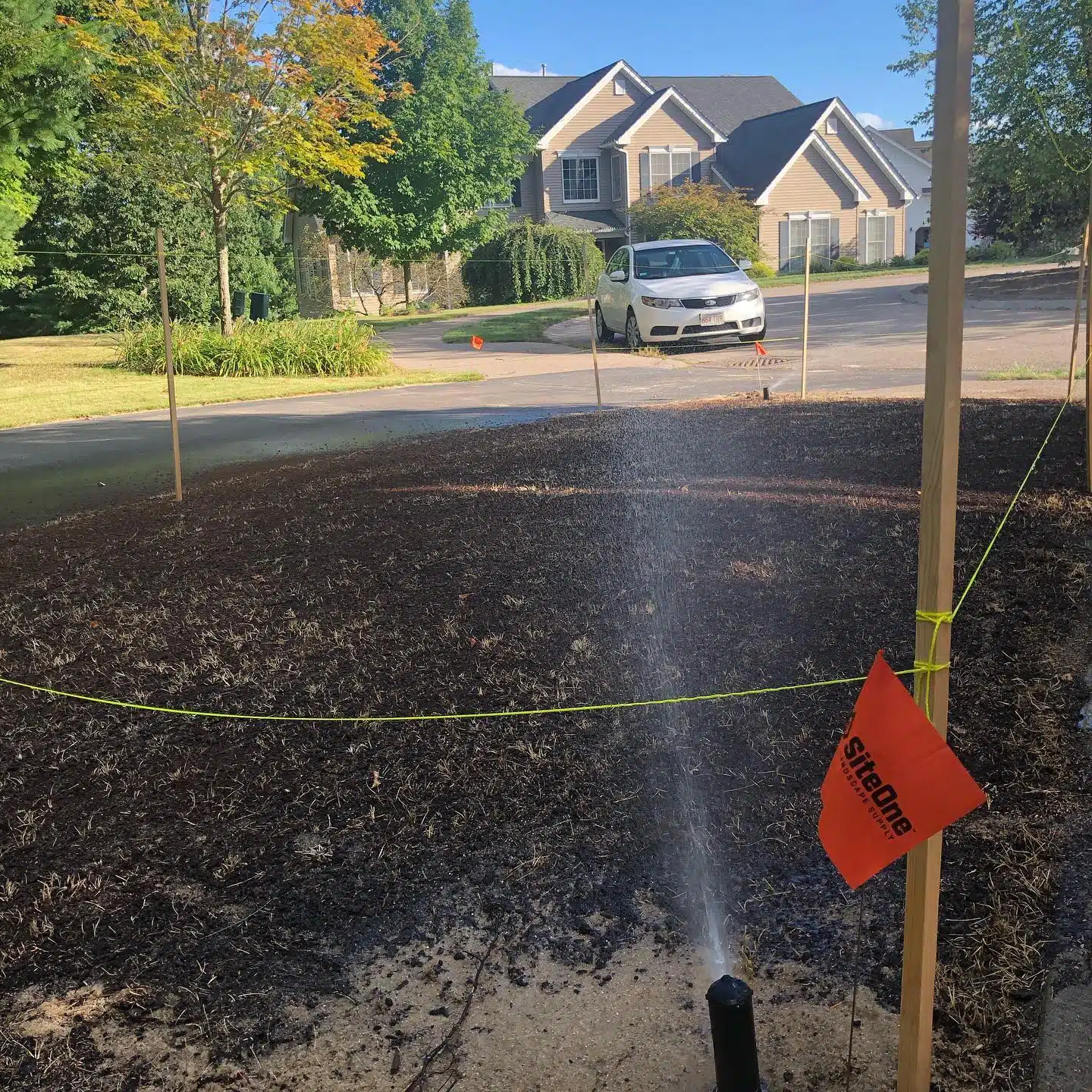
Plug your square footage into the grass seed calculator to get pounds. In our Heavy Traffic review, the blend came in noticeably thin at 4 lb per 1,000 sq ft on bare soil and much thicker at 7 lb, so don’t skimp on a new lawn.
Overseeding with perennial ryegrass
- Time it for late summer. UMass puts the best New England seeding window at roughly the third week of August to the third week of September. Ryegrass’s speed buys you a little slack late in that window, but not into October. See the best time to aerate and overseed.
- Get seed onto soil. Mow short, rake out debris or core aerate, then spread. Our overseeding guide walks through each step.
- Keep it moist. Light, frequent watering until it’s up, then taper off. Details are in how often to water grass seed.
- Use a seeding-safe weed control. Standard crabgrass pre-emergents stop new grass. Rutgers names mesotrione (Tenacity) and siduron as the options that are safe around new seedings, and Tenacity is LawnPhix’s go-to, documented in our Tenacity review.
- Don’t overseed with straight ryegrass every year. Penn State keeps it to about 20% of a mix because it’s competitive enough to crowd out slower grasses. Year after year of pure ryegrass pushes the lawn toward the all-ryegrass stand warned about above.
Perennial ryegrass FAQs
How long does perennial ryegrass take to germinate?
About 5 to 7 days in good late-summer conditions, per Penn State and our own seeding notes. Full cover takes about four weeks.
Is perennial ryegrass good for lawns in the Northeast?
Yes, as 10 to 20% of a blend with Kentucky bluegrass or tall fescue. On its own it’s too exposed to winter injury and gray leaf spot.
How short can you mow perennial ryegrass?
Penn State lists 1.5 to 2.5 inches for general turf, and it tolerates low mowing better than most. In a mixed home lawn, mow for the main grass; LawnPhix’s standard for cool-season lawns is 3 to 4 inches.
Does perennial ryegrass spread?
No. It’s a bunch grass with no rhizomes or stolons, so bare spots don’t fill in on their own. Kentucky bluegrass is the spreader in a Northeast mix.
Can you dormant seed perennial ryegrass?
You can, but it’s the riskiest choice. Because it sprouts so fast, a midwinter thaw is more likely to wake it early. Slow-starting Kentucky bluegrass is the safer dormant seeding pick.
Will perennial ryegrass take over my lawn?
It can dominate a new seeding if it makes up too much of the mix, which is why extension guides cap it at about 20%. In an established lawn it won’t creep into your other grasses.
Related guides
REVIEW
Black Beauty Heavy Traffic review
A tall fescue and ryegrass blend, seeded and tracked for a year.
Sources: UMass Extension: Turfgrass Selection · UMass: Selection of Grasses · UMass: Winter Injuries of Cool-Season Turf in New England · UMass: Gray Leaf Spot of Ryegrass and Tall Fescue · UMass: Establishment, Renovation & Repair · Penn State: Turfgrass Species for Pennsylvania · Penn State: Turfgrass Seed and Seed Mixtures · Penn State: Cool-Season Turfgrass Identification · Rutgers: Gray Leaf Spot Disease · Rutgers: Weed Control in Spring Seedings
