
Lawn Care · Grass Types
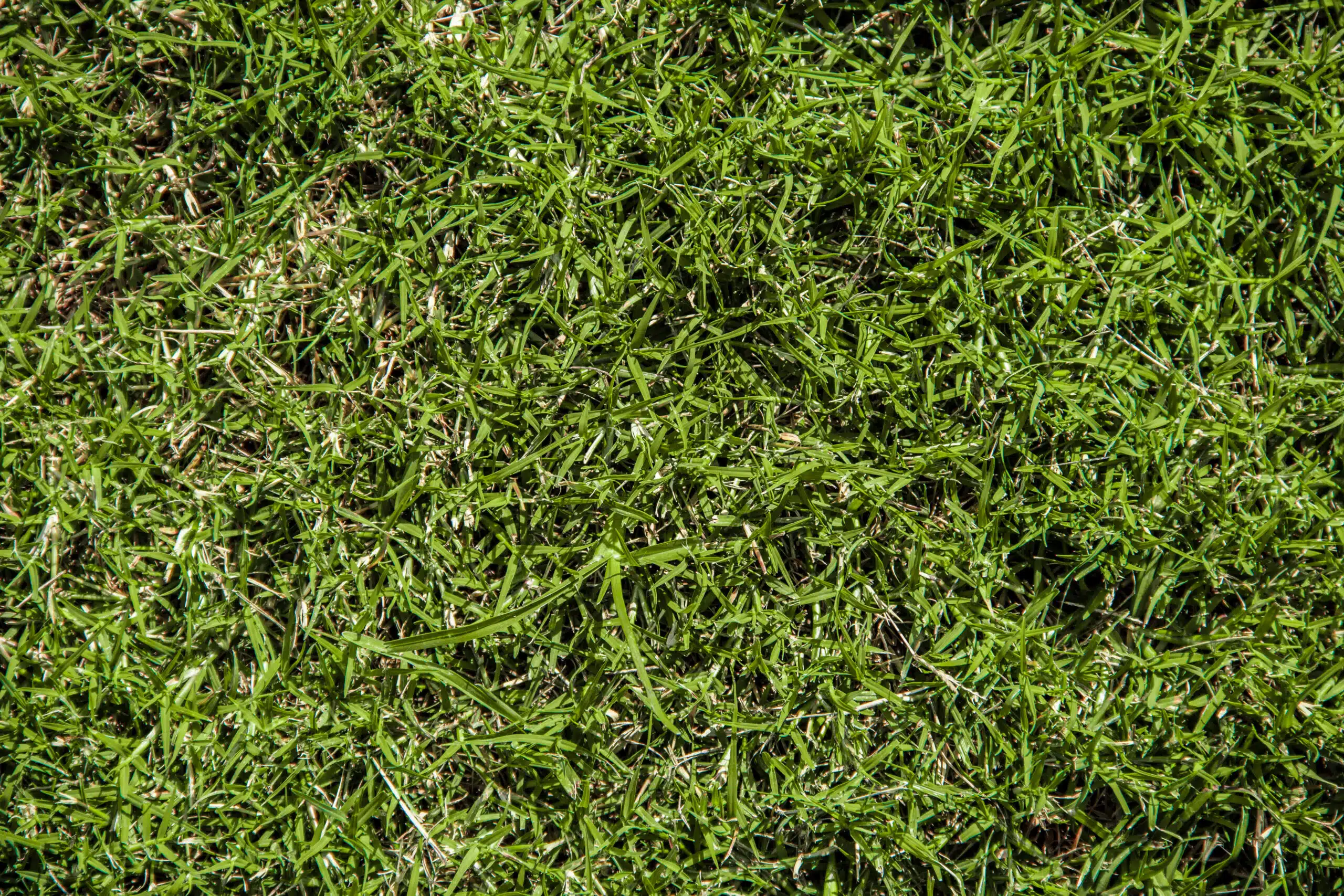
Bermuda grass wants full sun, a short cut and summer feeding.
Mow Bermuda at 1 to 2 inches, feed it ½ to 1 lb of nitrogen per 1,000 sq ft every four to six weeks from full green-up to late summer, and water ¾ to 1 inch when the whole lawn looks dry. Most Bermuda trouble traces back to shade, mowing too high, or feeding at the wrong time of year.
MOWING HEIGHT
1–2 in (hybrids lower)
NITROGEN
½–1 lb every 4–6 weeks
WATER
¾–1 in when dry
LIGHT
Full sun only
Bermuda grass care by season
This calendar pulls together the Southern extension calendars. Exact dates shift with latitude: Clemson says green-up usually comes in April on the South Carolina coast and as late as mid-May inland. Go by what your lawn is doing, not the date.
| Season | Do | Skip |
|---|---|---|
| Late winter (Feb–Mar) | Soil test every 2–3 years. Crabgrass pre-emergent: mid-February on the coast and in central South Carolina, mid-March in the Piedmont and mountains, with a second round 8–10 weeks later (Clemson). | Fertilizer. The grass is still dormant. |
| Green-up (Apr–May) | First mow at green-up, as low as you can go without scalping, to clear off dead leaf (NC State). First nitrogen once the lawn is fully green and soil at 4 inches holds at 65°F (UGA). | Dethatching before full green-up. |
| Summer (Jun–Aug) | Feed ½–1 lb N every 4–6 weeks. Mow often enough to take no more than a third of the blade. Core aerate and dethatch now if needed; UGA rates May–August best for both. | Herbicides when it’s 90°F or hotter (Clemson), and grassy-weed killers on drought-stressed turf (UGA). |
| Late summer and fall (Sep–Nov) | Last nitrogen before Aug 15 (Clemson) or no more than ½ lb in September (NC State). Potassium if a soil test is low. Fall pre-emergent in September. Raise the mower about ½ inch if you aren’t overseeding. | Heavy nitrogen, which NC State ties to spring dead spot. |
| Winter (Dec–Feb) | Water if 3–4 weeks pass with no rain, especially before a hard freeze (Clemson). Clear leaves for an even green-up. | Fertilizer of any kind. |
Mowing Bermuda
Bermuda thickens when it’s cut low and often. Clemson sets the summer range at 1–2 inches, starting around 1¼–1½ and lowering gradually; UGA uses 1–2 inches for common Bermuda and 1–1½ for hybrids. NC State says hybrids like Tifway and TifTuf do best at ¾–1 inch, but anything under an inch needs a reel mower and level ground.
- Mow often. UF/IFAS says never remove more than a third of the blade at once. In fast summer growth Clemson says that can mean mowing twice a week.
- Don’t let it get tall, then hack it down. Cutting a 3-inch Bermuda lawn down to 1 inch removes two-thirds of the blade, twice what UF allows, and leaves it scalped and brown.
- Raise it a little in fall. Once nights drop below 70°F, Clemson raises the height slightly; NC State raises it ½ inch on lawns that won’t be overseeded, to protect against winter kill.
- Leave the clippings at normal fertility if you mow on schedule (UF). See our rules of lawn mowing.
Feeding Bermuda
Bermuda is the heaviest feeder of the common Southern lawn grasses. Yearly nitrogen runs about 2–4 lb per 1,000 sq ft in South Carolina and 2–5 lb in Georgia, with hybrids in North Carolina taking up to 6 lb (NC State). Split it into ½–1 lb feedings. For the math on any bag, Clemson’s shortcut is 100 divided by the first number on the bag equals pounds of product for 1 lb of nitrogen per 1,000 sq ft, or use our nitrogen calculator.
Base phosphorus, potassium and lime on a soil test. UGA targets pH 5.5–6.5 and Clemson 6–6.5. In the fall, Clemson and NC State add about 1 lb of K2O per 1,000 sq ft, 4–6 weeks before frost, when the test shows potassium is low.
Watering Bermuda
Bermuda is drought tolerant and will go dormant (brown) in a long dry spell, then come back with water (UF/IFAS). To keep it green, water deeply when it asks for it rather than on a timer:
- Water when leaves fold or wilt, turn blue-gray, or footprints stay visible (UF).
- Put down ¾–1 inch when the whole lawn looks dry, early in the morning (Clemson). NC State works out to about an inch a week in the growing season.
- On sandy soil, NC State suggests about ½ inch every third day. On clay, water until it runs off, let it soak in, then repeat.
Weeds, thatch and the herbicide label
A thick, low-cut Bermuda lawn crowds out a lot of weeds. For the rest:
- Pre-emergents go down in late winter and again in September for winter weeds (Clemson). Timing details are in when to apply pre-emergent.
- Broadleaf products: Clemson notes Bermuda is sensitive to 2,4-D and says to use the label’s reduced rate for Bermuda. Don’t mow 3 days before or 2 days after spraying.
- Southern weed and feed: the atrazine products sold for St. Augustine say right on the label not to use them on Bermuda.
- Thatch: dethatch once it passes ½ inch, after full green-up. Clemson recommends a dethatcher with 2–3 inch blade spacing set ¼ inch deep, and warns against power rakes with 1-inch spacing. More on thatch.
Diagnosing a struggling Bermuda lawn
| What you see | Likely cause | What to do |
|---|---|---|
| Thin, stringy grass under trees or on the north side of the house | Shade. Clemson says Bermuda has very poor shade tolerance. | Prune for light or switch that area to a shade-tolerant grass (grass for shade). |
| Whole lawn tan from first frost to spring | Normal winter dormancy | Nothing, or overseed with ryegrass for winter color (overseeding Bermuda). |
| Brown, stubbly lawn right after mowing | Scalping from cutting too much at once | Mow more often at a steady height. |
| Sunken, circular dead patches 2 inches to 3 feet across in spring, often on 3–5-year-old lawns | Spring dead spot (NC State) | Feed monthly mid-May to mid-August to help it fill in, keep September N light, map spots for fall fungicide. |
| Large tan rings in spring or fall | Large patch (UF/IFAS) | Avoid excess nitrogen; fungicide if it spreads. See lawn diseases. |
| Yellowing on alkaline soil (pH above 7) | Iron or manganese deficiency (UF) | Foliar or chelated iron; see iron for lawns. |
| Patches that decline despite water and feeding | Possibly nematodes or mole crickets, both serious Bermuda pests in Florida (UF) | Get a diagnosis before treating; see the note below. |
When a patch keeps dying no matter how you water and feed, stop treating and get a diagnosis.
Nematodes are the most serious Bermuda pest in Florida, according to UF/IFAS. No Bermuda cultivar resists them, and home-lawn chemical options are limited, so guessing with insecticide or fungicide wastes money. UF recommends contacting your county Extension office for a diagnosis. Do the same for spreading spots that don’t match the table above.
If you’d rather hand off the mowing and feeding schedule, our full lawn maintenance page connects you with a lawn care company serving your area.
Bermuda grass care FAQs
When does Bermuda grass green up?
When soils warm in spring. Clemson puts it in April on the South Carolina coast and as late as mid-May inland; farther north in the transition zone it runs later.
How short should I cut Bermuda grass?
1–2 inches for most home lawns with a rotary mower. Hybrids can go to ¾–1 inch with a reel mower on level ground.
How do I make Bermuda grass thicker?
Mow low and often, feed on schedule through summer and keep it in full sun. Our guide to getting Bermuda to spread covers filling bare spots.
Should I bag Bermuda clippings?
Usually not. UF says clippings can stay on the lawn at low to moderate fertility if you mow on schedule. Bag them if you’ve let it get long.
Does Bermuda need lime?
Only if a soil test shows low pH. UGA targets 5.5–6.5, and Clemson notes Upstate South Carolina soils usually need lime rather than sulfur.
Can I overseed Bermuda for winter color?
Yes, with ryegrass in fall. UGA uses 5–10 lb of ryegrass seed per 1,000 sq ft. The overseeded rye has to fade in spring so the Bermuda can green up.
Related guides
Sources: Clemson HGIC 1216: Bermudagrass Yearly Maintenance · Clemson HGIC 1208: Bermudagrass · NC State AG-431: Bermudagrass Lawn Maintenance Calendar · NC State: Carolina Lawns · UGA: Bermudagrass Lawn Calendar · UF/IFAS ENH19: Bermudagrass for Florida Lawns · Scotts Bonus S Southern Weed & Feed label
