
Lawn Care · Fertilizer
The best Bermuda fertilizer is mostly nitrogen, fed in summer.
Bermuda grass needs roughly 2 to 6 lb of nitrogen per 1,000 sq ft a year, depending on the cultivar and where you live, applied ½ to 1 lb at a time once the lawn has fully greened up. The right bag is a high-nitrogen product with little or no phosphorus unless a soil test asks for it, plus potassium if your soil is short.
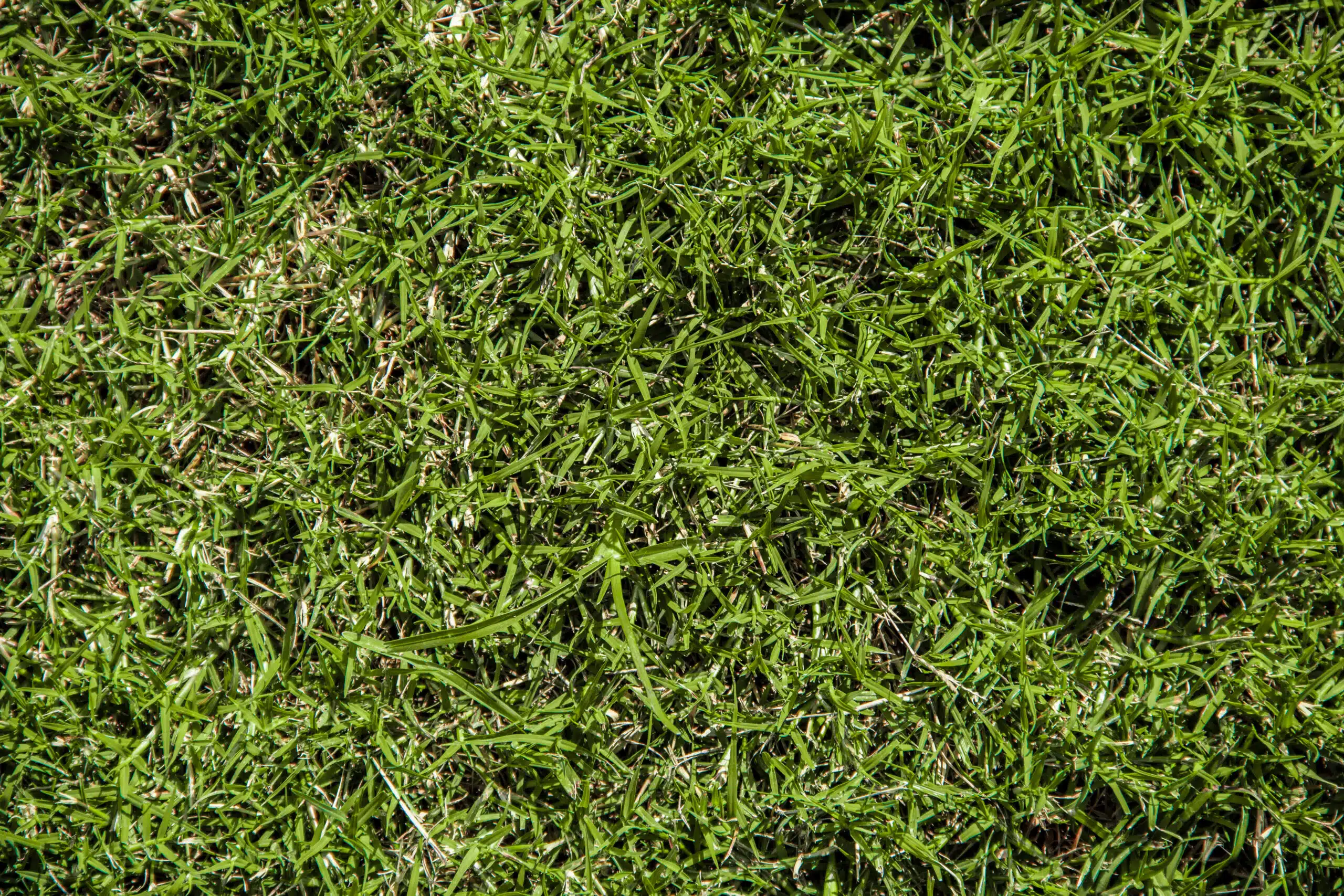
YEARLY NITROGEN
2–6 lb per 1,000 sq ft
PER FEEDING
½–1 lb N
FIRST FEEDING
Soil at 65°F (4 in deep)
LAST FEEDING
Mid-Aug to Sept, light
What Bermuda needs from a fertilizer
Bermuda is the hungriest of the common Southern lawn grasses. It spreads by stolons and rhizomes, and nitrogen is what fuels that spread, so the first number on the bag matters far more than the other two. Phosphorus and potassium still matter, but only in the amounts your soil is missing, which is why every extension program here tells you to start with a soil test.
How much nitrogen is a judgment call that depends on region, cultivar and how polished you want the lawn. The ranges below are each program’s figures in pounds of actual nitrogen per 1,000 sq ft per year. Hybrids (Tifway, TifTuf and the like) sit at the top; seeded common Bermuda and low-input lawns sit at the bottom.
| Program | Yearly N (lb / 1,000 sq ft) | Notes |
|---|---|---|
| Clemson HGIC 1216 (South Carolina) | 2–4 | Higher end on sandy soil, lower on clay |
| UGA Bermudagrass Lawn Calendar | 2–5 | Follow your soil test report |
| NC State, Carolina Lawns (Piedmont) | Common 4–4.5; hybrid 3–6 | Coastal plain common: 3–4.5 |
| Texas A&M E-436 | Common 2–5; hybrid 2–6 | Low to high maintenance |
| UF/IFAS ENH19 (Florida) | North 3–5; Central 4–6; South 5–7 | UF says these are likely more than most home lawns need |
| LSU AgCenter (Louisiana) | About 3 | 1 lb each in April, June and August |
A sensible home-lawn target is the middle of your state’s range: around 3 lb a year for most Bermuda lawns, 4 or more only if you have a hybrid you mow low and want dense.
Which kind of fertilizer fits your lawn
There’s no single best bag for every Bermuda lawn. Match the product type to what your soil test and your situation say:
| Your situation | Look for | Why |
|---|---|---|
| Soil test shows phosphorus and potassium are fine | High-N, zero-P product (for example a 34-0-10 or 30-0-x) | You only need nitrogen. UF notes most Florida soils are already high in phosphorus. |
| No soil test yet | Roughly 4 parts N : 1 part P : 2 parts K (for example 16-4-8) | Texas A&M suggests 4–6 : 1 : 2–4 when you don’t have a recent test. Test every 2–3 years. |
| Sandy soil or heavy summer rain | A product with a stated slow-release share | Slow-release nitrogen leaches less and evens out growth. Clemson also puts sandy soils at the high end of the yearly range. |
| You want zero burn risk in July heat | Organic or mostly slow-release (Milorganite-type) | Bermuda’s growing season is warm, which is exactly when microbe-fed organics release nitrogen. |
| Lawn yellows on alkaline soil (pH above 7) | Chelated iron or foliar iron, not more nitrogen | UF links high-pH yellowing to iron or manganese and says to use foliar or chelated iron. |
| Late summer and fall | Potassium only, and only if the test is low | Clemson and NC State both suggest about 1 lb K2O per 1,000 sq ft, 4–6 weeks before first frost. |
| Broadleaf weeds | A separate Bermuda-labeled herbicide, not a Southern weed and feed | Atrazine weed-and-feed products for St. Augustine say right on the label not to use them on Bermuda. |
Bermuda fertilizer products compared by label
We haven’t run side-by-side trials of these products. This table compares what each label actually delivers against the extension targets above. Labels were checked in October 2026, and formulas change, so confirm the bag before you buy.
| Product | Analysis | At the label rate | Slow-release N | Fit for Bermuda |
|---|---|---|---|---|
| Scotts Turf Builder Southern Lawn Food | 34-0-10 | 28.24 lb bag covers 8,000 sq ft, about 1.2 lb N per 1,000 sq ft (1.6 lb at the “Max Greening” rate) | Not stated on the product page | High N, no P, some K. Both label rates are above the ½–1 lb per feeding the extension programs use. For 1 lb N, spread about 2.9 lb per 1,000 sq ft. |
| The Andersons Professional 16-4-8 with NS-54 | 16-4-8, 2% iron | 6.25 lb per 1,000 sq ft = 1.0 lb N (low rate 4.54 lb = 0.73 lb N) | 6.4 of the 16 points, about 40% | Matches Texas A&M’s no-soil-test ratio almost exactly; label says repeat every 6–8 weeks. |
| Milorganite | 6-4-0, 2.5% iron | 32 lb per 2,500 sq ft = about 0.77 lb N per 1,000 sq ft | About 58% | Won’t burn and suits warm soil. Needs a lot of product, and the phosphate only helps if your soil test is low. See how to use Milorganite. |
| Urea (generic) | 46-0-0 | About 2.2 lb per 1,000 sq ft = 1 lb N | None | Cheapest nitrogen, all quick-release. In Florida, UF caps quick-release N at 0.7 lb per application (about 1.5 lb of urea). |
| Ammonium sulfate (generic) | 21-0-0 | About 4.8 lb per 1,000 sq ft = 1 lb N | None | Quick-release; see urea vs ammonium sulfate. |
| Muriate of potash / potassium sulfate | 0-0-60 / 0-0-50 | 1.6 lb or 2 lb per 1,000 sq ft = about 1 lb K2O | — | Fall potassium when a soil test is low (Clemson). See what is potash. |
The quick math for any bag comes from Clemson: divide 100 by the first number to get pounds of product for 1 lb of nitrogen per 1,000 sq ft, or divide 50 by it for ½ lb. Our nitrogen calculator does the same thing.
Worked example: a 5,000 sq ft hybrid Bermuda lawn
Say you have Tifway in the North Carolina Piedmont and you’re aiming for 4 lb of nitrogen a year, inside NC State’s 3–6 lb range for hybrids. Following the NC State Bermudagrass calendar:
- Early May, a few weeks after full green-up: 1 lb N.
- Mid-June, mid-July, early August: 1 lb N each, roughly every 4–6 weeks.
- September: nothing, or at most ½ lb. That keeps you at 4 to 4.5 lb for the year.
- Fall: 1 lb K2O per 1,000 sq ft only if your soil test shows low potassium.
With the 16-4-8 at its 1 lb rate, each feeding is 6.25 lb × 5 = about 31 lb, so four feedings use about 125 lb, or two and a half 50 lb bags. With a 34-0-10 at 2.9 lb per 1,000 sq ft, each feeding is about 15 lb and the season takes about 59 lb, roughly two 28 lb bags. The 34-0-10 is less to carry, but it brings no phosphorus and no stated slow-release share, so it only makes sense if your soil test says phosphorus is fine.
When to start and stop
- Start when the lawn is fully green, not when it first shows color. UGA says to wait until the soil at 4 inches holds at 65°F and rising. Clemson’s rule is simply no nitrogen until full green-up.
- Space feedings 4–6 weeks apart in summer (NC State); Texas A&M says at least 45–60 days.
- Stop before Aug 15 in South Carolina (Clemson), keep September to ½ lb or less in North Carolina, and in Texas make the last feeding at least 6 weeks before your average first frost (E-436 lists Oct 1 for Dallas and Oct 15 for Austin, Houston and San Antonio).
Don’t push nitrogen late in the season, and don’t put a St. Augustine weed and feed on Bermuda.
Late nitrogen is the timing mistake to avoid. NC State limits September nitrogen to ½ lb per 1,000 sq ft specifically to reduce spring dead spot, the sunken, circular dead patches that show up on 3- to 5-year-old Bermuda. Clemson says no nitrogen at all from September through winter. A “winterizer” on Bermuda should be potassium, not nitrogen, and only if your soil test calls for it.
The second mistake happens in the store aisle. Southern weed-and-feed products built around atrazine are made for St. Augustine, centipede and zoysia. The Scotts Bonus S Southern Weed & Feed label lists Bermuda among the grasses not to use it on. Feed with a plain fertilizer and handle weeds separately with a product labeled for Bermuda.
If you’d rather hand the schedule off, our lawn fertilization page connects you with a lawn care company serving your area.
Bermuda fertilizer FAQs
Is 10-10-10 good for Bermuda grass?
It works, but it’s rarely the best fit. LSU AgCenter uses 10-10-10 as an example (10 lb per 1,000 sq ft for 1 lb N), but you’re adding as much phosphorus as nitrogen. Unless your soil test is low in phosphorus, a high-N, low-P product does the job with less product and less runoff risk.
How often should I fertilize Bermuda?
Every 4–6 weeks from full green-up to mid- or late summer, at ½–1 lb of nitrogen per 1,000 sq ft. That works out to 3–5 feedings for most lawns, fewer on clay and low-input lawns.
Can I use Milorganite on Bermuda?
Yes. Its slow, microbe-driven release suits Bermuda’s warm-season growth. At the bag rate it gives about 0.77 lb N per 1,000 sq ft, so plan on more feedings or bags than with a synthetic, and remember it adds phosphate.
What’s the best fertilizer for Bermuda in summer?
Any of the high-nitrogen products above, at ½–1 lb N per feeding. In midsummer heat, a product with a large slow-release share is the safer choice. Clemson suggests a high-potassium blend such as 15-0-15 for its June–July and August feedings.
Does Bermuda need iron?
Only if it’s yellowing on alkaline soil or with high-pH water. Iron greens the leaves but doesn’t replace nitrogen. See iron for lawns.
Should I fertilize Bermuda before it greens up?
No. Clemson’s calendar holds all nitrogen until the lawn has fully greened up, and UF warns against feeding before the last frost. Early nitrogen mostly feeds weeds.
Related guides
FERTILIZER
Best fertilizer for St. Augustine grass
Nitrogen rates and timing for St. Augustine lawns.
Sources: Clemson HGIC 1216: Bermudagrass Yearly Maintenance · UGA: Bermudagrass Lawn Calendar · NC State AG-431: Bermudagrass Lawn Maintenance Calendar · NC State: Carolina Lawns · Texas A&M E-436: Fertilizing Texas Lawns · UF/IFAS ENH19: Bermudagrass for Florida Lawns · LSU AgCenter: April lawn fertilizing · Scotts Turf Builder Southern Lawn Food · Scotts Bonus S Southern Weed & Feed · The Andersons 16-4-8 label · Milorganite specifications · Milorganite rates
